
A small chip on Monday can turn into a full crack by Friday, especially in North Texas heat, highway traffic, and constant temperature swings. That is why understanding repairable windshield damage types matters. The sooner you know what can be fixed, the better your chances of saving the original glass, avoiding a bigger bill, and getting back on the road without the hassle of replacement.
What counts as repairable windshield damage types?
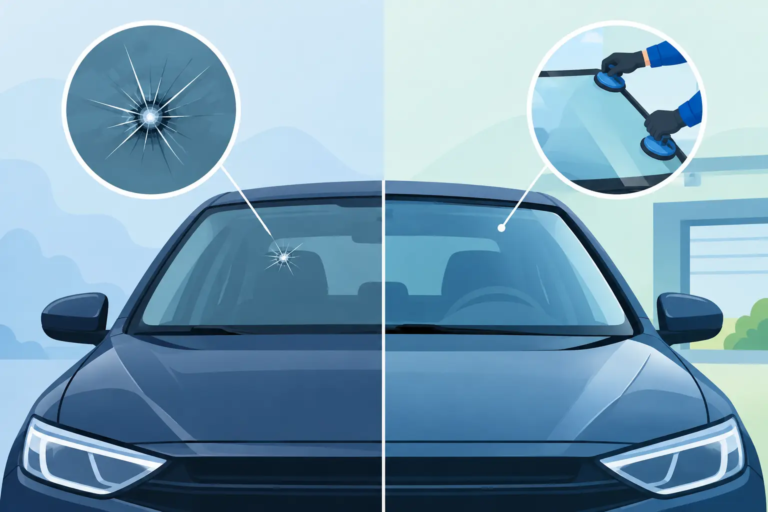
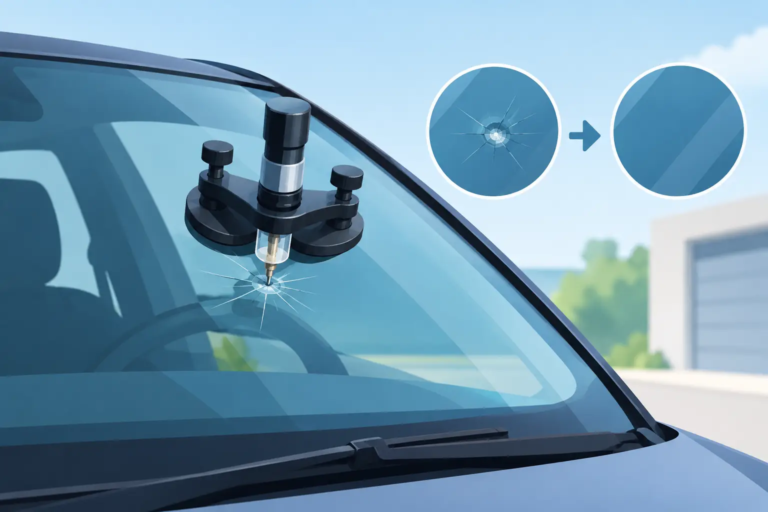
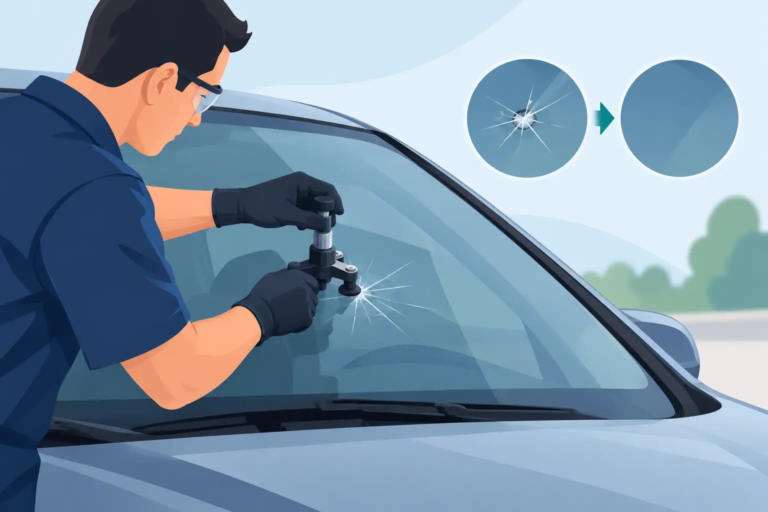
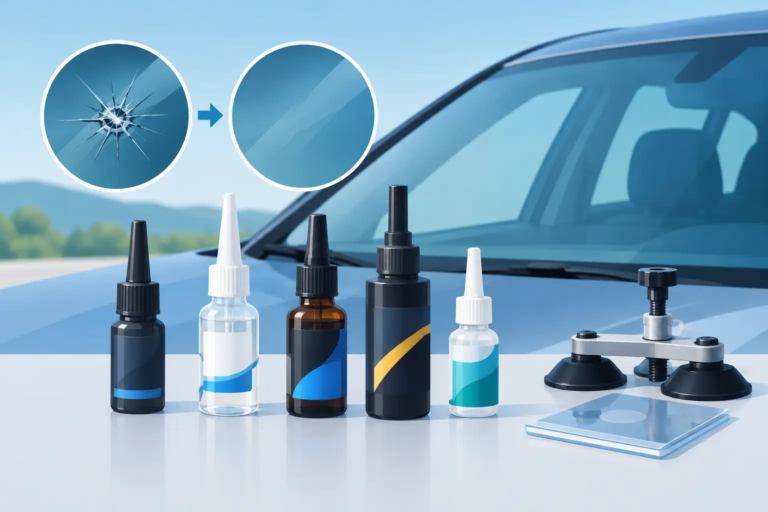
Not every chip or crack means you need a new windshield. In many cases, the damage can be repaired if it is caught early, located in the right area, and has not spread too far. A true windshield repair restores structural integrity, improves clarity, and helps stop the damage from growing.
The key point is that repairability depends on more than just size. Shape, depth, location, contamination, and how long the damage has been exposed all matter. Two chips that look similar to a driver can have very different outcomes once a specialist inspects them.
The most common damage a specialist can usually repair
Bullseye chips
A bullseye chip is one of the most common and most repair-friendly forms of windshield damage. It usually looks like a circular impact point with a dark center and a ring around it. These often happen when a rock strikes the glass straight on.
If the bullseye is relatively small and the outer edges are clean, repair is often the right move. This kind of damage responds well because the break pattern is usually contained instead of branching out in multiple directions.
Star breaks
A star break has several short cracks shooting outward from the impact point. It looks more dramatic than a bullseye, but that does not automatically mean replacement. Many star breaks can still be repaired, especially when the legs are short and the damage has not spread.
The challenge with star breaks is stability. Once those legs start growing, your repair window gets smaller. If you hit potholes, slam a door, or leave the vehicle in intense sun, the crack can extend fast.
Combination breaks
A combination break includes features of more than one chip type, such as a bullseye with star-shaped legs. These are common on busy roads where impact force hits at an angle. They can still fall under repairable windshield damage types, but they require a trained eye.
This is where experience matters. Some shops push replacement early because combination breaks are harder to handle. A repair specialist is more likely to evaluate whether the damage can be stabilized and restored instead of defaulting to a new windshield.
Small partial bullseyes and surface chips
Some chips are shallower and less defined than a full bullseye. Others may appear as small pits or minor nicks in the outer glass layer. If they have not penetrated deeply and there is no meaningful crack growth, they are often good candidates for repair.
These are the easiest to ignore because they may not seem urgent. That is a mistake. Even small chips collect moisture, dust, and debris, which can make later repair less effective.
Short cracks
Yes, some cracks can be repaired. That surprises a lot of drivers because they assume any line in the windshield means automatic replacement. In reality, short cracks can sometimes be repaired depending on their length, location, and whether they intersect edges or critical viewing areas.
This is one of the biggest reasons to call a specialist instead of guessing. A short crack that is still stable may be fixable today and non-repairable next week.
When windshield damage may not be repairable
There are limits, and a trustworthy company should be direct about them. Repair is the best option when it is safe and effective. When it is not, you should be told clearly.
Damage in the driver’s critical line of sight
Even when a repair is technically possible, the location matters. If damage sits in the driver’s primary viewing area, optical clarity becomes a bigger issue. A repaired chip will usually look much better than before, but it does not disappear completely.
For that reason, some damage in that zone may be better handled with replacement. Safety and visibility come first.
Long or spreading cracks
Once a crack travels too far, branches heavily, or reaches the edge of the windshield, repair becomes less reliable. Edge cracks are especially concerning because they affect the overall strength of the glass more quickly.
This is one of those it-depends situations. Some edge-related damage may still be evaluated for repair, but the odds drop as length and spread increase.
Contaminated or old damage
If a chip has been exposed to rain, washer fluid, road grime, or weeks of everyday driving, contamination can work its way into the break. That makes a cleaner, stronger repair harder to achieve.
This does not always rule out repair, but it can affect the final result. Fresh damage almost always gives you the best repair outcome.
Deep impact damage or multiple problem areas
If the impact damages more than the repairable layers or if the windshield has several separate breaks, replacement may make more sense. The same is true when previous damage has already weakened the glass.
For fleet vehicles, this comes up often. A windshield with multiple chips from repeated road exposure may reach a point where replacement is simply the better operational decision.
Why acting fast makes such a big difference
Windshield damage does not stay the same for long. Heat expands glass. Cold contracts it. Rough roads flex the body of the vehicle. Pressure from normal driving keeps working on the break.
That is why a repairable chip can become a replacement job in a matter of days. Fast service is not just about convenience. It protects your options. For busy drivers in Denton, Plano, Frisco, McKinney, Lewisville, Carrollton, and nearby areas, mobile repair makes that easier because you do not have to lose half a day sitting in a shop.
Why shape matters less than most people think
Drivers often ask, “What kind of chip is this?” That is a fair question, but classification is only part of the answer. The same star break can be repairable on one vehicle and not on another depending on age, contamination, and placement.
So yes, the common repairable windshield damage types include bullseyes, stars, combination breaks, partial bullseyes, surface chips, and some short cracks. But no honest specialist should promise repair based on a photo alone without considering the full condition of the glass.
What a proper windshield repair should do
A quality repair is not cosmetic only. It should strengthen the damaged area, reduce the appearance of the break, and help stop further cracking. It should also be done by someone who focuses on repair as a specialty, not as an afterthought before trying to sell replacement.
That difference matters. A specialist repair company is built to save glass when possible. That means better judgment, better technique, and a stronger chance of preserving the windshield you already have.
At SuperGlass Denton, that specialist approach is exactly the point. The goal is not to replace what can be restored. The goal is to fix damage others dismiss too quickly and do it with the convenience of mobile service.
How to know what to do next
If you have a fresh chip, a small star, a circular break, or a short crack, do not wait for it to get worse before asking questions. Keep the area dry if you can, avoid extreme temperature shock like blasting defrost on cold glass, and get it inspected as soon as possible.
The best case is simple. You catch the damage early, the repair goes smoothly, and you keep your original windshield at a lower cost than replacement. The longer you wait, the more the decision gets made for you by heat, vibration, and time.
A windshield does not have to be perfect to be repairable. It just has to be evaluated before the damage gets the upper hand.