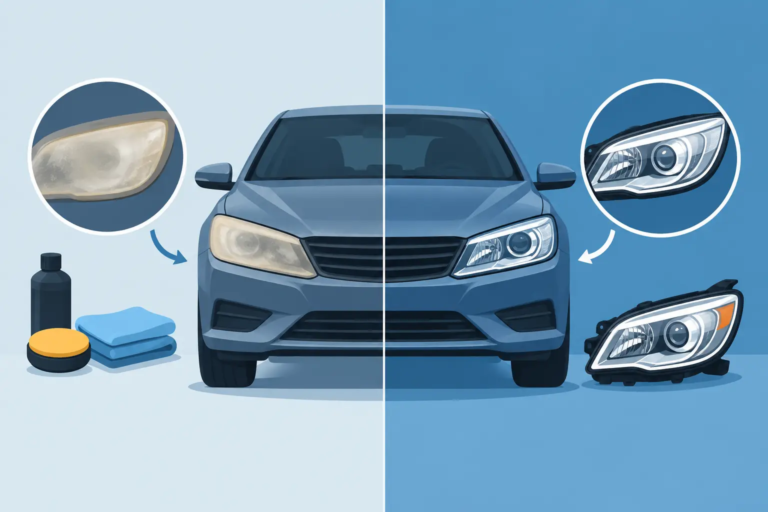
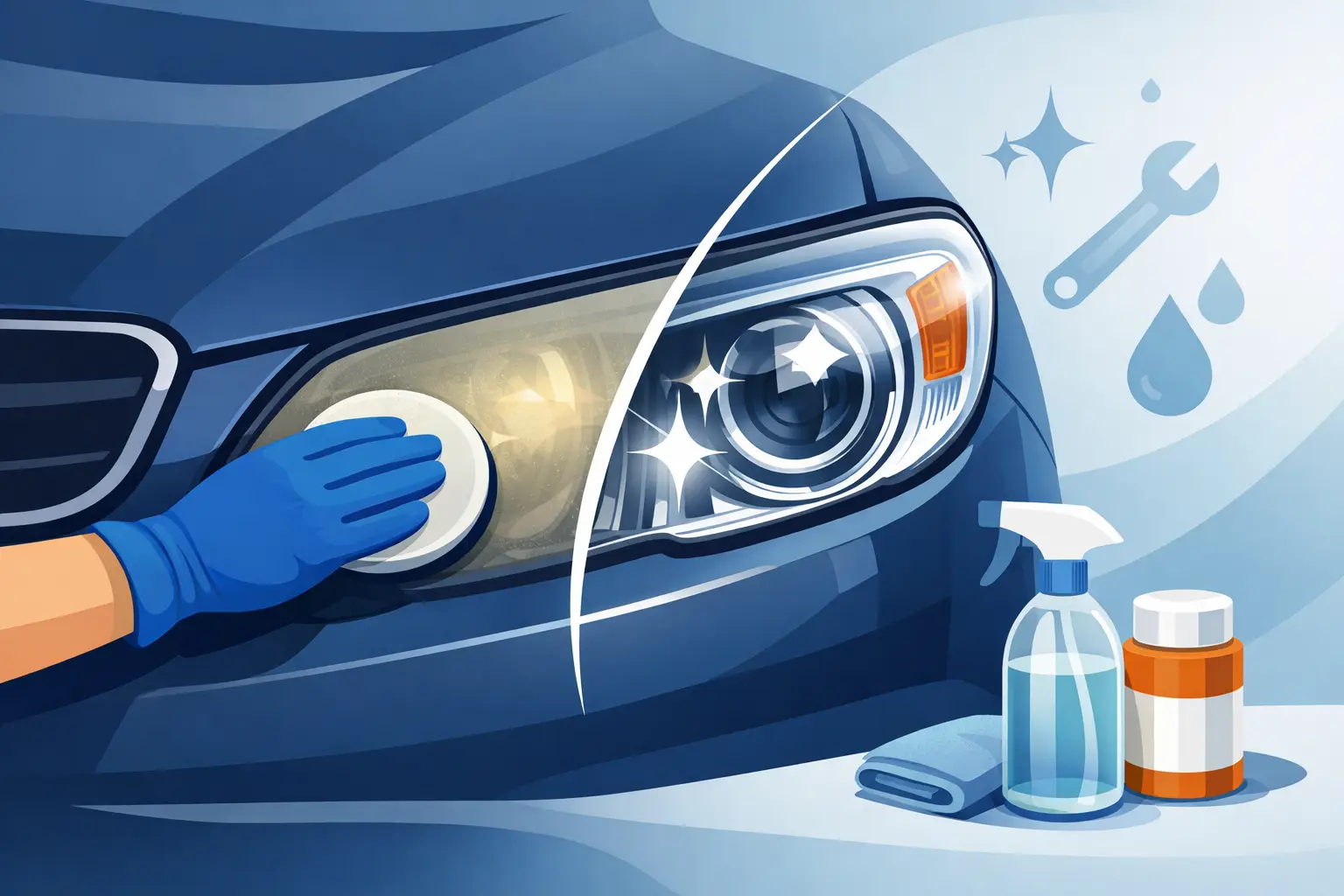
A cloudy headlight can make an otherwise well-kept vehicle look older than it is, but the bigger concern is what happens after dark. Yellowed, hazy lenses reduce the amount of usable light reaching the road. The good news is that many drivers can clear headlights without replacement when the damage is limited to the outer lens surface.
For Denton-area commuters, families, and fleet operators, restoration is often the practical answer. It costs less than installing new assemblies, avoids unnecessary parts replacement, and can restore a sharper, brighter appearance without taking your vehicle out of service for long.
Why Headlights Turn Yellow and Hazy
Most modern headlights use a clear polycarbonate lens rather than glass. Polycarbonate is durable and lightweight, but it takes a beating in North Texas. Sun exposure, heat, road grit, car-wash chemicals, and everyday driving gradually wear down the factory UV-protective coating.
Once that coating breaks down, the lens begins to oxidize. It may look yellow, chalky, cloudy, or rough to the touch. In some cases, the haze is mostly cosmetic. In others, it scatters the beam from the bulb and makes nighttime visibility noticeably worse.
That distinction matters. A clean bulb or brighter bulb cannot correct a lens that is blocking and diffusing the light before it leaves the headlight assembly.
Can You Clear Headlights Without Replacement?
Yes, in many cases. Headlight restoration works best when the cloudiness, oxidation, light scratching, and yellowing are on the outside of an otherwise intact lens. A trained technician can remove the damaged surface layer, refine the lens, polish it to clarity, and apply protection designed to slow future UV damage.
The deciding factor is not how bad the headlight looks at first glance. It is where the damage is located and whether the lens structure is still sound. A heavily yellowed lens can often be restored. A lens that is cracked, leaking, severely pitted, or cloudy on the inside may require a different solution.
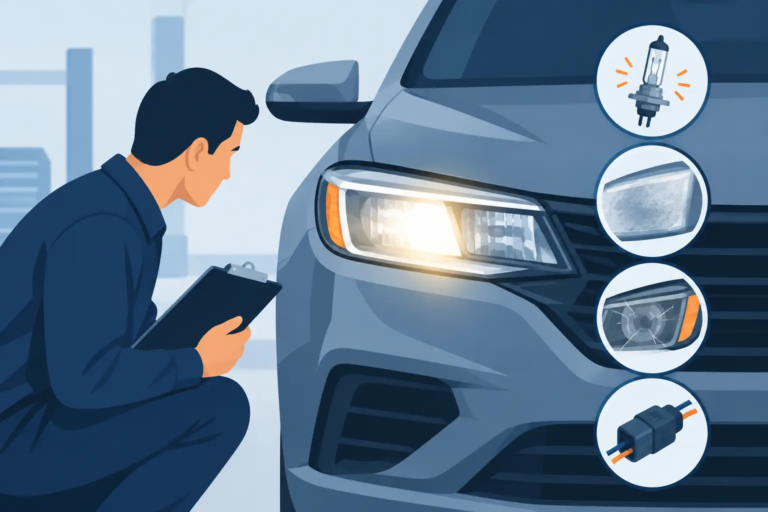
A proper inspection should check for exterior oxidation, interior moisture, broken mounting tabs, deep rock damage, and damage around the seal. Replacement is not the automatic answer just because a lens looks rough. But it is the right answer when restoration cannot safely produce a clear, dependable result.
What Professional Headlight Restoration Actually Does
Good restoration is more than rubbing a compound onto the lens until it shines for a few days. The cloudy layer has to be removed evenly. That usually involves controlled wet sanding with progressively finer abrasives, followed by polishing to bring back optical clarity.
The final protection step is where many quick fixes fall short. Once the old oxidized layer is removed, the newly exposed polycarbonate needs a quality UV-resistant coating. Without it, the lens is exposed again and can haze over much sooner than it should.
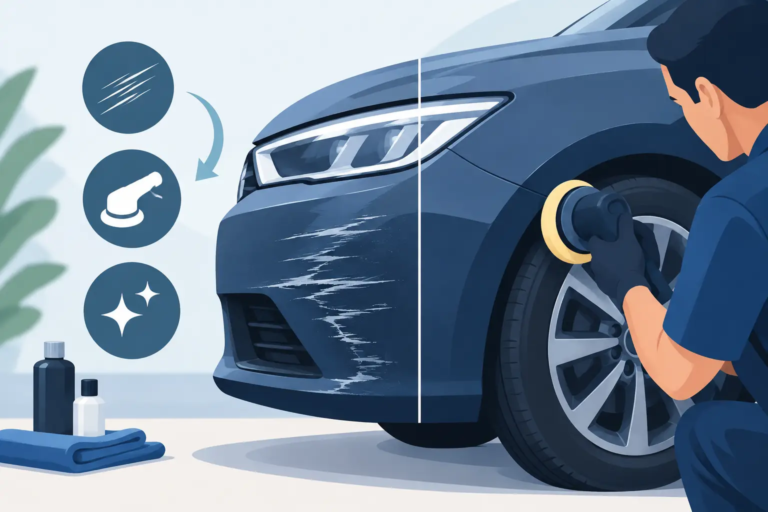
The work also needs to be done carefully around paint, trim, and the edges of the headlight. Aggressive sanding can create uneven spots, leave swirl marks, or damage nearby surfaces. A professional approach focuses on a uniform finish across the full lens, not just a clear-looking patch in the center.
Restoration can dramatically improve the appearance and performance of the headlights, but it is not magic. Deep pits from years of highway driving may remain faintly visible, and an assembly with internal damage will not become new again. A reputable specialist will set that expectation before work begins.
DIY Kits Can Help, but They Have Limits
Store-bought headlight kits are tempting because they are inexpensive and easy to find. For mild haze, a careful vehicle owner may see improvement. The trade-off is that kits vary widely in quality, and the results depend heavily on surface preparation, technique, and whether the kit includes a durable protective coating.
Toothpaste, household cleaners, and one-step polish shortcuts are even less reliable. They may make a lens look better temporarily by cleaning the surface or adding a little gloss, but they do not reliably remove oxidation or protect the lens from UV exposure. Some abrasive household methods can also create fine scratches that make glare worse at night.
DIY work can make sense for a lightly hazed vehicle when you have time, patience, and realistic expectations. Professional restoration is usually the better choice when the headlights are badly yellowed, the vehicle is being prepared for sale, visibility has become a concern, or you need consistent results across multiple fleet vehicles.
When Headlight Replacement Is the Better Call
Saving the existing assembly is smart when it is repairable. It is not smart to force a restoration when there is a safety or structural issue. Replacement may be necessary if the lens has cracks that allow moisture inside, the housing is damaged, the reflector is deteriorating, or the lens has severe internal clouding.
Condensation is especially worth checking. A small amount of temporary moisture can occur with temperature changes, but standing water, recurring fogging, or visible water lines inside the headlight point to a sealing problem. Restoring the outside of the lens will not fix water inside the assembly.
Likewise, a restored lens will not correct an electrical issue, a weak bulb, a failed ballast, or headlights aimed too low. If your headlights still seem dim after the lens is clear, those components should be inspected separately.
Clear Headlights Matter for Fleets Too
For commercial vehicles, cloudy headlights are not just a cosmetic maintenance item. Trucks, school buses, rental vehicles, and service fleets spend more time on the road, often before sunrise or after dark. Dull lenses can affect driver confidence, vehicle presentation, and regular inspection readiness.
Replacing headlight assemblies across a fleet can become expensive quickly, especially when the housings are otherwise in good condition. Restoration offers a practical middle ground: improve clarity, protect usable components, and reduce downtime. Mobile service is particularly useful because work can be completed where vehicles are parked instead of sending each one to a shop.
How to Keep Restored Headlights Clear Longer
After restoration, regular washing helps remove road film and contaminants before they bake into the lens. Avoid harsh cleaners and dry scrubbing, which can add fine scratches. Parking in a garage or covered area when possible also reduces UV exposure, though that is not realistic for every driver or fleet.
The biggest factor is the quality of the protective finish applied after restoration. A lens that has been properly refinished and coated has a much better chance of staying clear than one that was simply polished. If haze begins to return, addressing it early is usually easier than waiting until the lens becomes heavily oxidized again.
For drivers across Denton and nearby North Texas communities, SuperGlass Denton provides mobile headlight restoration for lenses that deserve repair rather than unnecessary replacement. The goal is straightforward: assess the condition honestly, restore what can be restored, and help you get back to safer nighttime driving with less cost and disruption.
Before you spend money on new headlight assemblies, have the lenses evaluated. A clear answer about whether the damage is external, internal, repairable, or beyond repair can save you from guessing and help you make the right call for your vehicle.