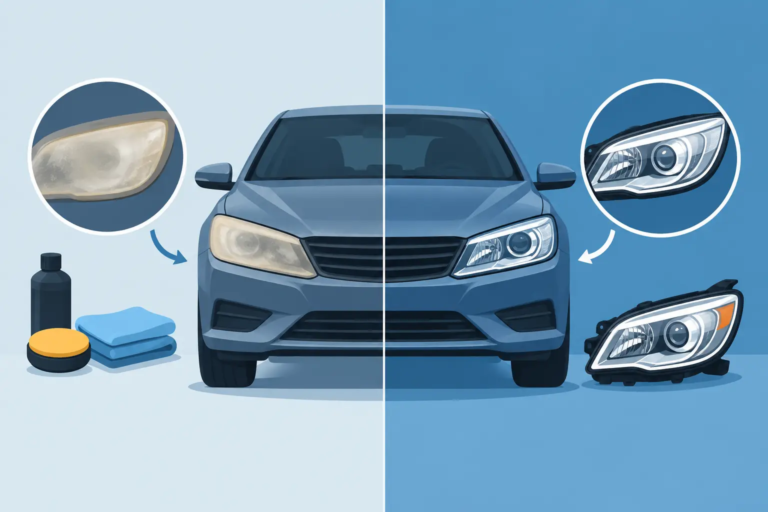

Cloudy headlights do more than make a vehicle look worn out. They reduce usable light at night, weaken the appearance of an otherwise well-kept car, and can become a problem at inspection time. This headlight coating durability review explains what actually determines whether restored headlights stay clear – especially under the hard sun, heat, road grit, and sudden weather changes North Texas drivers know well.
The short answer is that a quality protective coating can make a major difference. But no coating lasts forever, and the restoration work beneath it matters just as much as the coating itself. A quick polish may look good for a few weeks. A proper restoration that removes damaged material and applies a suitable UV-resistant coating is built for a much longer result.
What Headlight Coating Durability Really Means
Most modern headlight lenses are made from polycarbonate plastic. The factory applies a clear UV-resistant layer to protect that plastic. Over time, sunlight breaks down the original protection. Heat, washing, chemicals, highway debris, and ordinary wear all add to the damage.
That is when headlights turn yellow, hazy, chalky, or rough to the touch. The discoloration is not always just sitting on the surface. In many cases, the damaged factory coating itself is failing. Simply buffing the lens can temporarily improve clarity, but it does not automatically restore long-term UV protection.
Coating durability is the ability of the new protective layer to keep doing its job after restoration. A durable coating should help the lens resist renewed oxidation, maintain clarity, and slow the return of yellowing. It should also bond evenly, cure correctly, and hold up through routine washing and real driving conditions.
Why North Texas Is Hard on Headlight Coatings
Denton, Plano, Frisco, McKinney, Lewisville, Carrollton, and surrounding communities put vehicles through demanding conditions. Long stretches of direct Texas sun are the biggest factor. UV exposure attacks unprotected plastic, and high summer temperatures accelerate the process.
Then there is everything else: dust, pollen, road film, construction debris, bugs, storm runoff, and frequent temperature swings. A vehicle parked outside at home or work gets far more exposure than one kept in a garage. Fleet vehicles, school buses, work trucks, and rental cars often have it even tougher because they spend more hours on the road.
That does not mean a coating will fail quickly. It means the product and process need to match the environment. A cheap wipe-on product may be fine as a short-term cosmetic improvement. It is not the same as a professionally applied protective coating on a properly prepared lens.
Preparation Determines the Result
The most common reason restored headlights haze again too soon is incomplete preparation. If yellowed oxidation, failed clear coat, or fine scratches remain underneath, the new coating is being asked to cover a problem instead of protect a clean surface.
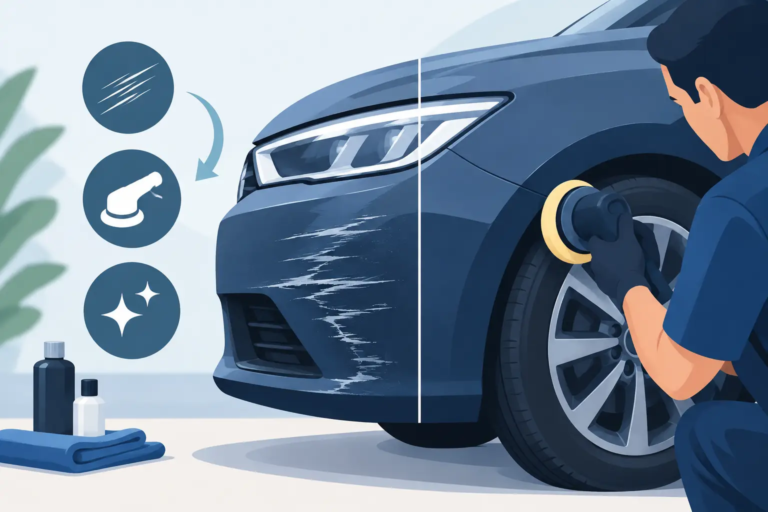
A professional restoration should address the lens in stages. The damaged layer needs to be removed evenly, the surface refined to restore optical clarity, and the lens cleaned before coating. Skipping those steps may save a few minutes, but it can leave uneven appearance, poor adhesion, or early failure.
This is also why do-it-yourself kits produce mixed results. Some drivers get a decent short-term improvement, particularly on light oxidation. Others see streaking, peeling, or a return of haze because the lens was not fully corrected or the protectant was not applied under the right conditions.
Headlight Coating Durability Review: What to Expect
For most drivers, a professionally restored and coated headlight should provide noticeably longer protection than polishing alone. The exact lifespan depends on the vehicle, the amount of outdoor exposure, the condition of the lenses before service, and how the vehicle is maintained afterward.
It is better to think in terms of condition and protection than promises that every car will look brand-new forever. A daily-driven vehicle parked outdoors in Denton will age differently than a weekend vehicle stored in a garage. A truck that runs highway routes all day will face more abrasion and contamination than a family sedan used for local errands.
A good coating earns its value by delaying the repeat work that comes with unprotected polishing. It also keeps the finish more consistent. Instead of rapidly returning to a dull, yellow look, the lens has a protective barrier designed to take the abuse first.
There are trade-offs. The lowest-cost restoration option may improve appearance today but need attention sooner. A more complete service takes additional care because it addresses oxidation and applies protection correctly. For drivers planning to keep their vehicle, fleet managers focused on presentation, or anyone who drives regularly after dark, the longer-lasting approach is usually the better value.
Signs a Previous Coating Is Failing
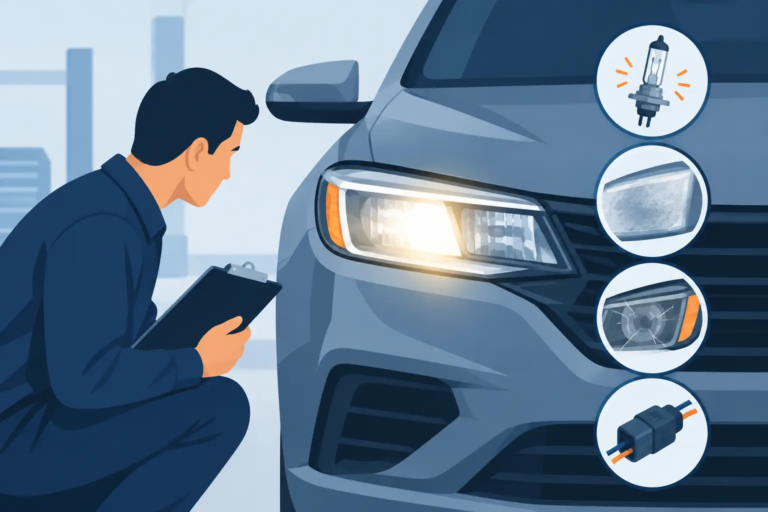
You do not need special tools to spot a coating problem. Look closely at the lenses in direct daylight and after washing the vehicle. A failing coating may show up as:
- Yellowing that returns in patches rather than evenly across the lens
- A dull, chalky, or rough surface that does not clean away
- Peeling, flaking, or cloudy areas around edges and corners
- Fine cracking that looks like crazing beneath the surface
- Reduced nighttime light output, even with good bulbs installed
If the lens is deeply cracked or damaged from the inside, restoration may not be the right answer. An experienced technician should tell you that plainly. Repair is about saving components when it makes sense, not forcing a repair when replacement is the safer choice.
How to Help a Coating Last Longer
After restoration, basic care goes a long way. Wash the headlights with normal automotive soap rather than harsh household cleaners. Avoid dry-wiping dust and grit across the lenses, which can create fine scratches. When possible, park in covered areas or use shade, particularly during the hottest months.
Be careful with aggressive compounds and solvent-based products around the headlights. Some products intended for heavy cleaning or detailing can dull plastic or weaken a coating over time. If you use a car wash, a standard wash is generally preferable to repeated abrasive treatment aimed directly at the lenses.
Maintenance does not need to become a project. The goal is simply to avoid stripping or scratching the protection that was applied. If you notice haze starting to return, get it checked early. Minor surface wear is easier to address than advanced oxidation that has been allowed to build back up for years.
When Professional Restoration Is Worth It
Professional restoration is a strong option when headlights are yellow, foggy, visibly scratched, or reducing confidence on night drives. It is particularly worthwhile before selling a vehicle, returning a lease, preparing a fleet unit, or trying to avoid the cost of headlight replacement.
Replacement assemblies can be expensive, and cheaper aftermarket units do not always match factory fit, light pattern, or build quality. If the original lenses are structurally sound, restoring them can preserve the components already designed for your vehicle.
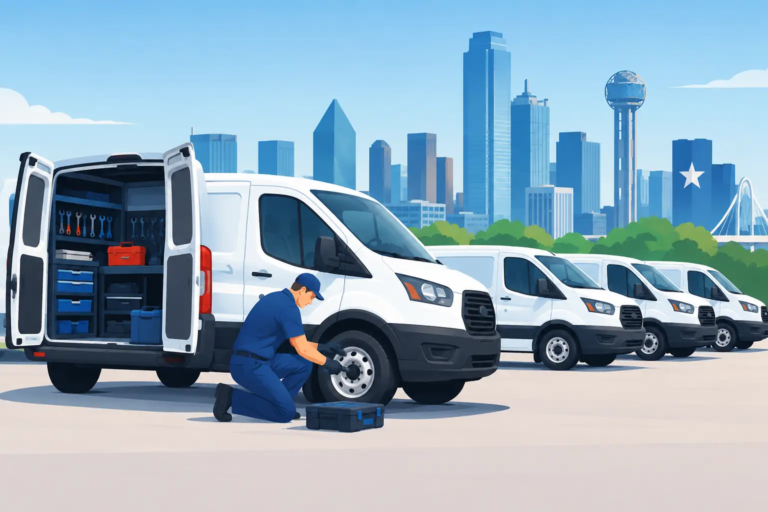
For mobile customers across Denton and nearby North Texas communities, convenience matters too. SuperGlass Denton brings specialist restoration service to homes, workplaces, and fleet locations, so drivers do not have to lose a day sitting at a shop. The focus is straightforward: determine whether the lenses can be restored, perform the work professionally, and protect the finish for the road ahead.
Clear headlights are a safety and value issue, not just a cosmetic one. If yours are starting to fade, deal with them while restoration is still practical – before a manageable surface problem turns into a bigger replacement decision.