A headlight can switch on and still be a problem at inspection. That surprises plenty of drivers who pull in with both lights working, only to learn that weak output, cloudy lenses, poor aim, or the wrong bulb can count against them. Understanding the top reasons headlights fail inspection gives you a chance to fix a small issue before it becomes a failed check, a safety concern, or an expensive replacement decision.
For drivers and fleet operators around Denton and North Texas, visibility is not optional. Dark rural roads, wet pavement, early commutes, and busy highways all demand headlights that put usable light where it belongs. Requirements vary by state, inspection program, and whether a vehicle is commercial, but the condition of your headlights is always worth taking seriously.
The Top Reasons Headlights Fail Inspection
Burned-out bulbs and partial lighting failures
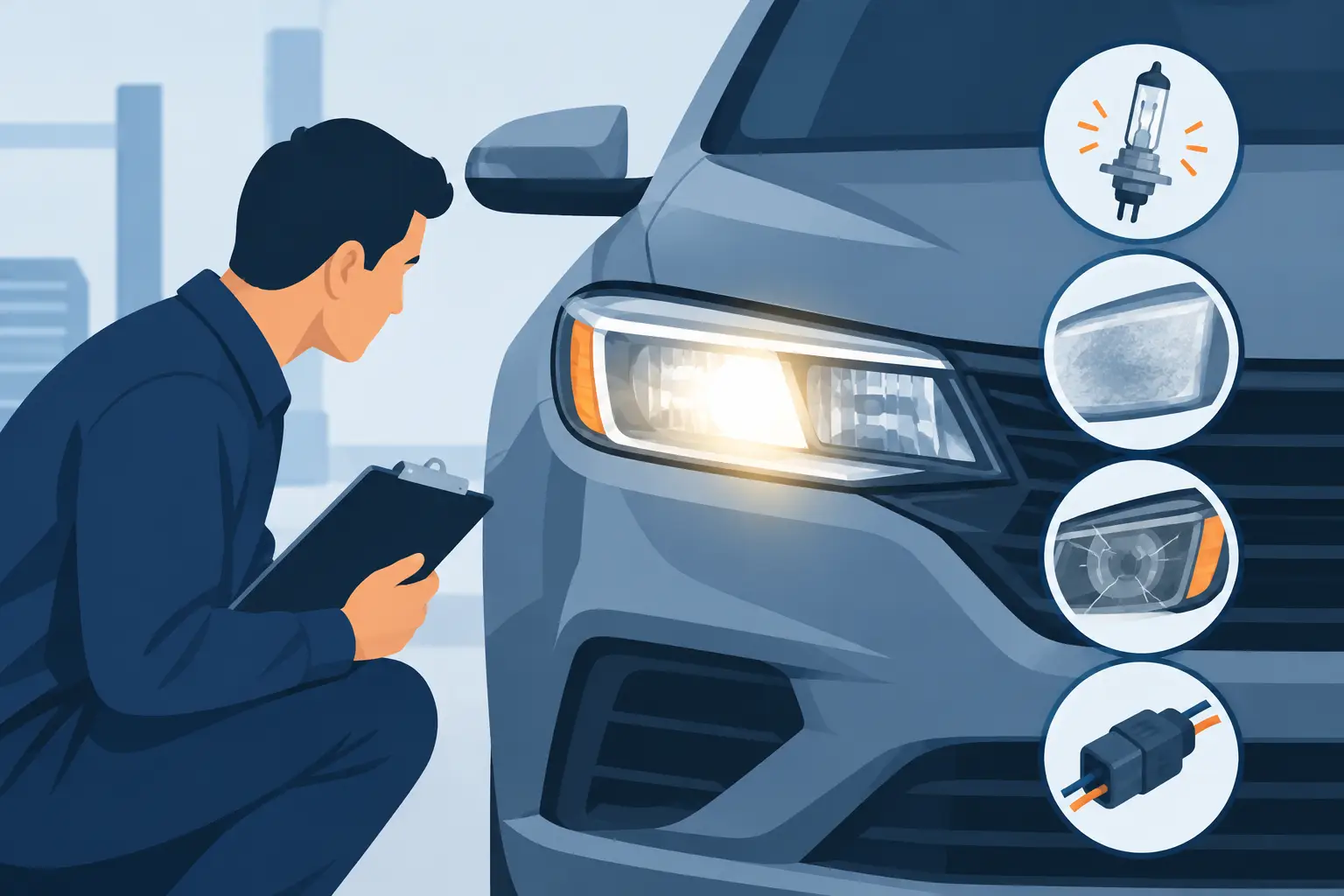
The clearest failure is also the easiest to miss: one or more required lights do not work. A low beam may be out while the high beam still works, or one side may illuminate intermittently because of a loose connection, corroded socket, failing relay, or worn wiring.
Inspectors may check low beams, high beams, parking lights, turn signals, and sometimes daytime running lights depending on the program. A light that flickers can be just as concerning as one that stays dark. If you have to tap the headlight housing or wiggle the switch to make a lamp come on, get it checked before inspection day.
Cloudy, yellowed, or heavily oxidized lenses
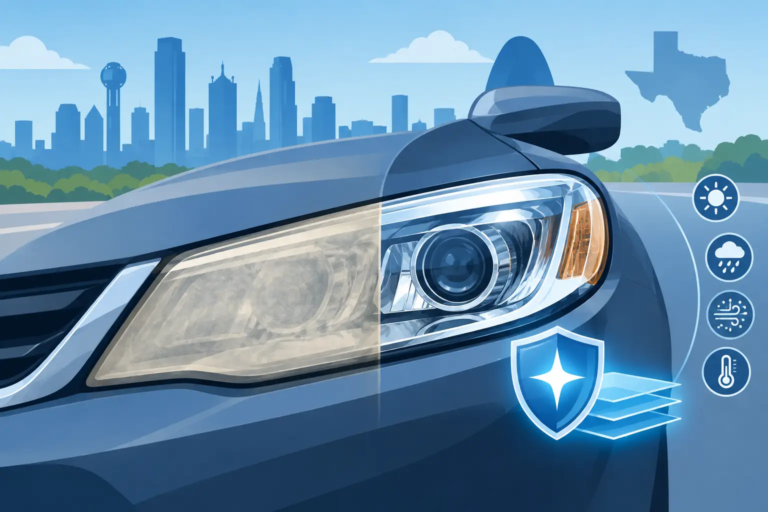
A bulb can be perfectly good and still produce poor lighting through a damaged lens. Modern headlight assemblies are usually made from polycarbonate plastic. Sun exposure, road debris, heat, and weather gradually break down the protective surface, leaving the lens hazy, yellow, rough, or chalky.
That haze scatters light instead of focusing it down the road. From the driver’s seat, the difference may creep up slowly enough that you do not notice it. Compared with a clear lens, though, an oxidized one can sharply reduce usable nighttime visibility and create glare for oncoming traffic.
This is one of the most common issues that can often be addressed without replacing the entire assembly. The catch is that a quick wipe-down or a do-it-yourself polish may improve appearance temporarily without removing the damaged layer or protecting the lens afterward. Professional headlight restoration is designed to correct the surface properly and leave the lens clearer for the long haul.
Headlights that are aimed too high, too low, or unevenly
Headlights are meant to illuminate the road ahead without shining into other drivers’ eyes. A hard pothole hit, minor collision, damaged mounting tab, suspension change, or previous repair can throw that aim off.
Lights aimed too low may make the vehicle technically illuminated but unsafe at normal road speeds. Lights aimed too high can blind oncoming drivers and often draw immediate attention during an inspection. Uneven beams are another red flag, especially when one headlight points noticeably higher, lower, or farther to one side than the other.
Replacing a bulb or restoring a lens does not automatically correct alignment. If the beam pattern looks strange against a garage door or wall, or other drivers flash their high beams at you when yours are on low, have the aim inspected.
Cracked housings, moisture, and damaged mounting points
A cracked headlight lens is more than a cosmetic issue. Cracks let in water and dirt, which can damage the bulb, reflector, wiring, and internal electronics. Condensation that clears quickly can occur with normal temperature changes, but standing water, heavy fogging, or repeated moisture inside the assembly points to a failed seal or damaged housing.
Inspectors may also notice a headlamp assembly that is loose, taped in place, or missing mounting hardware. Besides looking unfinished, a loose assembly can shift out of aim while driving. If an impact has cracked the housing or broken its tabs, determine whether repair is safe and practical rather than assuming the bulb is the only problem.
Noncompliant bulbs, colors, and aftermarket modifications
Brighter is not always better. Bulbs that are not designed for the housing, improperly installed HID or LED conversions, colored films, tinted covers, and nonstandard beam colors can all create inspection trouble. They can also make a vehicle less safe by scattering light, reducing output, or creating glare.
Many aftermarket LED bulbs claim an easy upgrade, but the results depend on the original reflector or projector design. An LED bulb placed in a housing built for halogen may not put light in the correct pattern. It may look intensely bright when viewed head-on while actually leaving dark spots on the road.
Stick with the correct bulb type and wattage for your vehicle unless a qualified professional confirms a compliant upgrade. White or amber lighting requirements can vary by location and function, so avoid blue, purple, smoked, or decorative lighting if your goal is road-legal visibility.
Weak light output from aging bulbs or electrical problems
Not every failing bulb goes completely dark. Halogen bulbs gradually lose output as they age, and both lamps may dim so evenly that the driver assumes the lighting is normal. A dirty lens, tired bulb, weakened alternator, poor ground, or voltage issue can make the problem worse.
Look for dim lights at idle, a noticeable difference between the left and right beam, or headlights that brighten and dim as other accessories are used. Those signs call for more than a new bulb. An electrical diagnosis may be needed to identify the source and prevent a repeat failure.
What to Check Before You Arrive
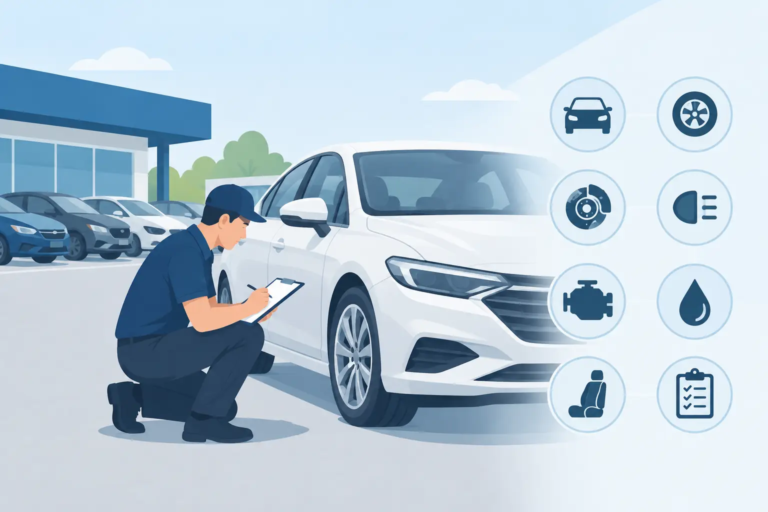
Give your headlights a simple inspection a few days before your appointment. Park on level ground facing a wall or garage door at dusk. Turn on low beams, then high beams, and walk around the vehicle. Check that both sides illuminate, the lens surfaces are clear, and the beams appear even.
Also look closely for moisture, cracks, loose trim, and yellowing. Do not forget to test turn signals and parking lights. If you drive a truck, manage a rental fleet, or operate school buses, make this part of a routine pre-trip or preventive maintenance process. Small headlight issues spread quickly across a fleet when vehicles spend long hours in the sun and on the road.
A quick visual check will not replace an official inspection, but it catches the issues drivers can address before they lose time. It also helps separate a simple bulb replacement from a lens-restoration, alignment, housing, or electrical problem.
When Restoration Makes More Sense Than Replacement
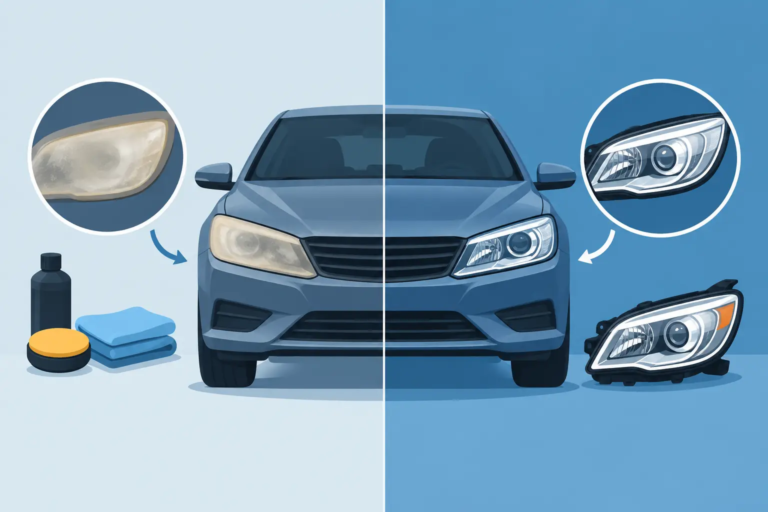
A cloudy lens does not automatically mean you need a new headlight assembly. Replacement can be necessary when a housing is badly cracked, leaking, broken internally, or no longer mounts securely. But if the assembly is structurally sound and the main problem is exterior oxidation, restoration is often the more cost-conscious option.
That matters because replacement assemblies can be costly, and cheaper aftermarket units do not always match the fit, durability, or beam quality of the original equipment. Restoring the lenses you already have can improve appearance and light transmission while keeping a good factory assembly in service.
SuperGlass Denton provides mobile headlight restoration for drivers and fleets that want a practical fix without giving up a workday at a shop. A specialist can assess whether the lens condition is repairable or whether damage points to a larger issue. That honest distinction matters: restoration helps with surface oxidation, not a broken housing or a failed electrical circuit.
Do Not Wait for the Inspection Failure
If your headlights look dull, uneven, dim, or damaged, handle them before your next required check or nighttime drive. Clear lenses, correct bulbs, stable housings, and properly aimed beams make inspections easier, but the bigger payoff is seeing the road clearly when conditions get difficult.