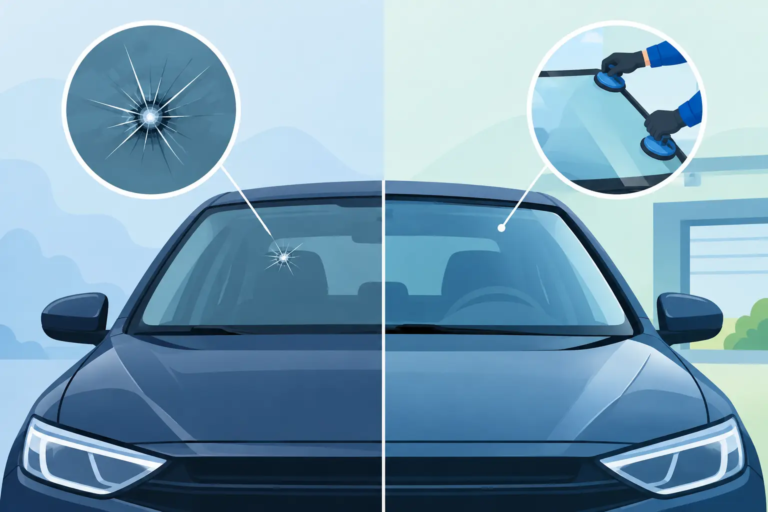

You spot a small chip on the windshield after a highway drive, and by the time you get a closer look, it has tiny legs shooting out from the center. That is the moment most drivers ask the same question: can a star break be repaired? In many cases, yes – but only if the damage is handled early and evaluated by someone who repairs windshields every day.
A star break is one of the most common types of windshield damage we see across Denton and North Texas. It usually happens when a rock or road piece strikes the glass and creates a central impact point with short cracks radiating outward like a star. Some star breaks are excellent repair candidates. Others are already too far gone by the time the driver notices them. The difference comes down to size, depth, location, age, and whether moisture or dirt has gotten into the break.
Can a Star Break Be Repaired or Does It Need Replacement?
The honest answer is: it depends on the break itself, not just the fact that it is a star break.
A clean, fresh star break that is small enough and not in a critical viewing area can often be repaired successfully. The goal of repair is to restore structural integrity, stop the damage from spreading, and improve the appearance of the chip. A quality repair will not make the damage disappear completely, but it should leave the windshield stronger and the break far less noticeable.
If the break is too large, has long crack legs, reaches the edge of the windshield, or sits in a spot that affects driver visibility, replacement may be the better call. That is where specialist judgment matters. A general glass company may lean straight toward replacement. A true repair specialist looks first at whether the windshield can still be saved.
That matters for cost, time, and convenience. Repair is typically faster and less expensive than full replacement, and it lets you keep the factory windshield that came with your vehicle.
What Makes a Star Break Repairable?
The best repair candidates usually share a few traits. The break is relatively small. The legs of the star are short and contained. The impact point is not badly crushed. The damage has not spread into a long crack. And the break has stayed fairly clean and dry.
Location also matters. A star break in the middle or passenger side of the windshield is often easier to approve for repair than one directly in the driver’s line of sight. Even if a repair is structurally sound, no professional wants to leave a visual blemish in a place that could distract the driver.
The age of the damage matters more than people think. A chip that happened this morning is usually a better repair candidate than one that has been through rain, dust, car washes, and a week of Texas temperature swings. Once contamination gets into the break, the final result may not be as clean or as strong.
That is why waiting is risky. Star breaks often look stable at first, then spread without much warning when the glass heats up, cools down, or flexes from normal driving.
Size, depth, and placement all matter
There is no one-size-fits-all rule that applies to every windshield, but there are clear limits. If the damage is deep enough to affect more than the outer layer of laminated glass, or wide enough that the structural loss is significant, repair may not be the right answer. The same is true when multiple fracture lines have expanded beyond what resin can reliably stabilize.
Placement near the windshield edge is another red flag. The edges carry more structural stress, so damage there is more likely to spread. For fleet vehicles, trucks, and buses that spend long hours on the road, that stress can be even more of a factor.
Why fast action gives you the best chance
Drivers often put off chip repair because the windshield still looks usable. That delay is what turns a simple fix into a replacement job.
A star break is unstable by nature. Those little legs are already cracks trying to travel farther. Heat, cold, potholes, slamming the door, and direct sun can all make the damage grow. Once that happens, repair options shrink fast.
Fast service matters because early repair seals the break before contamination and spreading take over. For busy commuters and families, mobile service makes that easier. You do not have to lose half a day sitting in a shop just to protect the windshield from getting worse.
How a professional star break repair works
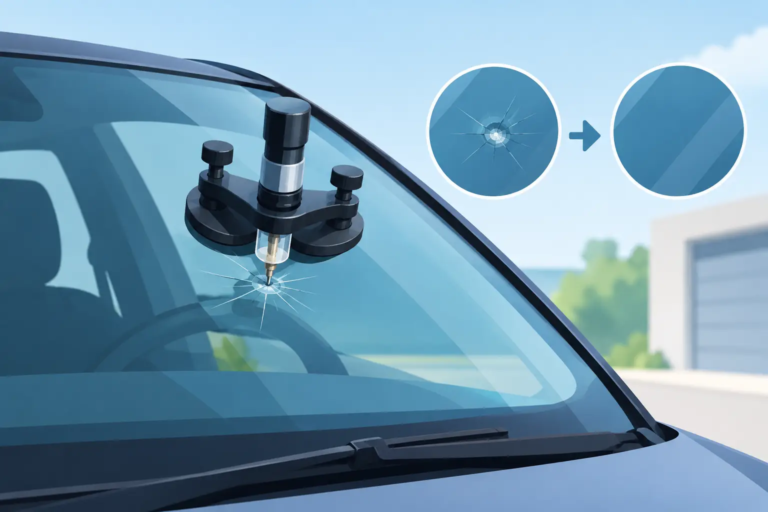
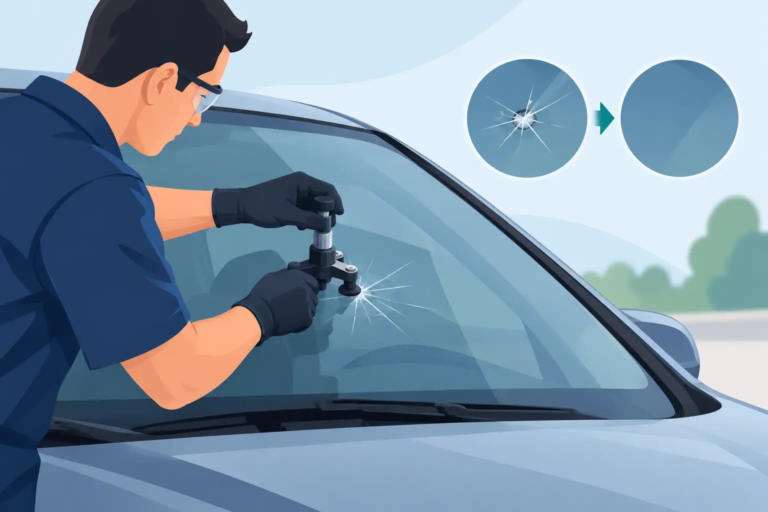
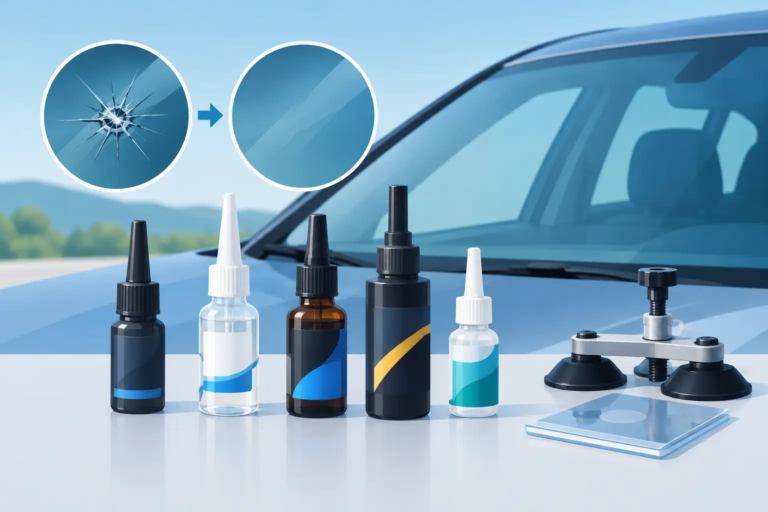
A proper windshield repair is more than filling a chip with resin and hoping for the best. The break needs to be inspected first to confirm it is a safe candidate for repair. Then the technician cleans the damaged area, removes trapped air from the break, and injects a specialized resin designed to bond with the glass.
That resin flows into the fracture lines and impact point. Once cured, it strengthens the damaged area and helps prevent further spreading. The technician then finishes and polishes the repair so the surface is smooth.
When done correctly, the repair improves both strength and appearance. It does not restore the windshield to brand-new cosmetic perfection, and any honest specialist should tell you that upfront. But it should leave you with a safer, more stable windshield and a much better outcome than letting the damage continue.
What repair can and cannot do
Repair can stop many star breaks from turning into full cracks. It can restore a large portion of the windshield’s strength. It can reduce the visible mark left by the impact.
What it cannot do is erase every sign of damage. You may still see a faint outline, a small pit, or slight shadowing depending on the original break. That is normal. The real win is saving the windshield and avoiding unnecessary replacement.
When replacement is the smarter move
Not every windshield should be repaired, and a trustworthy specialist should be clear about that.
If the star break has already spread into a long crack, if the damage is severe near the edge, if there are multiple connected breaks, or if the driver’s direct vision area would be left too distorted, replacement may be the safer option. The same is true if the inner layer is affected or the damage compromises the windshield beyond accepted repair standards.
This is where experience matters. You want someone who knows the difference between a windshield that can be saved and one that should not be pushed past its limit. A bad repair attempt on non-repairable damage wastes time and money and may still lead to replacement later.
Can a star break be repaired on every type of vehicle?
The basic repair process is similar across cars, trucks, SUVs, and many commercial vehicles, but the answer is still not always yes.
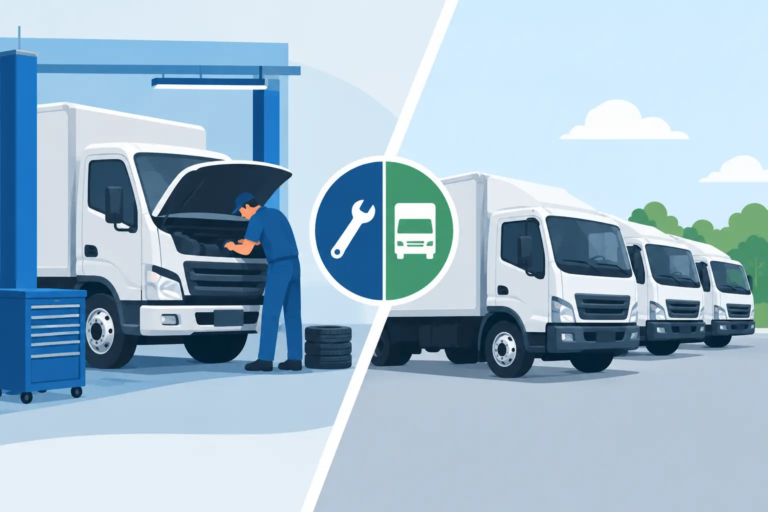
Vehicle type changes the stress load on the glass, the windshield angle, and sometimes the location of safety systems. For fleet managers, repair decisions also need to account for uptime. A fast, well-executed repair on a service vehicle or rental unit can prevent bigger scheduling problems later. For school buses and work trucks, getting damage handled early helps avoid the cost and disruption of taking the vehicle out of service for a full windshield replacement.
That is one reason specialist mobile repair is so valuable. It keeps the process practical for both individual drivers and businesses that cannot afford delays.
The biggest mistake drivers make with star breaks
The biggest mistake is assuming a small break can wait.
The second biggest mistake is thinking every glass company evaluates repairs the same way. They do not. Some businesses are built around replacement. A repair specialist is built around saving the glass when it can and being honest when it cannot.
That difference matters if your goal is to avoid unnecessary cost and downtime. At SuperGlass Denton, that repair-first mindset is exactly what local drivers and fleet customers count on.
If you have a star break, the smartest move is simple: get it looked at before the weather, the road, or one hard bump makes the decision for you. A small repair window does not stay open for long.