
You usually do not notice the damage when it happens. It starts with a sharp ping from a small rock, a hard temperature swing, or pressure in the wrong spot. Then a day or two later, that tiny mark has turned into a crack stretching across your view. The top causes of windshield cracks are not always dramatic, but they are common, and in North Texas they can turn a repairable windshield into a replacement faster than most drivers expect.
For everyday drivers, commuters, and fleet operators, the real issue is not just what caused the crack. It is whether the damage can still be repaired before it spreads too far. That is where timing matters.
The top causes of windshield cracks drivers see most often
The most common cause is road debris. Loose gravel, small stones, construction material, and tire-thrown debris hit windshields every day on busy roads around Denton, Plano, Frisco, McKinney, Lewisville, and Carrollton. A direct impact may leave a chip that looks minor at first, but the glass has already been compromised.
A windshield is built from layered safety glass, so it does not usually shatter from one small hit. But once the outer layer is damaged, normal driving vibration, heat, and pressure can help that chip expand. This is why a windshield that looked fine after the morning commute suddenly has a spreading crack by evening.
Construction zones make this even more likely. Trucks carrying aggregate, uneven pavement, and high-speed traffic create the perfect setup for windshield damage. If you drive a lot for work or manage a fleet, exposure alone raises your risk.
Rock chips are the usual starting point
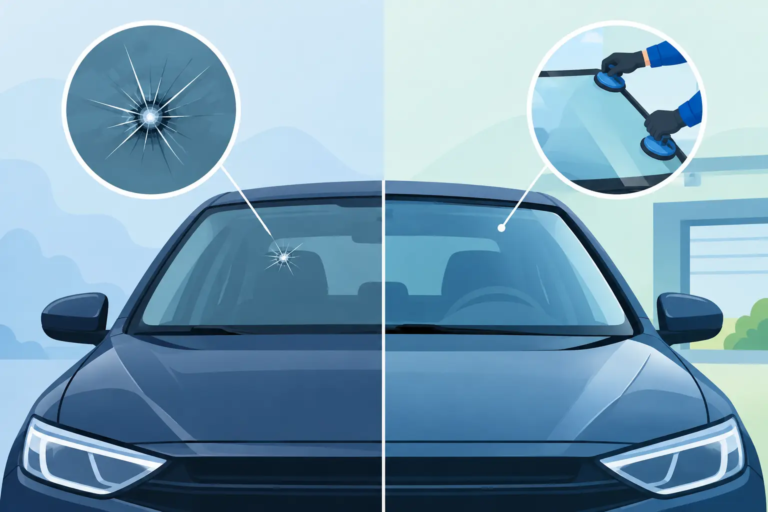
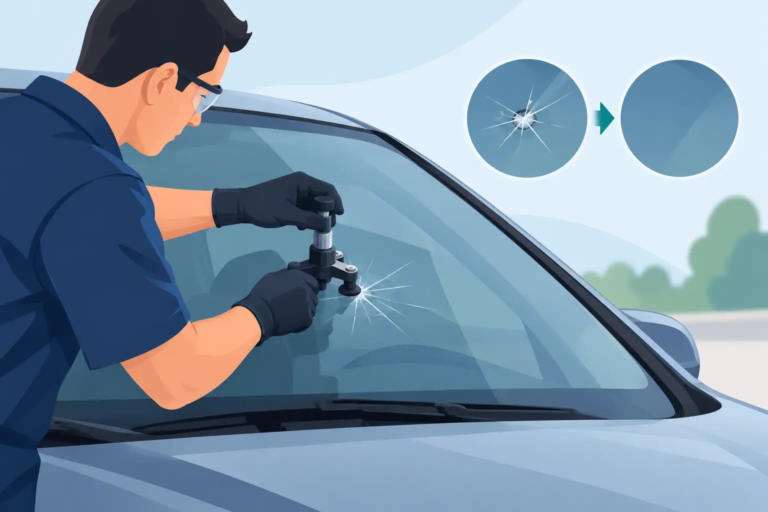
Many full cracks begin as chips, bulls-eyes, or star breaks. Drivers often wait because the damage seems cosmetic, but that is a gamble. The smaller the damaged area, the better the chance of saving the glass with a proper repair.
That trade-off matters. Waiting might feel convenient in the moment, but it often leads to more cost, more downtime, and fewer repair options later.
Temperature changes put stressed glass over the edge
Texas weather is hard on windshields. A hot afternoon followed by a cool night can stress damaged glass. So can blasting the air conditioner on a windshield that has been baking in the sun or using defrost heat on a cold morning when a chip is already present.
Temperature does not always create the original damage, but it is one of the biggest reasons existing damage spreads. Glass expands and contracts. If there is already a weak point, that movement can turn a small chip into a long crack.
This is one of those cases where the cause is not obvious to the driver. People think, “I did not hit anything today,” but the chip from last week finally gave way because the glass was under thermal stress.
Heat and cold do not affect every crack the same way
It depends on the size and location of the damage. A chip near the edge of the windshield is more likely to spread because the edges already handle a lot of structural stress. Add heat, cold, or rapid temperature change, and that damage can move quickly.
A chip in the center may remain stable longer, but longer does not mean safe to ignore.
Poor installation can create hidden stress
Not every windshield crack comes from the road. Sometimes the problem begins with bad installation. If a windshield was installed unevenly, bonded incorrectly, or placed under tension, cracks can develop without a major impact.
This is more common than many drivers realize, especially after low-cost replacement work where speed matters more than precision. A windshield has to fit properly within the vehicle frame. If it does not, pressure builds over time and the glass can crack from normal driving, body flex, or weather changes.
You may notice this when a crack seems to appear for no clear reason. In some cases, there was a reason. It just started before the glass ever saw the road.
For business vehicles, this matters even more. Trucks, vans, and buses deal with more vibration, more miles, and more body movement than the average passenger car. If the glass is installed poorly, those conditions expose the weakness fast.
Vehicle frame flex and rough roads add pressure
Windshields are not floating independently. They are part of the vehicle structure. When the frame twists over potholes, uneven roads, railroad crossings, or job site terrain, the windshield absorbs some of that stress.
On a healthy windshield, that is usually not a problem. On a windshield with existing damage, it can absolutely be the reason a chip becomes a crack.
North Texas drivers deal with plenty of rough pavement, highway debris, and expansion joints. Fleet vehicles deal with even more. The heavier the use, the more often glass is exposed to vibration and structural movement.
That does not mean every crack is avoidable. It does mean early repair matters, because weakened glass has less ability to handle normal road stress.
Slamming doors can spread existing damage
This one surprises people. A hard door slam can create enough vibration and air pressure change inside the cabin to help a chip spread, especially if the windshield already has damage near the edge.
The door did not cause the original break, but it may be the moment the damage becomes visible. The same goes for rough tailgate closures on trucks and repeated heavy use in commercial vehicles.
It sounds minor, but it is real. Once the glass is compromised, ordinary vehicle use becomes part of the problem.
Existing damage changes everything
A strong windshield can handle a lot. A damaged one cannot. That is why the smartest move is not guessing whether a chip will hold. It is getting a specialist to look at it while repair is still possible.
Pressure from improper handling can crack the glass
Leaning on the windshield during cleaning, putting pressure near a chip, or using the wrong tools around the glass can make damage worse. This is less common than road debris, but it happens, especially with already weakened glass.
Even something simple like pressing too hard while scraping off ice or trying to clear stuck debris near the edge can add stress in the wrong place. Windshields are durable, but they are not meant to absorb point pressure once damaged.
For busy drivers, this is a reminder that DIY handling has limits. A chip is not the time to test whether the glass can take one more push, one more wash, or one more week.
Minor accidents and body stress are major crack triggers
You do not need a major collision to crack a windshield. A curb strike, a fender bender, or a hard bump can shift stress through the vehicle body and into the glass. If the windshield already has a chip, that impact may be enough to spread it.
Sometimes the crack appears after the incident, not during it. That delay makes people think the two are unrelated. In reality, the glass was weakened first and then pushed over the edge.
This is another reason repair should happen early. Once a vehicle takes another hit, even a small one, your options shrink.
What drivers can do before a crack gets worse
The best response is simple. Do not wait.
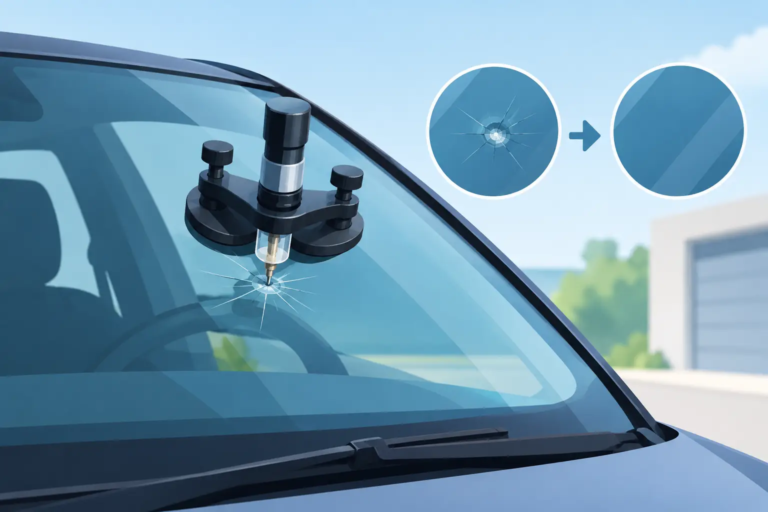
If you spot a chip or small crack, have it checked right away. Repair is often faster, more affordable, and less disruptive than replacement, but only while the damage is still within repairable limits. Size, depth, location, and how long the damage has been there all matter.
You can also lower your risk by keeping distance from gravel trucks, slowing down in construction zones, avoiding sudden temperature blasts on damaged glass, and being careful with door slams if you already have a chip. Those habits help, but they are not a substitute for prompt service.
For drivers with packed schedules and for fleet managers trying to keep vehicles on the road, convenience matters too. Mobile service makes early action easier because the repair can often be handled where the vehicle already is instead of creating another errand.
SuperGlass Denton sees this every day – damage that could have been repaired when it was small, but turned into replacement after a little time, a little heat, and a little road vibration. That is why the smartest windshield decision is usually the fastest one.
If your windshield has a chip, star break, or fresh crack, do not wait for it to make the decision for you. Getting it looked at early gives you the best shot at saving the glass and getting back on the road without a bigger problem.