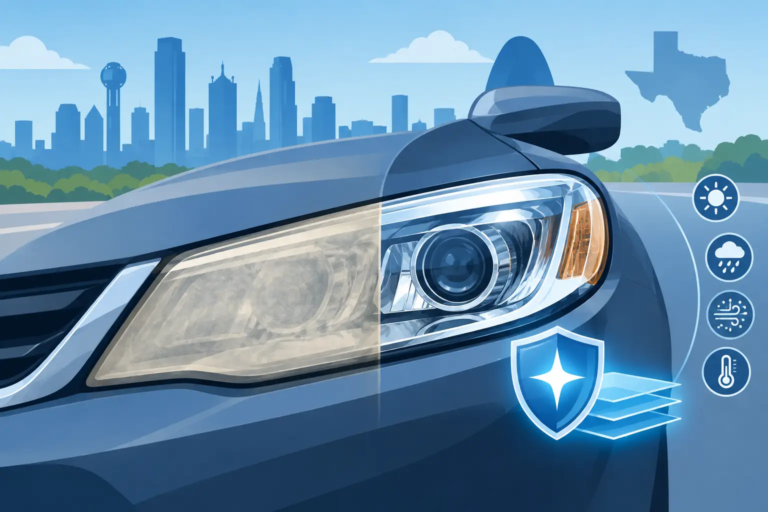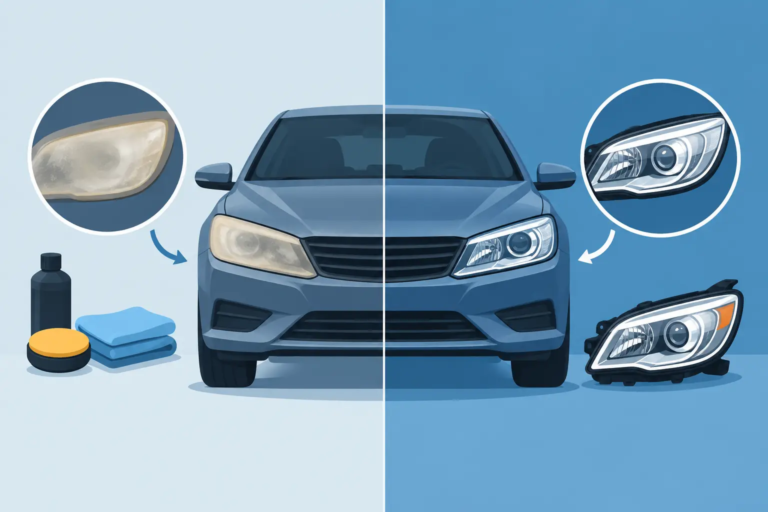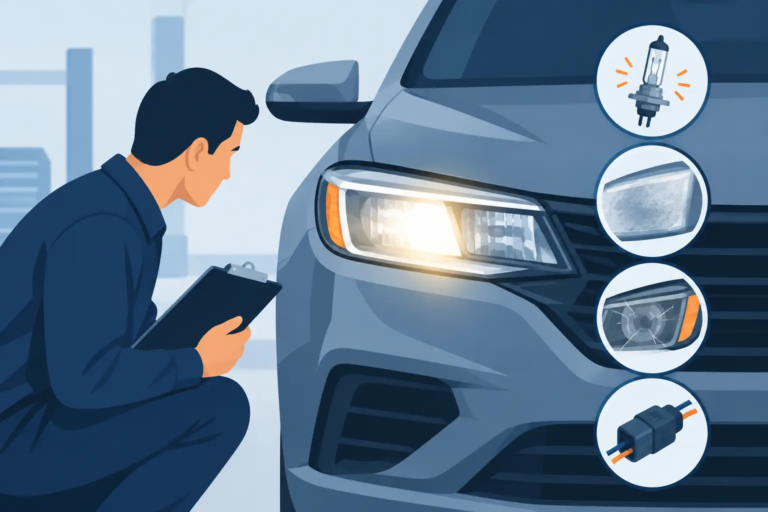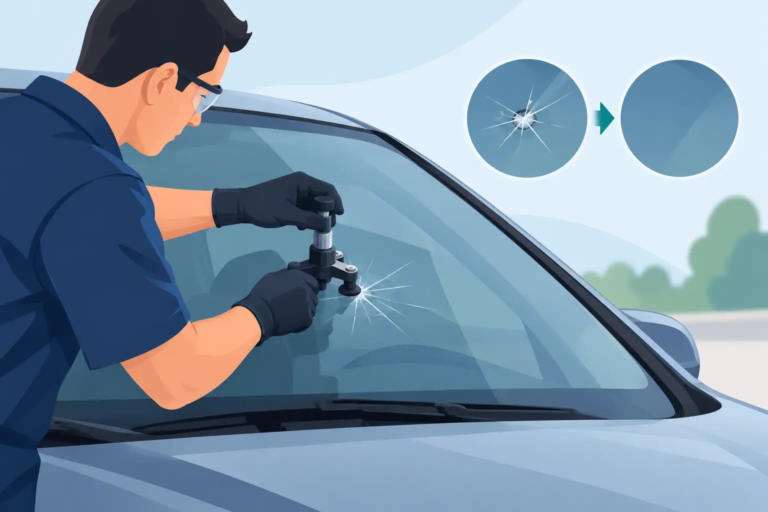
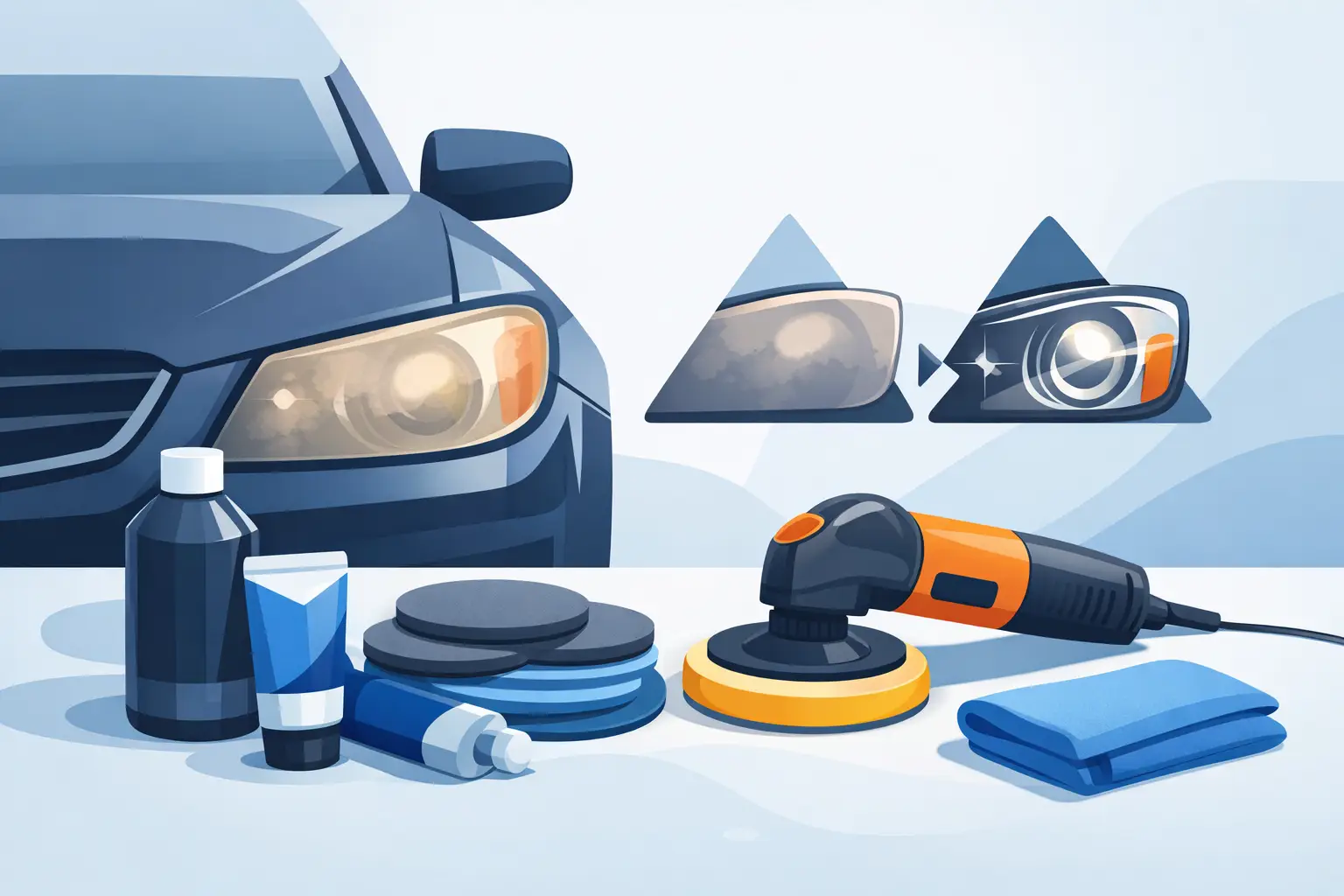
Cloudy headlights do more than make a vehicle look tired. They cut down nighttime visibility, make rain driving harder, and can leave an otherwise solid car looking neglected. That is why a real headlight restoration kit review should do more than list products. It should answer the question drivers in Denton and across North Texas actually care about – will a kit truly restore your headlights, or are you about to spend money and still end up needing professional help?
What a headlight restoration kit review should actually judge
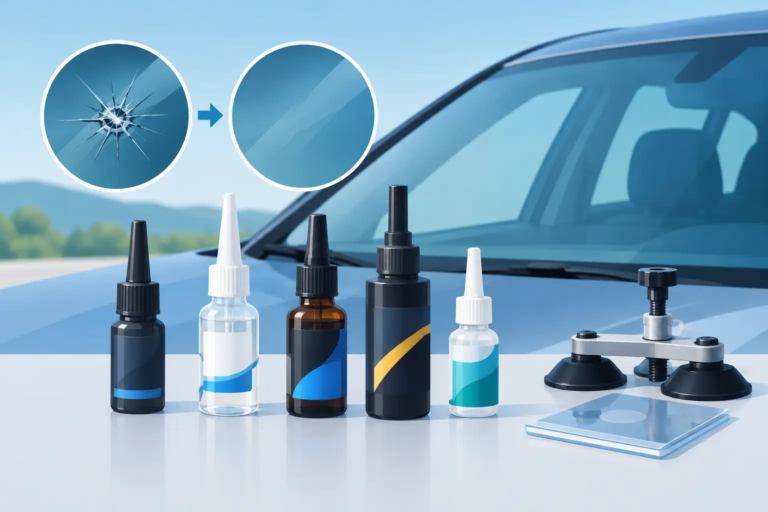
Most DIY kit reviews focus on what comes in the box. Sanding discs, polishing compound, masking tape, sealant, maybe a drill attachment. That matters, but it is not the whole story. The real test is what the headlights look like 30 days later, 6 months later, and after a Texas summer.
A good kit can improve oxidation on the surface. That part is true. If your headlights have mild haze and yellowing, a basic kit may give you a noticeable cosmetic improvement. For some drivers, especially on an older commuter car, that may be enough.
But there is a difference between improving appearance and restoring clarity that lasts. That is where many kits fall short. The sanding and polishing step removes oxidation, but long-term results depend on how well the surface is refinished and protected. If the UV coating is weak, uneven, or skipped altogether, the headlights often cloud back up faster than expected.
The good news about DIY kits
Let us be fair about it. DIY headlight restoration kits are not useless. For the right vehicle and the right level of damage, they can be a reasonable short-term fix.
If the headlight lenses have light oxidation, no deep pitting, and no interior moisture issues, a kit can improve brightness and appearance for a relatively low cost. Drivers who are comfortable following instructions, using sandpaper correctly, and taking their time can get decent results.
This is especially true if expectations are realistic. A kit may help an older vehicle pass the curb appeal test again. It may make the lenses look cleaner before a sale or trade-in. It may buy some time if you are not ready to invest in professional restoration.
That said, most people are not evaluating a kit under shop lighting with years of repair experience. They are working in a driveway, often in wind, heat, or direct sun, and hoping for the best. That environment affects the outcome.
Where most headlight restoration kits struggle
The biggest issue is consistency. A kit can work well in one person’s hands and poorly in another’s. The process looks simple until you are halfway through sanding and realize one lens is clearing up while the other still looks patchy.
Pressure matters. Sanding pattern matters. Surface prep matters. Even keeping the lens wet at the right stage matters. If you sand too aggressively, skip grit levels, or leave residue behind before sealing, the final finish can look uneven or hazy. In some cases, drivers accidentally create more noticeable swirl marks or dull spots than they started with.
Another common problem is durability. This is where a lot of glowing product claims do not hold up in the real world. North Texas heat and UV exposure are hard on restored plastic. If the protective coating is weak, the oxidation often returns sooner than expected. What looked good on Saturday can start fading back by the next season.
There is also the issue many kits cannot solve at all. If the lens damage is severe, deeply pitted, cracked, or oxidized beyond the outer layer, a DIY kit may improve it without ever fully restoring safe clarity. And if the cloudiness is happening inside the housing, no outside kit is going to fix that.
Headlight restoration kit review by damage level
Mild haze
If the headlights are slightly dull, with early yellowing and no rough texture, a DIY kit has a fair chance. This is the sweet spot for consumer products. You still need patience, but the odds are better.
Moderate oxidation
This is where many drivers get mixed results. The lenses are visibly cloudy, maybe a little rough, and nighttime visibility is noticeably worse. A kit might improve them, but it may not restore the level of clarity you expected. This is also where application mistakes start to show.
Heavy oxidation or failed prior repairs
At this stage, a kit is often more of a gamble. If someone already attempted a quick fix with toothpaste, household polish, or an incomplete sanding job, the lens may need a more controlled process than a boxed kit can deliver. Professional restoration usually makes more sense here.
Why professional restoration often lasts longer
A proper restoration is not just about making the lens look clear for a few days. It is about correcting the surface evenly and applying a finish that stands up to sunlight, weather, and regular use.
That takes more than effort. It takes experience. A specialist knows how to read the lens condition, how aggressive the correction should be, and whether the headlight is a good candidate for restoration at all. That judgment is where many DIY attempts go sideways.
For busy drivers, there is also the time factor. Even a decent DIY kit can turn into a frustrating afternoon. If you miss a step or do not like the results, you may end up redoing the work or paying for professional service anyway. What looked cheaper at first can become a double expense.
For fleet vehicles, the case is even stronger. School buses, trucks, rental vehicles, and work vehicles need consistent results and minimal downtime. A patchy DIY outcome is not just a cosmetic issue. It can affect driver visibility, vehicle presentation, and maintenance standards across the fleet.
The hidden cost question in any headlight restoration kit review
The sticker price on a kit is only part of the cost. You also have to factor in your time, the possibility of uneven results, and how soon the oxidation comes back.
If a low-cost kit gives you a minor improvement for a few months, maybe that is enough. But if you need to redo the process, buy extra materials, or still hire a specialist later, the savings shrink fast.
This is where repair-focused service has a real advantage. Instead of replacing headlights unnecessarily or gambling on a one-size-fits-all kit, you get a direct answer about what can be restored and what result you can realistically expect. That is a better use of time for most drivers.
Who should try a kit, and who should skip it
A DIY kit makes the most sense for someone with mild oxidation, solid patience, and realistic expectations. If you enjoy working on your vehicle and you are fine with a result that may be good rather than perfect, it can be worth trying.
Most other drivers are better off talking to a specialist first. That includes people with heavily clouded headlights, newer vehicles they want to protect, leased vehicles, and anyone who just wants the job done right without experimenting in the driveway.
It also includes businesses managing multiple vehicles. If appearance, safety, and uptime matter, consistency matters too. That is not where trial-and-error kits shine.
Our take on the headlight restoration kit review question
If you want the short answer, here it is. Headlight restoration kits can work, but only under the right conditions, and many do not hold up as well as the packaging suggests.
They are best viewed as a limited tool, not a guaranteed fix. For light oxidation, they may be enough. For moderate to heavy damage, for long-term clarity, or for drivers who care more about dependable results than weekend projects, professional restoration is usually the smarter move.
That is especially true in North Texas, where sun exposure is relentless and vehicles spend a lot of time on the road. Clear headlights are not just about looks. They affect how well you see and how your vehicle is seen.
A company like SuperGlass Denton sees this every day. Some lenses can be restored beautifully. Some need more than a store-bought kit can offer. The value is not just in the process. It is in knowing the difference before you waste time and money.
If your headlights are starting to haze over, the best next step is not chasing the flashiest box on the shelf. It is getting an honest read on the condition of the lenses and choosing the option that gives you the clearest result for the longest time.