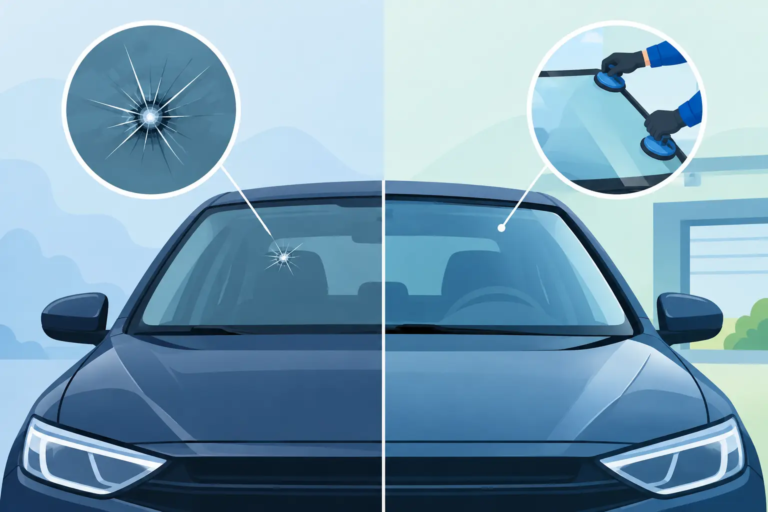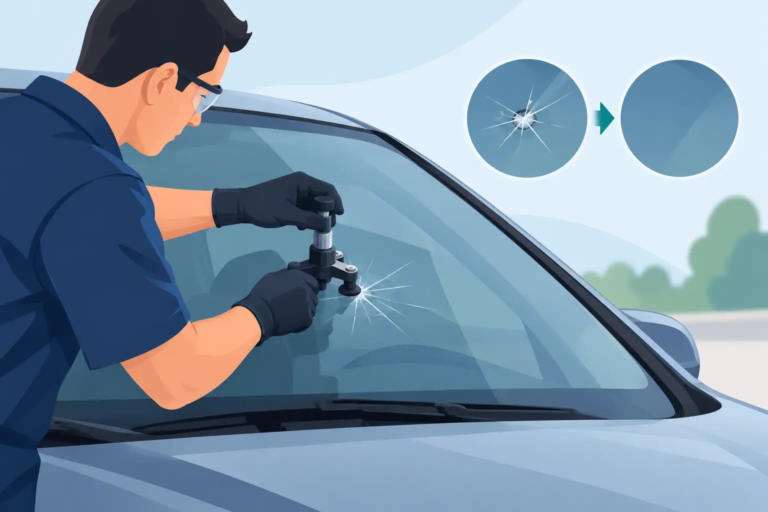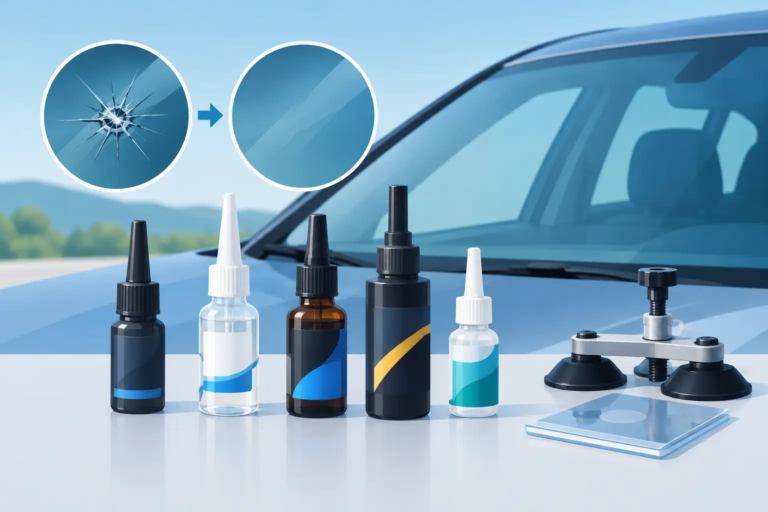

A small windshield chip can turn into a long crack on the drive from Denton to Frisco, especially after a hot afternoon, a cold front, or one hard bump in the road. The best windshield chip repair methods stop that damage early by stabilizing the break, removing trapped air, and bonding the damaged glass with the right resin. Done correctly, repair can preserve the original windshield, improve visibility, and help you avoid an unnecessary replacement.
Why a Windshield Chip Needs Quick Attention
Your windshield is more than a sheet of glass. It is a structural part of the vehicle, supports the roof in a rollover, and helps the passenger-side airbag deploy as designed. A chip weakens that glass at one concentrated point. Heat, vibration, moisture, and daily driving pressure can push the damage farther across the windshield.
North Texas weather gives chips plenty of opportunities to spread. Parking in direct sun, blasting the air conditioning, running through a car wash, or driving over uneven pavement can all stress the glass. There is no honest way to promise that every chip will crack, but waiting always reduces the odds of a clean, nearly invisible repair.
The first rule is simple: cover the damaged spot with clear tape if the glass is dry and schedule an inspection soon. The tape helps keep dirt and water out of the break. Do not press on the chip, pick at loose glass, or pour hot or cold water on the windshield in an attempt to “fix” it.
The Best Windshield Chip Repair Methods, Explained
Professional windshield repair is not just filling a pit with resin. The method has to match the chip’s shape, depth, location, and contamination level. A trained technician first determines whether the damage is a strong repair candidate and then selects resin and equipment for that specific break.
Vacuum and pressure resin injection
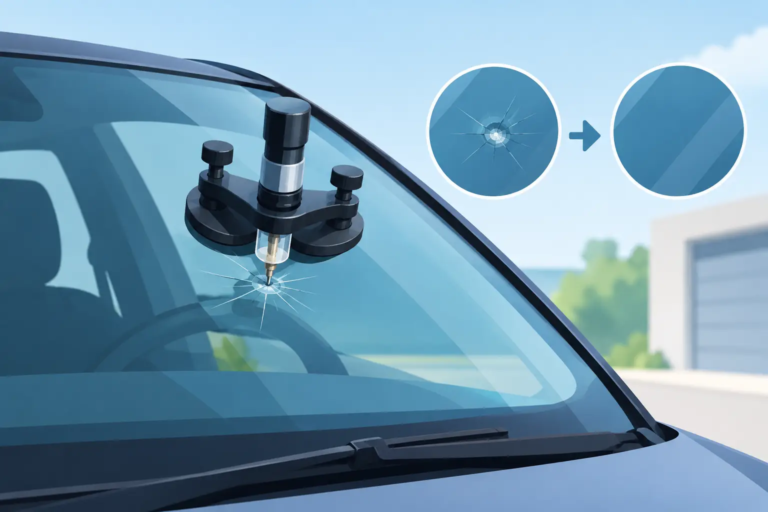
For most repairable chips, vacuum and pressure resin injection is the most dependable method. A repair bridge seals over the impact point. The technician uses a vacuum cycle to draw air out of the damaged area, then applies pressure to drive liquid resin into the chip’s legs and internal fractures.
This is what separates a professional repair from simply applying resin to the surface. Air pockets inside the break can leave weakness and visible distortion behind. Controlled vacuum and pressure help resin reach farther into the damaged glass, which strengthens the repaired area and improves the finished appearance.
The resin is then cured with ultraviolet light. Once it hardens, the technician fills and finishes the surface pit so the windshield is smooth and protected. A good repair often makes the chip far less noticeable, although no reputable specialist should promise every repair will disappear completely. The main goal is to restore strength and prevent spreading. Better appearance is an important benefit, not a guarantee of invisibility.
Targeted repair for star breaks and combination chips
A bullseye chip is generally more straightforward than a star break, which has thin legs radiating from the point of impact. Combination breaks include features of both and require more careful work. In these cases, the technician may use multiple vacuum and pressure cycles, vary the resin’s viscosity, and carefully flex the glass when appropriate to encourage resin flow into fine cracks.
This is why chip size alone does not tell the whole story. A small star break with long legs may be more challenging than a larger, clean bullseye. A specialist looks at the entire damage pattern before deciding what is realistic.
Pit filling and surface finishing
The impact crater on the outer glass layer needs its own attention. After the interior damage is filled, a surface resin is placed in the pit and cured under a clear finishing film. The repair is then leveled and polished.
This finishing step helps prevent moisture and debris from entering the repair later. It also reduces the rough spot that catches your eye every time sunlight hits the windshield. Skipping it can leave a repair looking unfinished and more exposed to future contamination.
Mobile professional repair
A quality windshield repair does not require you to lose half a day at a shop. Mobile service brings the equipment and expertise to your driveway, office, fleet yard, or other convenient location. For busy commuters, parents, and fleet managers, that convenience matters because chips should be addressed before they grow.
Mobile repair still requires the right conditions. Heavy rain, extreme contamination, or a location that prevents safe access to the windshield may affect scheduling or results. A professional will be direct about those limits rather than rushing a repair that cannot be properly completed.
Are DIY Windshield Chip Kits Worth It?
DIY kits can be useful in a narrow situation: a fresh, small, simple chip that is away from the driver’s direct line of sight and can be treated immediately. They are better than ignoring the damage completely. However, they do not offer the same vacuum control, resin selection, or technician judgment as professional equipment and service.
The biggest issue is trapped contamination. If water, road grime, glass dust, or old wax has settled into the chip, a kit may seal it in. The result can be a cloudy repair, incomplete resin penetration, or a break that still spreads later. Applying too much pressure or using the device incorrectly can also make delicate legs extend.
For a vehicle you rely on daily, a professional repair is usually the better value. It protects the original windshield and gives you a clear assessment of whether repair is actually the right option. SuperGlass Denton specializes in repairs that save glass whenever the damage can be safely restored, including many chips that other providers may be quick to reject.
When Repair Is Not the Right Answer
Repair is an excellent option for many chips, but it has limits. Windshield replacement may be the safer choice when the damage compromises visibility, reaches the windshield edge, is extensively contaminated, or has grown into a long crack. Damage on the inner layer of laminated glass also requires a different evaluation than a standard outer-layer chip.
Location matters as much as size. A repair directly in the driver’s critical viewing area may leave a small visual blemish even when the glass is structurally stabilized. Depending on the vehicle and the damage, that may make replacement the more sensible recommendation.
A trustworthy repair specialist does not force every windshield into a repair. The right call is the one that protects safety, visibility, and the long-term condition of the vehicle.
What to Do Between the Chip and Your Appointment
Until the windshield can be inspected, keep the chip clean and dry. If conditions allow, place a small piece of clear tape over it without pushing debris into the break. Avoid high-pressure washes, slamming doors, and abrupt temperature changes whenever possible.
Do not wait for the chip to become “big enough” to worry about. A small repair is usually faster, more affordable, and more successful than dealing with a crack that has already traveled across the glass. For commercial vehicles, prompt repair also helps reduce downtime and keeps small damage from becoming a scheduling problem across the fleet.
The best time to repair a windshield chip is before it starts making decisions for you. A fast professional inspection can tell you whether the glass can be saved and give you a practical path forward without the cost, waste, and disruption of replacement.