A pebble kicked up by a truck can leave a windshield chip in less than a second. A loose piece of tire tread, gravel from a construction exit, or a dropped load can do far more. This road debris damage prevention guide gives North Texas drivers practical ways to reduce the risk, recognize damage early, and keep a small impact from becoming an expensive replacement.
Road debris is part of driving around Denton, Plano, Frisco, McKinney, Lewisville, Carrollton, and the rest of North Texas. Construction zones, fast-moving highways, gravel shoulders, and heavy commercial traffic all raise the odds of an impact. You cannot control every hazard on the road, but the right driving habits and quick repair decisions can make a meaningful difference.
Start With More Following Distance
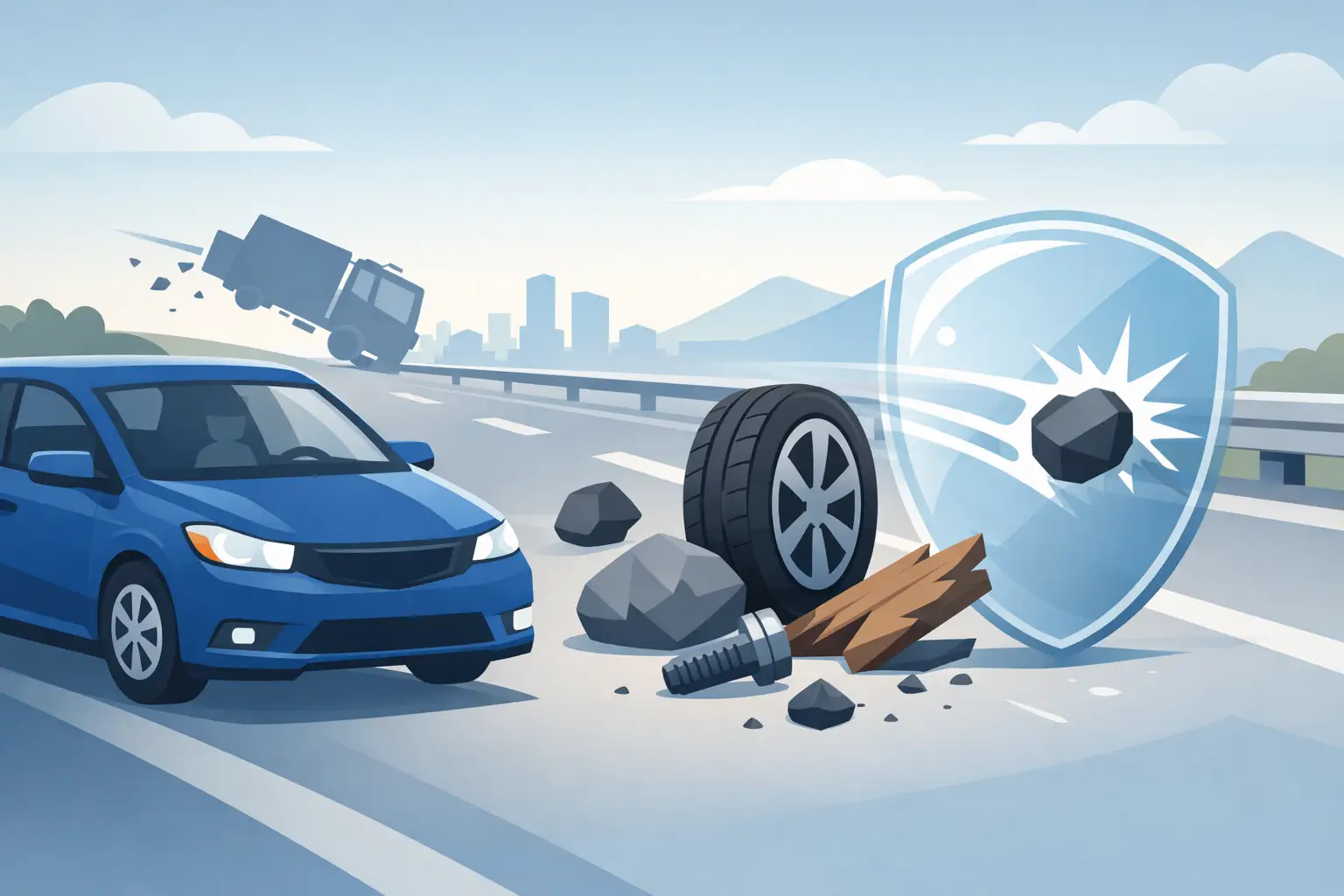
The most effective protection is simple: give the vehicle ahead of you more room. Tires throw rocks, chunks of asphalt, road salt, screws, and other debris backward, especially at highway speed. The closer you drive behind a car, pickup, dump truck, or trailer, the less time a rock has to fall harmlessly to the pavement instead of reaching your windshield.
Use at least a three-second following distance in normal traffic, then increase it behind vehicles with oversized tires, uncovered loads, landscaping equipment, or trailers. If road conditions are wet, traffic is moving quickly, or a vehicle is actively shedding gravel or mud, create even more space or safely change lanes.
Large trucks deserve extra caution. Staying alongside a truck for an extended stretch can expose your windshield and paint to debris from multiple tires. Pass decisively when it is safe, or drop back until you have a clear opportunity. Never tailgate a truck just to keep another driver from merging in front of you. Saving one car length is not worth a cracked windshield.
Read the Road Before Debris Reaches You
Good defensive driving is not only about watching brake lights. Scan farther ahead for clues that debris is likely. Fresh construction areas, lane closures, unpaved driveways, road resurfacing crews, and trucks entering from work sites all deserve more attention.
Slow down when you see loose gravel, rough pavement, or debris already scattered across a lane. Speed gives a rock more energy when it strikes glass, and it also reduces your ability to avoid a larger object safely. Do not swerve suddenly for small debris if another vehicle is beside you or behind you. A controlled reduction in speed is usually the safer choice.
Be especially alert after storms. Heavy rain can wash gravel, branches, and broken pavement into travel lanes. Strong North Texas winds can move trash cans, signs, limbs, and lightweight construction materials without warning. At night, lower visibility makes a clear windshield and properly restored headlights more than cosmetic concerns.
Protect the Surfaces Debris Hits Most Often
Windshields take the most obvious hits, but they are not the only vulnerable surface. Your vehicle’s front bumper, hood, mirrors, headlights, and paint are all in the line of fire.
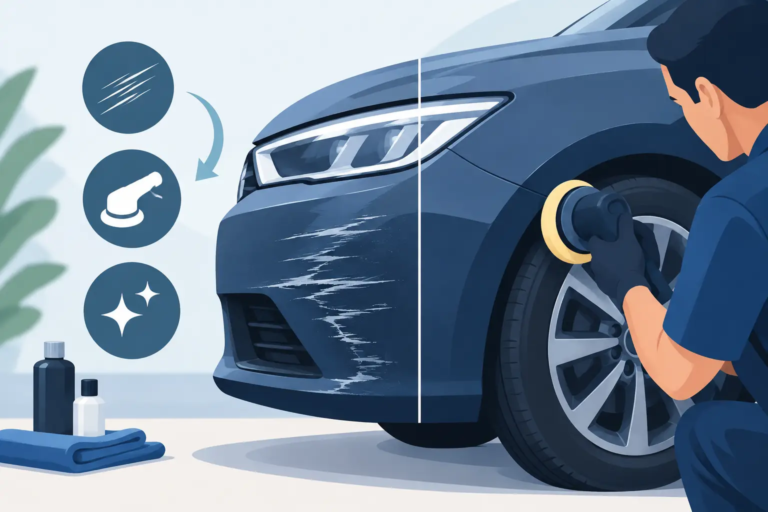
A quality paint protection film can help absorb minor stone impacts on high-exposure areas such as the front bumper, hood edge, and mirror caps. It is an investment, so it makes the most sense for newer vehicles, high-mileage commuters, luxury vehicles, and fleet units that spend significant time on highways. It will not stop every deep gouge or collision-related damage, but it can reduce the steady accumulation of small chips.
Keep your windshield clean inside and out. Dirt, bug residue, and haze can make it harder to see a small chip, crack, or pit before it worsens. Replace worn wiper blades promptly. A damaged blade can drag grit across the glass and create scratches, while a blade that clears poorly can hide a developing problem during rain.
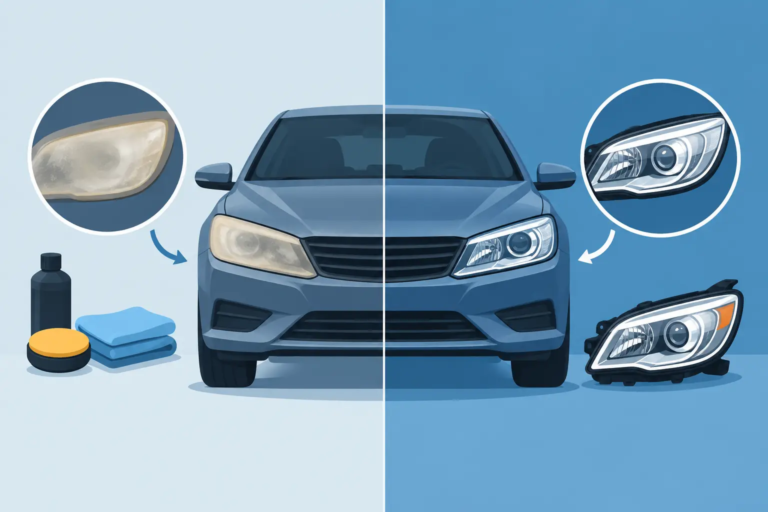
Headlights also need attention. Cloudy or oxidized lenses reduce the light reaching the road, which gives you less time to spot debris after dark. Restoring faded headlights improves visibility and helps drivers see you sooner, particularly in rain and on poorly lit roads.
What to Do the Moment a Rock Hits Your Windshield
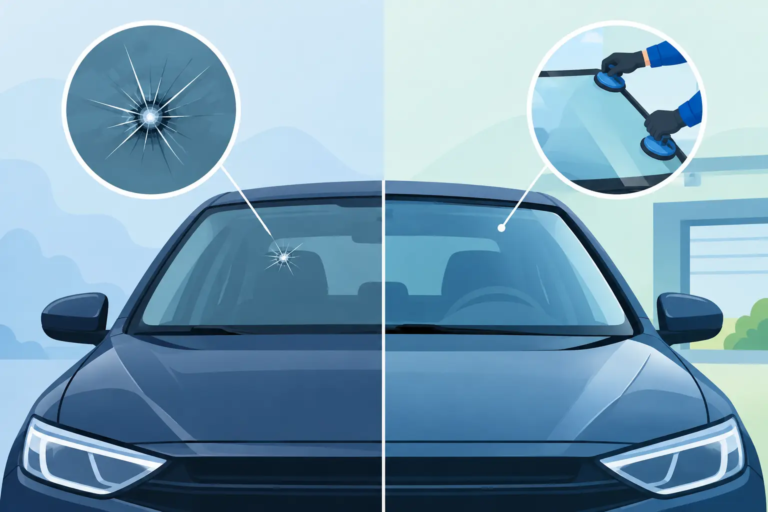
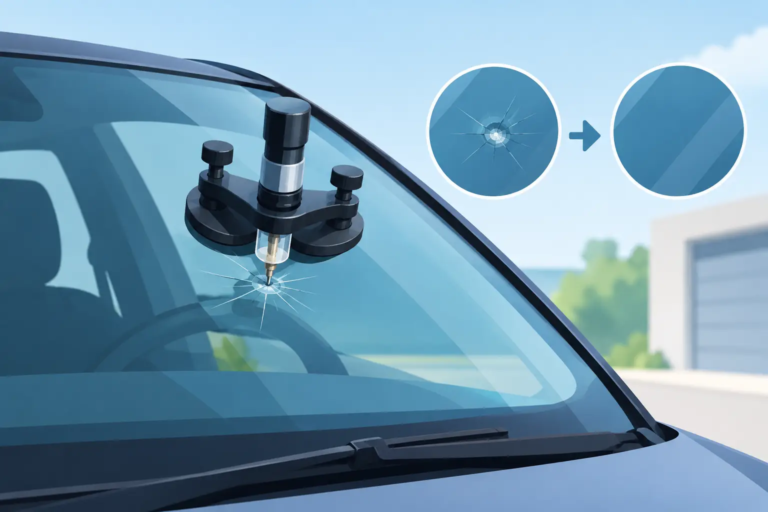
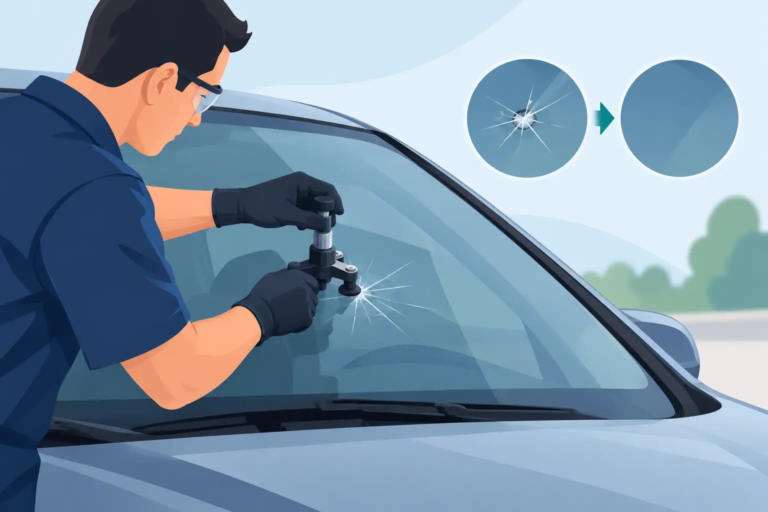
A loud pop does not always mean your windshield is ruined. Many impacts begin as small chips that can be professionally repaired, often avoiding full windshield replacement. The key is acting before temperature changes, vibration, moisture, and normal driving turn the chip into a spreading crack.
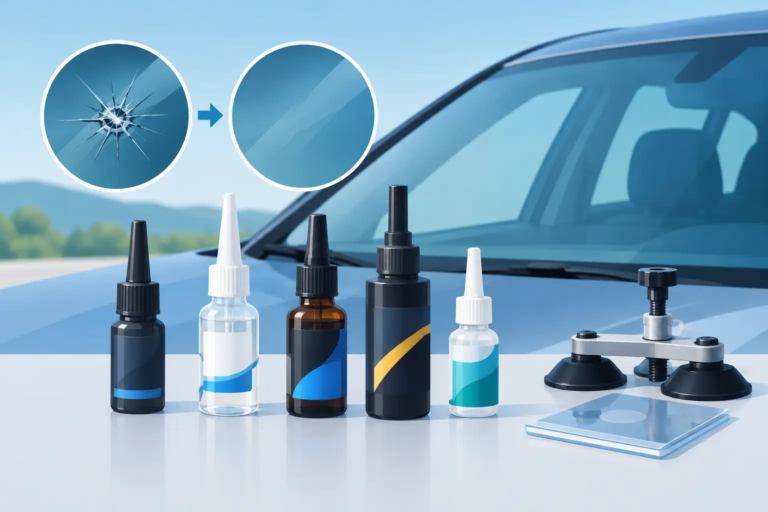
Pull over when it is safe and inspect the glass. Look for a star-shaped break, a bullseye, a small crater, or thin lines extending from the impact point. If you can safely cover a clean, dry chip with clear tape, it may help keep dirt and water out until it can be inspected. Do not press on the damaged area, and do not use household glue, nail polish, or a random DIY filler. Contamination can make a professional repair more difficult.
Avoid blasting the defroster or air conditioning directly at a damaged windshield. Extreme temperature changes can stress the glass and cause a chip to run. Park in shade if possible, drive gently over rough roads, and schedule an assessment promptly.
There is no honest rule that every chip is repairable. It depends on the size, depth, location, type of break, and whether the damage has already spread. Damage near the edge of the windshield or directly in the driver’s critical viewing area may call for a different solution. But waiting rarely improves the odds of repair.
A Road Debris Damage Prevention Guide for Fleet Vehicles
For school buses, work trucks, rental vehicles, and other fleets, road debris damage is more than an inconvenience. A sidelined vehicle affects schedules, customer service, safety checks, and operating costs. Prevention works best when it is built into the routine rather than handled only after a driver reports a problem.
Fleet managers should ask drivers to report windshield chips, headlight damage, and paint scratches at the end of each shift, not weeks later. A quick walk-around before departure catches issues that drivers may miss from behind the wheel. It also creates a record of when damage appeared, which can be useful when evaluating routes, vehicle spacing, or recurring construction-zone exposure.
Keep a simple process for fast repair approval. A small windshield chip can often be addressed with far less downtime and expense than replacing an entire windshield. Mobile service is particularly useful for fleets because repairs can be completed where the vehicles are parked, reducing the need to pull units from service for a trip to a shop.
Routes matter, too. A detour may not be practical every day, but repeat problems on one gravel-heavy route or behind one type of contractor traffic are worth tracking. Small operational changes, such as adjusting departure times to avoid construction traffic, can lower damage frequency over time.
Avoid These Common Mistakes
The biggest mistake is treating a tiny chip as a cosmetic issue. Windshields are structural safety components, and cracks can spread quickly after a hot afternoon, a cold rainstorm, or one hard bump in a parking lot. Fast evaluation protects both your visibility and your budget.
Another mistake is following too closely behind vehicles marked with warnings about staying back. Those warnings are not legal shields for unsecured loads, but they are useful signals that the vehicle may throw debris. Give it room and document any significant incident as soon as you can do so safely.
Finally, do not wait for an inspection to find out whether damage is repairable. A trained specialist can assess the break, explain the options clearly, and recommend repair when it is the sound choice. SuperGlass Denton provides mobile windshield repair and surface restoration for drivers and fleets that want a practical alternative to unnecessary replacement.
The next time a rock hits your windshield, do not let the size of the chip decide how seriously you take it. Protect the area, avoid temperature shock, and have it checked while repair is still on the table.