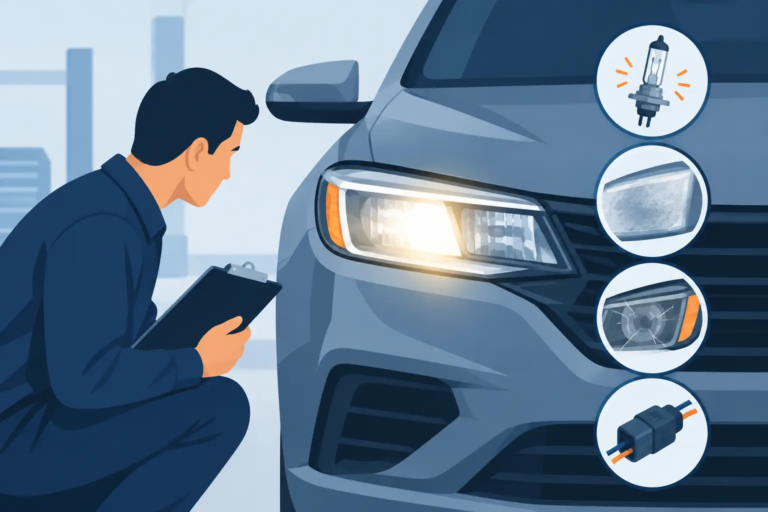
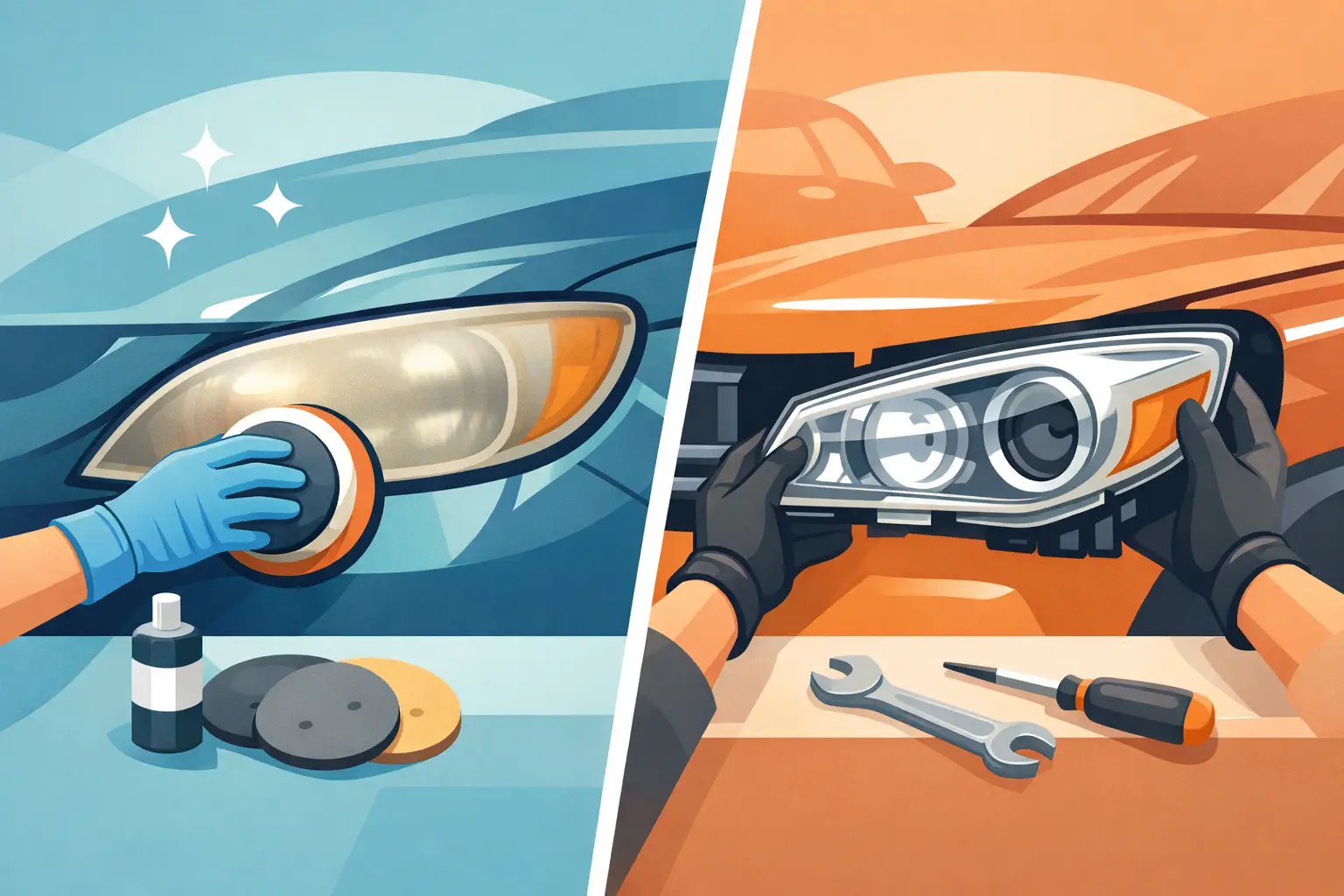
A yellow, cloudy headlight does more than make an otherwise well-kept vehicle look tired. It cuts usable light on dark North Texas roads, reduces contrast in rain, and can create a headache at inspection time. When weighing headlight restoration versus lens replacement, the right choice comes down to what is actually damaged – not just how bad the haze looks from the driveway.
For many Denton-area drivers, restoration is the faster, more cost-effective answer. But it is not the answer for every headlight. A professional should be willing to tell you when replacement is the safer investment.
What Causes Headlights to Turn Cloudy?
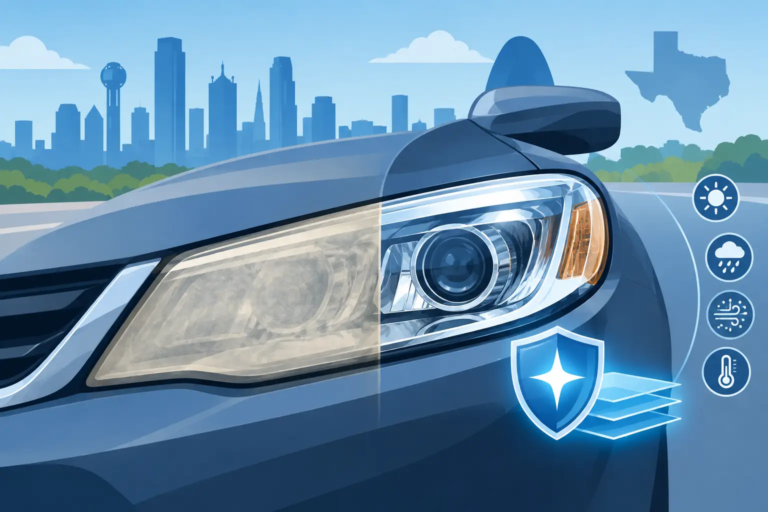
Most modern headlights use a clear polycarbonate lens. It is tough and light, but years of UV exposure gradually break down the factory protective coating. Texas sun, heat, road grit, car washes, and chemical cleaners speed up the process. The lens may first look dull, then yellow, then heavily oxidized with a rough or chalky surface.
That common kind of damage is on the outside of the lens, which is why it can often be restored. The goal is not to hide the cloudiness with a quick polish. A proper service removes the failed surface material, refines the lens for clarity, and applies UV protection so the result lasts.
Cloudiness can also come from inside the headlight assembly. Moisture intrusion, heat damage, peeling internal reflector material, and lens cracking are different problems. Polishing the outside will not correct them.
Headlight Restoration Versus Lens Replacement: The Real Difference
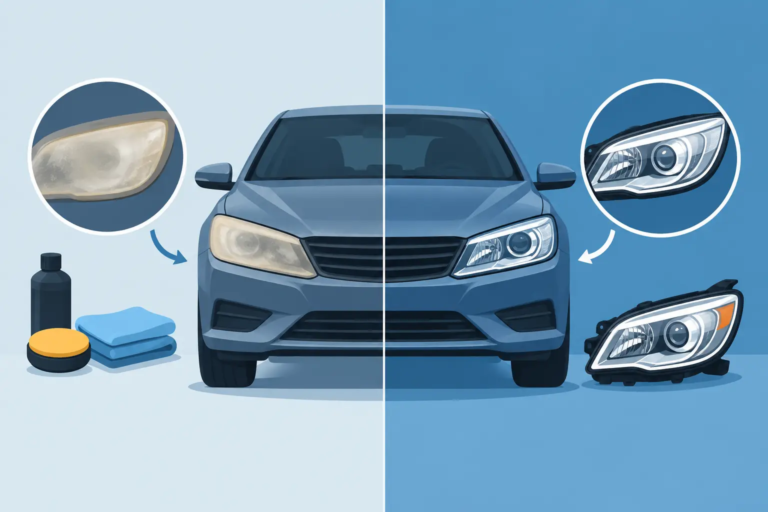
Headlight restoration preserves the existing headlight assembly. The technician works on the exterior lens to remove oxidation and restore clarity. It is usually completed far faster than replacing an assembly, costs less than new parts, and avoids disturbing wiring, mounts, and factory alignment.
Lens replacement sounds simple, but on many vehicles the lens is not sold as a separate factory service part. The practical replacement option is often the entire headlight assembly. That can mean a higher parts cost, labor to remove bumper trim or other components, and possible headlight aiming afterward.
Replacement is justified when the assembly itself has failed. Restoration is the better value when the lens is structurally sound and the problem is surface oxidation.
When Restoration Is the Smart Choice
Restoration is typically the best fit when headlights are yellowed, hazy, dull, lightly scratched, or showing UV oxidation on the outside. A vehicle can look years newer after the lenses are properly refinished, but the bigger benefit is functional: clearer lenses allow more of the bulb’s light to reach the road.
For busy professionals and families, the convenience matters too. Mobile service means you do not have to arrange a ride, spend a morning in a waiting room, or leave your vehicle at a shop. A specialist can assess and restore eligible headlights at your home or workplace.
Fleet operators often see an even stronger case for restoration. Replacing assemblies across trucks, school buses, or rental vehicles adds up quickly and can keep equipment out of service. Restoring lenses that are otherwise sound helps maintain a professional appearance and safer nighttime visibility while controlling maintenance costs.
A quality restoration should include a durable UV-protective finish. Without that final protection, freshly polished headlights can look clear at first but oxidize again much sooner. The finish is not an optional extra – it is a major part of a lasting repair.
When Lens or Assembly Replacement Is Necessary
There are times when replacement is the clear call. If a lens has a crack, hole, or broken seal, water can enter the housing and damage electrical components or internal reflective surfaces. Restoration cannot reseal a compromised assembly in a way that makes it equivalent to an intact unit.
Replacement is also usually needed when the cloudiness is inside the housing, when the reflector bowl is burned or peeling, or when mounting tabs are broken. These issues affect the headlight’s performance, fit, or ability to stay securely positioned. Cosmetic work on the front lens would only mask the real concern.
Severe physical damage after a collision is another reason to replace the assembly. On vehicles with LED units, adaptive headlights, daytime running lights, or integrated electronics, diagnosis matters before ordering parts. A damaged module or moisture-related electrical issue may require more than a new lens.
The honest answer is sometimes, “This one needs replacement.” A repair specialist earns trust by making that recommendation when safety and long-term reliability demand it.
Do Not Judge by Yellowing Alone
Two headlights can look equally cloudy and need completely different solutions. One may have surface oxidation that responds beautifully to professional restoration. The other may have trapped condensation, a hairline crack along the edge, or internal heat damage that no exterior process can fix.
A quick inspection should look for moisture beads inside the housing, visible cracks, damaged seals, loose mounting points, uneven light output, and deterioration behind the lens. It should also compare both sides. One lens can be much worse due to parking direction, prior damage, or a previous low-quality repair.
This is why do-it-yourself kits can be hit or miss. Some can improve a mildly hazy lens, but they do not diagnose internal damage, and many do not leave behind a professional-grade protective coating. Aggressive sanding or the wrong chemicals can also create uneven clarity or shorten the life of the lens.
Cost, Downtime, and Long-Term Value
The price gap between restoration and replacement can be substantial. Restoration generally involves skilled labor and protective materials, while replacement adds the cost of the assembly itself. If the vehicle requires removal of a bumper cover, grille components, or wheel-well liners to access the headlights, labor can climb further.
Replacement parts are not all equal, either. Original equipment assemblies may offer proper fit and beam pattern, but they can be expensive. Lower-cost aftermarket assemblies can be tempting, yet fitment, sealing quality, lens clarity, and light output vary widely. A poor replacement can create new issues that a sound factory assembly never had.
Restoration is often the best value when it restores a good original component. Replacement makes better financial sense when continued repair would be temporary, unsafe, or ineffective. The lowest upfront number is not always the lowest cost over the life of the vehicle.
A Better Way to Make the Decision
Start with the condition of the assembly, not the age of the car. If the lens is intact, dry inside, securely mounted, and cloudy mainly on the exterior, ask about professional restoration. If it is cracked, leaking, loose, internally damaged, or electrically compromised, get a replacement recommendation and confirm whether the full assembly is required.
Also consider how you use the vehicle. A commuter who drives unlit roads before sunrise needs dependable forward visibility. A fleet manager needs repairs that can be repeated consistently without unnecessary downtime. In both cases, clear headlights are not just an appearance upgrade.
At SuperGlass Denton, the focus is on saving repairable vehicle components from unnecessary replacement. That means evaluating the condition honestly, restoring lenses that can be restored properly, and not pretending every damaged headlight can be polished back to safe working condition.
Keep Clear Lenses Clear Longer
After a professional restoration, regular washing helps remove road film and bug residue before it bakes onto the lens. Avoid harsh solvents and abrasive cleaners. Parking in a garage or shaded area when practical can reduce UV exposure, although North Texas weather makes that impossible for plenty of drivers.
If the haze starts returning, address it early. Light oxidation is easier to correct than a lens that has been left to deteriorate for years. More importantly, do not wait until a dark, rainy drive makes the loss of light impossible to ignore. A clear view ahead is one vehicle repair that pays you back every time the sun goes down.