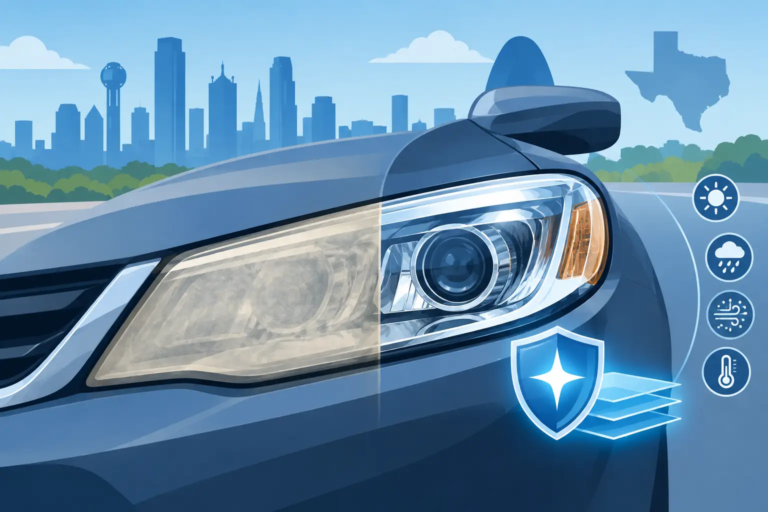
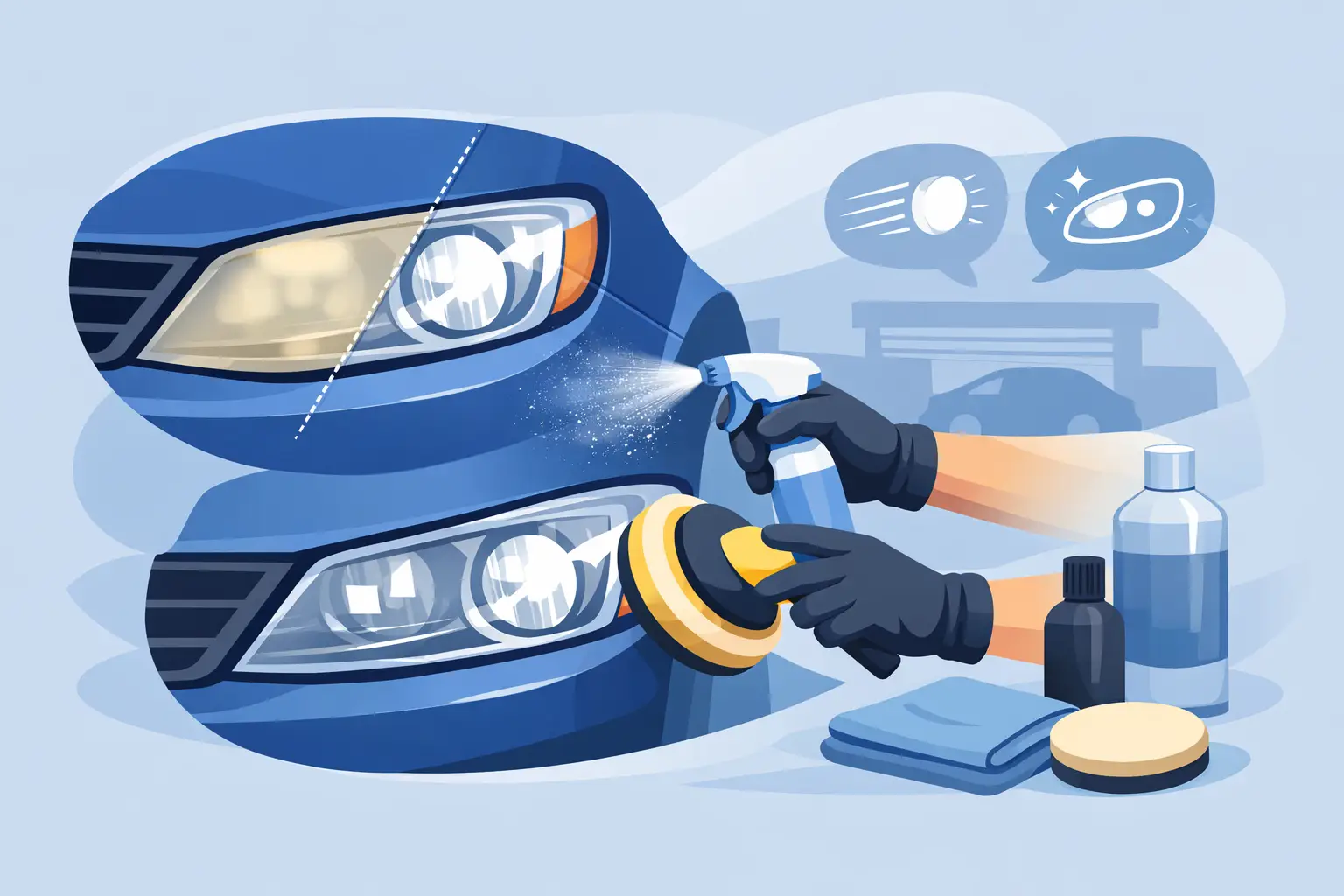
Cloudy headlights are not just a cosmetic problem. When the outer lens turns yellow, hazy, or dull, less light reaches the road ahead. That matters on dark North Texas back roads, during heavy rain, and on early-morning commutes. This vehicle headlight restoration guide explains what causes the damage, when restoration makes sense, and when a professional should take a closer look.
Why Headlights Turn Cloudy
Most modern vehicles use polycarbonate headlight lenses instead of glass. Polycarbonate is durable and lightweight, but years of sun exposure eventually break down the protective coating on the outside of the lens. UV rays, road grit, car-wash chemicals, heat, and everyday weather all contribute to oxidation.
The result is the familiar yellow or foggy appearance that makes headlights look old before the rest of the vehicle does. On some cars, the cloudiness is mostly on the surface. On others, the lens may also have deep scratches, peeling coating, moisture inside the housing, or damage caused by a previous low-quality restoration.
The difference matters. Surface oxidation can often be restored effectively. Internal moisture, cracked housings, broken mounting tabs, or damage to the reflector inside the assembly may call for a different repair or replacement decision.
A Vehicle Headlight Restoration Guide: Start With the Right Diagnosis
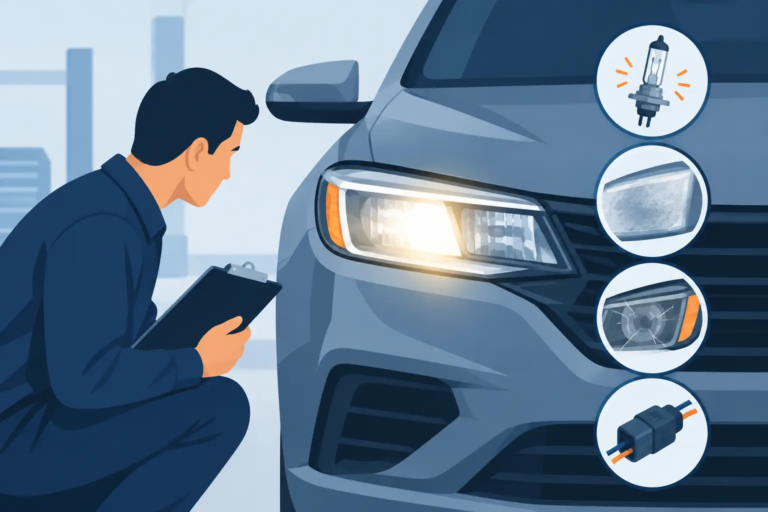
Before reaching for a restoration kit, look at the headlights in direct sunlight and then switch them on after dark. A lens can look only slightly dull during the day yet still scatter light badly at night.
A good candidate for restoration usually has yellowing, a milky haze, fine surface scratches, or faded protective coating on the outside of the lens. Both headlights should be assessed, even if only one looks noticeably worse. Restoring one side while leaving the other cloudy can create uneven light output and an uneven appearance.
Watch for signs that the issue goes beyond the lens surface. Condensation that returns after drying, standing water inside the housing, visible cracks, a loose lens seal, or a reflector that appears burned or peeling can limit what an exterior restoration can accomplish. A burned-out or weak bulb may also be mistaken for a cloudy-headlight problem.
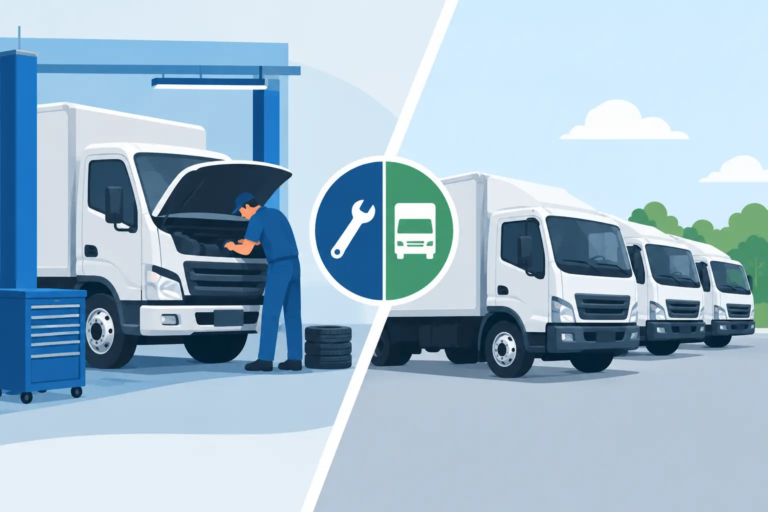
For fleet vehicles, this inspection should be part of routine maintenance. School buses, rental vehicles, work trucks, and delivery vehicles spend more hours exposed to sun and road debris. Catching lens oxidation early can help maintain visibility and avoid taking a vehicle out of service for a larger repair later.
What a Proper Restoration Should Include
A real restoration is more than wiping the lens with a cleaner or applying a quick polish. Those shortcuts may make a headlight look better for a few days, but they do not remove severe oxidation or rebuild the protection the lens needs.
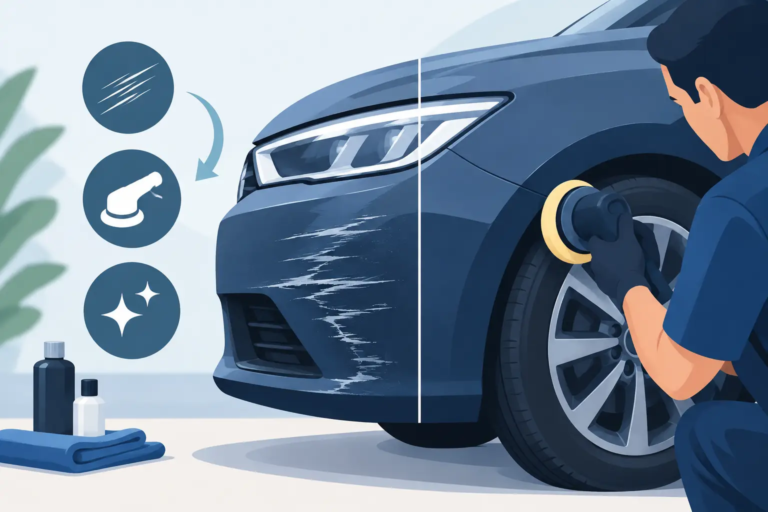
Professional restoration typically begins with cleaning and carefully masking the painted surfaces around the headlight. The oxidized layer is then removed in stages, using the right abrasives for the condition of the lens. This process levels surface damage without being unnecessarily aggressive.
After the lens is refined and polished clear, the critical final step is applying UV protection. Without a quality protective coating, a freshly polished lens can begin oxidizing again quickly under Texas sun. The finish should be even, clear, and properly cured – not streaky, greasy, or overly glossy from a temporary dressing.
The goal is not to make a worn headlight look shiny for a photo. The goal is to restore usable clarity and help the headlight send more effective light forward.
DIY Kits: When They Help and When They Fall Short
A DIY kit can be a reasonable option for light, early-stage haze on a vehicle you are comfortable working on. Many kits include sandpaper, a polishing compound, and a sealant or wipe-on coating. Following the instructions carefully, working in the shade, and taking time with each sanding stage can produce an improvement.
The trade-off is consistency and durability. It is easy to leave sanding marks, miss oxidation near lens edges, damage nearby paint, or apply too little UV protection. Some products improve the appearance briefly but do not hold up through heat, rain, and repeated washing.
Avoid household shortcuts such as toothpaste, bug spray, brake fluid, or harsh solvents. These methods may create a temporary change in surface appearance, but they can scratch the lens, weaken the plastic, or strip the remaining factory coating. A cheap shortcut can leave the lens harder to restore correctly afterward.
If the headlights are heavily yellowed, have been restored before, or need to look professional for a lease return, vehicle sale, customer-facing fleet, or daily commuter, professional work is often the better value. It saves the trial-and-error cost and gives you a clearer answer about whether restoration is the right solution at all.
Restoration or Replacement: How to Decide
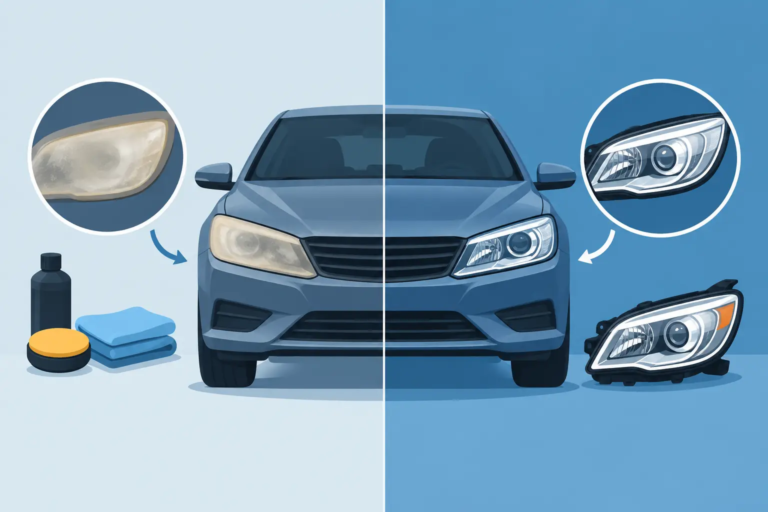
Restoration is usually the cost-effective choice when the headlight housing is sound and the damage is limited to the exterior lens surface. It can improve the vehicle’s appearance, support safer nighttime driving, and help protect resale value without the expense of replacing the full assembly.
Replacement may be necessary when the lens is cracked through, water is entering the housing, internal components are damaged, or the reflector and wiring have failed. Some newer assemblies also contain LED modules, adaptive lighting components, or integrated electronics that need specialized diagnosis.
Do not assume replacement is automatically better. Replacement assemblies vary widely in quality, fit, and light pattern. A low-cost aftermarket unit may not match the original housing, seal properly, or perform as expected. On the other hand, no amount of polishing can fix a headlight with major internal failure. The right choice depends on the condition of the assembly, not just how cloudy it looks from the curb.
How Long Restored Headlights Last
A properly restored headlight can stay clear for years, but lifespan depends on exposure and care. Vehicles parked outside every day in Denton, Plano, Frisco, McKinney, Lewisville, Carrollton, and nearby communities receive more UV exposure than garage-kept vehicles. Long highway drives and frequent automatic car washes can also wear down protective coatings over time.
You can help the finish last by washing the lenses with regular automotive soap, avoiding abrasive cleaners, and applying a paint-safe UV protectant when appropriate. Parking in a garage or shaded area helps, although it is not realistic for everyone.
Check the headlights every few months. If you notice a slight haze returning, address it early rather than waiting for the lenses to turn fully yellow again. Early maintenance is faster and less aggressive than correcting severe oxidation.
Don’t Overlook Headlight Aim and Bulbs
Clear lenses are only one part of seeing well at night. After restoration, turn on the headlights and check that both sides appear similar in brightness and color. If one side is dimmer, flickers, or has a different color temperature, the bulb, wiring, or assembly may need attention.
Headlight alignment matters too. A headlight aimed too low reduces your view of the road. One aimed too high can glare into oncoming traffic. If the vehicle has been in a collision, had front-end work completed, or recently received a replacement headlight assembly, have the aim checked.
For commercial vehicles, proper lighting is especially practical. Clear, working headlights support driver safety, reduce avoidable inspection issues, and present a more professional image to customers and the public.
When to Call a Specialist
Call for an assessment when the headlights are severely cloudy, have peeling coating, show moisture inside, or have already failed to improve with a store-bought kit. A specialist can tell you plainly whether the lenses can be restored or whether replacement is the smarter investment.
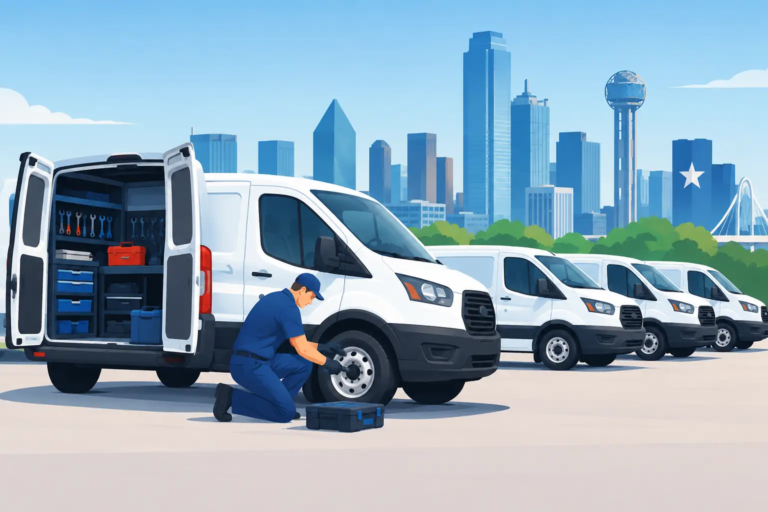
SuperGlass Denton provides mobile headlight restoration for drivers and fleets that want a practical repair without unnecessary downtime. Meeting you at home, at work, or where your fleet is parked keeps the process convenient while giving the headlights the attention a quick cosmetic fix cannot provide.
Your headlights do not need to look brand-new to make a meaningful difference. They need to be clear, protected, and working as they should when the road ahead gets dark.