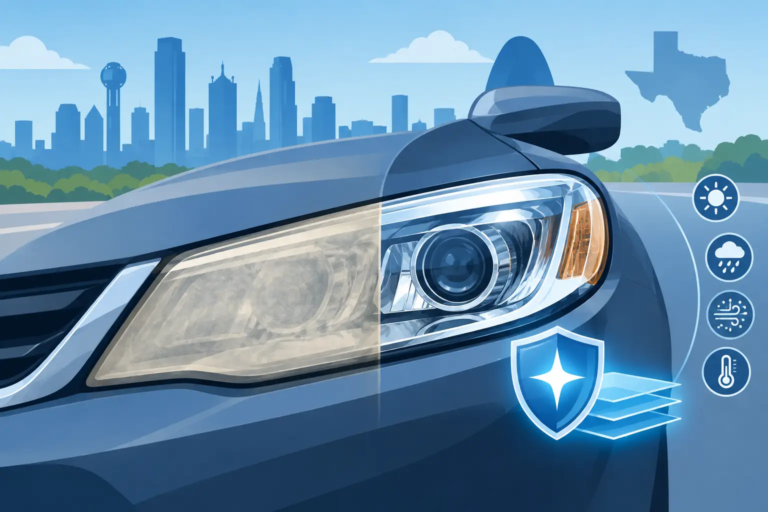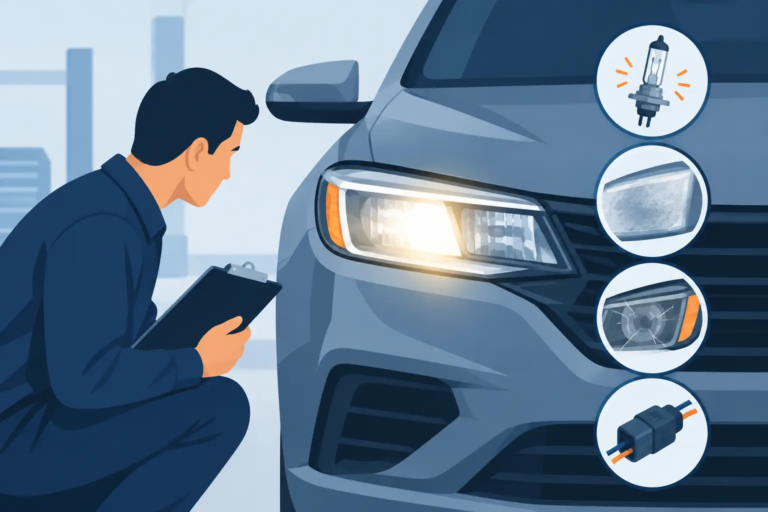

You notice it in a parking lot or your own driveway. One day your headlights look clear enough, and the next they seem dull, yellow, and older than the rest of the vehicle. If you have ever wondered why do headlights turn yellow, the short answer is simple – the clear plastic on modern headlight lenses breaks down over time from sun, weather, road wear, and heat.
That yellowing is not just a cosmetic issue. It can cut light output, make nighttime driving harder, and give the front of your vehicle a worn-out look even if the rest of it is in good shape. For North Texas drivers dealing with strong sun, heat, dust, and daily commuting, this happens faster than many people expect.
Why do headlights turn yellow on modern vehicles?
Most modern headlights are made with polycarbonate plastic, not glass. Polycarbonate is strong, lightweight, and impact-resistant, which is why manufacturers use it. But it has one weakness – it does not love long-term exposure to the elements.
When headlights are new, they have a factory-applied protective clear coating designed to block UV rays and slow surface damage. Over time, that coating wears down. Once it starts to fail, the plastic underneath is exposed to sunlight, oxygen, moisture, road grime, and heat from the bulbs and engine bay. That is when the lens begins to oxidize.
Oxidation is the main reason headlights turn yellow. It changes the surface of the plastic, creating a cloudy or yellowed appearance that scatters light instead of letting it pass through cleanly. In the early stages, you may only notice a slight haze. Later, the lens can look chalky, rough, or deeply discolored.
The biggest causes of yellow headlights
UV exposure is usually the top culprit. Texas sun is hard on vehicle surfaces, and headlight lenses sit right at the front of the car taking direct sunlight day after day. If a vehicle spends a lot of time parked outside, the protective coating tends to fail sooner.
Road debris also plays a role. Dust, sand, tiny rock impacts, bug residue, and harsh washing methods gradually wear down the lens surface. What looks like simple discoloration is often a combination of oxidation and fine surface damage.
Heat matters too. Headlights deal with both outside weather and internal heat from the lighting system. That repeated heating and cooling cycle can stress the plastic and speed up deterioration, especially on older vehicles.
Chemicals can make things worse. Automatic car wash cleaners, strong degreasers, and even the wrong polishing products can strip away what is left of the factory coating. Once that barrier is compromised, yellowing tends to accelerate.
Why some headlights look cloudy and others look yellow
Drivers often use cloudy, foggy, hazy, and yellow to describe the same problem, but there are slight differences. Cloudiness usually comes from surface oxidation and micro-scratches that scatter light. Yellowing often shows up when oxidation has progressed further and the plastic itself has begun to discolor.
Some lenses also develop a patchy look. You might see a clear area near one edge and a dull yellow section in the center. That usually means the damage is uneven based on sun exposure, wear patterns, or previous attempts at cleaning and polishing.
The exact appearance depends on age, climate, vehicle design, and maintenance history. A work truck, school vehicle, or commuter car that lives outside all year will usually show wear sooner than a garage-kept weekend vehicle.
Why yellow headlights are more than a cosmetic problem
A yellow headlight lens does not just make a vehicle look older. It reduces visibility. When the lens becomes oxidized, it blocks and diffuses the beam. That means less usable light reaches the road.
At night, in rain, or during early morning commutes, that reduced light can make it harder to see lane markings, debris, and pedestrians. It can also create more glare for oncoming drivers because the beam pattern is no longer passing cleanly through the lens.
For fleet operators, this is not a small detail. Cloudy headlights affect driver confidence, appearance standards, and in some cases safety inspections. For everyday drivers, it often becomes obvious the first time they drive a dark back road and realize the headlights are on, but the road still looks dim.
Can you prevent headlights from turning yellow?
You can slow the process, but you usually cannot stop it forever. Parking in a garage or shaded area helps. Regular washing helps too, especially when you remove bug residue, dirt, and road film before they bake onto the lens.
Applying a proper UV-protective coating after restoration or maintenance also makes a real difference. That part matters more than many people realize. A lens can be polished clear, but if it is not protected afterward, the yellowing often comes back quickly.
Gentle cleaning is better than aggressive scrubbing. Using harsh compounds or random DIY products can create more fine scratches or strip protection prematurely. The goal is not just to make the headlight look better for a week. The goal is to restore clarity and protect it.
DIY fixes vs professional restoration
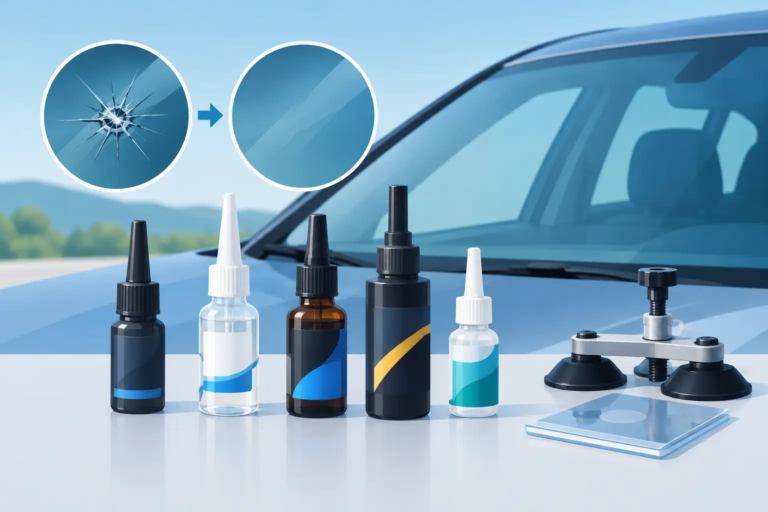
There is no shortage of DIY headlight hacks online. Toothpaste, baking soda, bug spray, household cleaners, and off-the-shelf kits all get mentioned. Some of those methods can improve appearance temporarily, especially if the oxidation is light. But temporary is the key word.
Many DIY methods only polish the surface without addressing the need for proper finishing and UV protection. The lens may look clearer for a short time, then fade again after a few weeks or months. In some cases, aggressive sanding or poor product choice can make the lens look worse.
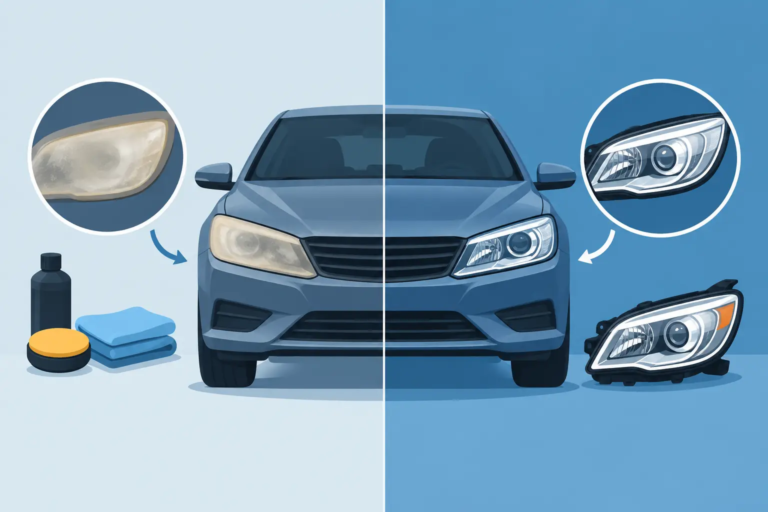
Professional restoration is usually the better move when the headlights are noticeably yellow, hazy, or rough to the touch. A proper process removes damaged material in a controlled way and then seals the surface so it stays clearer longer. That matters if you want real improvement instead of a quick cosmetic patch.
For drivers in Denton and surrounding North Texas communities, mobile service can make that even easier. Instead of losing time at a shop, the work can be done where the vehicle already is.
When restoration works and when replacement is the better call
Most yellow headlights can be restored if the damage is mainly on the outer surface. That is the common scenario. If the problem is oxidation, haze, and worn coating on the outside of the lens, restoration is often the most practical and cost-effective solution.
But it depends on the condition. If the lens is cracked, heavily pitted, leaking moisture inside, or damaged from the interior, restoration may not fully solve the issue. Some headlights also have internal reflector damage or seal failure that reduces performance no matter how clear the outside looks.
That is where specialist judgment matters. A good technician should tell you whether the lens can be restored properly or whether replacement is the smarter investment. Not every headlight needs to be replaced, and not every one can be saved equally well.
How long does headlight restoration last?
That depends on the quality of the restoration, the protection applied afterward, and how the vehicle is used. A vehicle parked outdoors every day in North Texas sun will usually see wear return faster than one kept in a garage.
Still, a professionally restored and protected lens should hold up far better than a quick DIY polish. The biggest mistake people make is judging all restoration by the results of a cheap kit or shortcut repair. Done correctly, restoration can significantly improve clarity, appearance, and nighttime performance without the cost of replacing the entire assembly.
What to watch for before headlights get really bad
If your headlights look slightly dull in daylight, that is the time to act. Early oxidation is easier to correct than severe yellowing with deep surface breakdown. You may also notice weaker light output, a fuzzy beam pattern, or a lens that no longer feels smooth when cleaned.
Waiting too long does not always mean the lens is beyond repair, but it can limit how clean the final result will be. The sooner the problem is addressed, the better the odds of restoring both appearance and function.
For a lot of drivers, yellow headlights seem like a minor issue until they see the difference after proper restoration. Clear headlights make the vehicle look newer, perform better at night, and help you avoid replacing parts that may not need replacement at all. That is usually the smarter fix – restore what can be restored, and keep the vehicle working the way it should.