A hazy headlight may look like a cosmetic problem, but inspectors see it differently. Clouded lenses can cut down the amount of usable light reaching the road, scatter the beam into oncoming traffic, and make it harder for other drivers to see your vehicle. So, will restored headlights pass inspection? In many cases, yes – provided the restoration leaves the headlights clear, functional, properly aimed, and free of damage that affects safe operation.
The key is not whether a headlight has ever been restored. The key is its condition when the vehicle is inspected. A proper restoration can improve visibility and help correct the cloudy, yellowed appearance that raises concerns. A quick polish that leaves haze behind or masks deeper damage may not.
What an Inspector Looks for in Restored Headlights
Inspection requirements vary by state, county, and vehicle type, but the safety concerns are generally the same. Inspectors are looking at whether your headlights work as intended and whether they create a safe beam pattern.
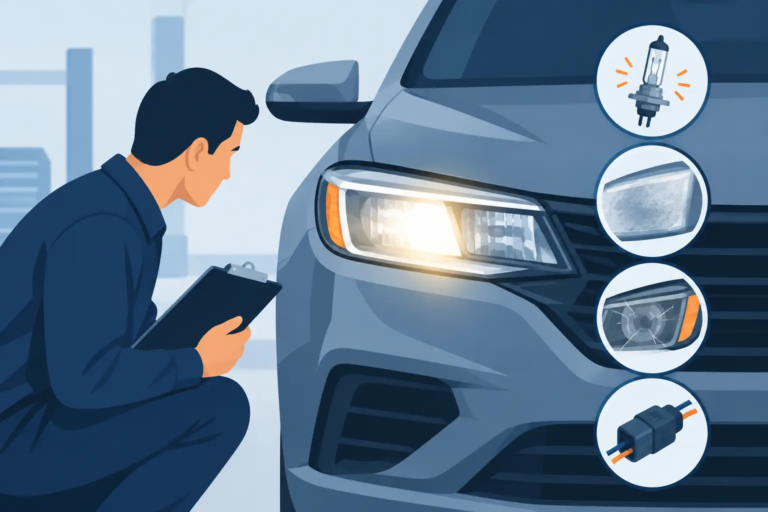
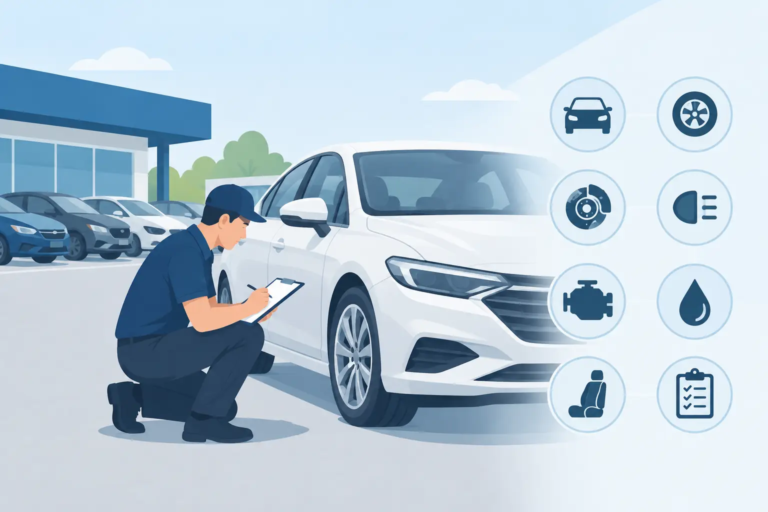
They may check that both low beams and high beams illuminate, the lenses are not cracked or severely damaged, and the lights are mounted securely. They can also look for excessive discoloration, moisture trapped inside the assembly, damaged reflectors, and beam aim that points too high, too low, or off to one side.
A restored lens does not automatically create a problem. In fact, restoring an oxidized lens is often a practical alternative to replacing the entire headlight assembly. But the work has to restore clarity rather than simply make the lens look better for a few days.
Clear lenses are only part of the equation
You can have a shiny lens and still have an inspection issue if the bulb is burned out, the housing is loose, or the beam pattern is poor. On older vehicles, internal reflector damage can reduce light output even after the outside lens has been restored.
That is why a specialist should assess the whole headlight, not just the yellow surface. If the lens is the source of the problem, restoration can be an excellent fix. If there is water intrusion, a broken mounting tab, or a failing electrical connection, those issues need attention too.
When Headlight Restoration Is Usually Enough
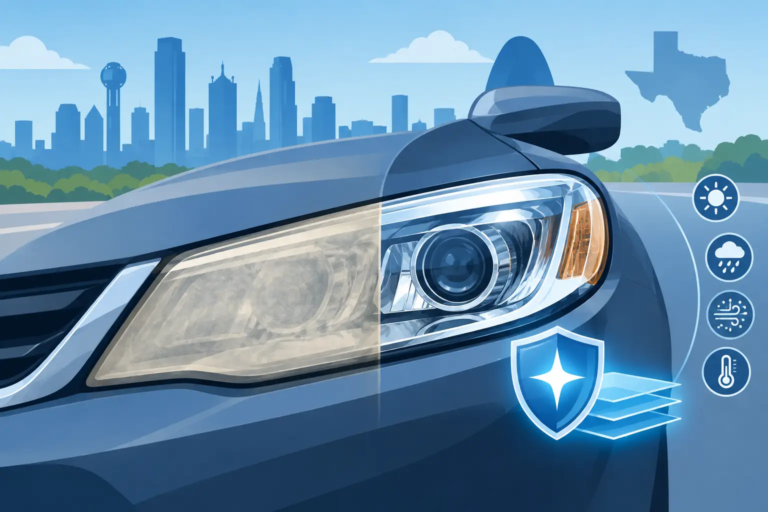
Most headlights turn yellow because the factory UV coating breaks down over time. Sun exposure, road grit, heat, and frequent North Texas driving all take a toll. The outer plastic oxidizes, creating the dull, yellow, or milky film that makes headlights look old and reduces nighttime visibility.
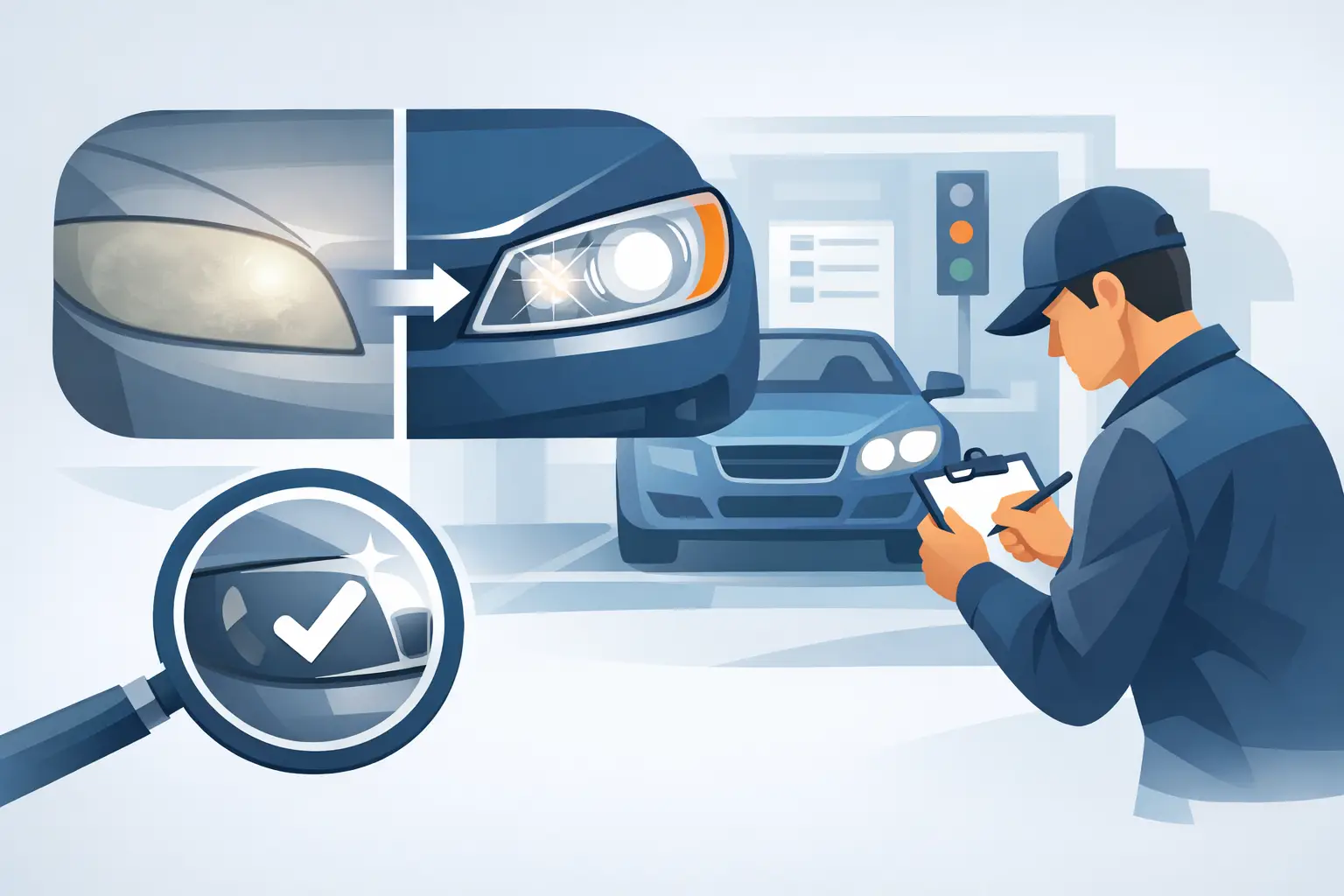
When that oxidation is on the outside of an otherwise sound lens, professional restoration is often enough. The process removes the damaged surface, refines the lens for clarity, and applies protection designed to slow future UV damage. Done correctly, it can make a dramatic difference in both appearance and light performance.
Restoration is a smart option when the housing is intact, the lens is not deeply cracked, and the internal components are working properly. It can save you the cost and downtime of replacement while improving the condition inspectors care about.
For drivers who have an inspection coming up, timing matters. Do not wait until the day before if your headlights are badly yellowed. A professional can tell you whether the lenses can be restored or whether there is another issue that needs repair before your appointment.
When Restored Headlights May Still Fail Inspection
There are situations where lens restoration alone will not solve the problem. Severe damage inside the headlight assembly is one of them. If moisture has entered the housing and corroded components, or if the reflector bowl has deteriorated, the light may remain weak even with a clear lens.
Cracks and holes can also be a concern, particularly if they allow water in or leave sharp edges. A restored headlight can also be rejected if the beam is improperly aimed. This sometimes happens after collision repairs, suspension work, bulb changes, or previous attempts to modify the lighting system.
Aftermarket bulbs and modifications deserve extra caution. Extremely bright bulbs, non-compliant LED conversions, tinted films, and dark lens covers can create visibility or beam-pattern problems. A headlight that looks customized may not deliver the safe, controlled light pattern an inspector expects.
The practical standard is simple: your headlights should be clear enough to transmit light effectively, bright enough to perform their intended function, and aimed correctly. If the restoration achieves that and there are no other defects, it should not be the reason your vehicle fails.
Texas Inspection Rules: What Local Drivers Should Know
For most non-commercial passenger vehicles in Texas, the statewide annual safety inspection requirement ended in 2025. That means many Denton-area drivers no longer receive the traditional annual safety inspection that once included a headlight check.
However, that does not make headlight condition optional. Vehicles still must have safe, working equipment on the road, and some counties continue to require emissions testing for registration. Commercial vehicles can also be subject to separate inspection requirements, and fleet operators must maintain lighting systems that meet applicable federal and state safety standards.
For fleet managers, cloudy headlights are more than a minor appearance issue. A school bus, rental vehicle, work truck, or delivery vehicle with poor nighttime visibility can create avoidable risk, driver complaints, downtime, and maintenance costs. Mobile restoration is often a practical way to keep vehicles presentable and road-ready without pulling them out of service for an entire day.
If you are moving to another state, buying a used vehicle, preparing for a commercial inspection, or dealing with an insurer after a repair, do not assume every location follows the same rules. Ask the inspection station what they evaluate and address visible lighting issues before the vehicle is due.
How to Prepare Your Headlights Before an Inspection
Start by checking your lights at dusk or in a shaded area. Turn on the low beams, high beams, parking lights, turn signals, and hazard lights. Walk around the vehicle and look for dim bulbs, uneven brightness, condensation, cracks, or lenses that still appear foggy when illuminated.
Then park facing a flat wall from a short distance away. The beams should look reasonably even and should not be aimed high into the eyes of other drivers. If one beam is visibly higher, lower, weaker, or scattered compared with the other, have it checked before inspection.
Avoid relying on a store-bought wipe or a rushed driveway polish as a permanent answer. Some kits can improve appearance temporarily, but many do not fully remove oxidation or leave behind lasting UV protection. The headlights can yellow again quickly, sometimes before the next season of Texas sun.
A professional restoration is more thorough because the goal is not merely to brighten the surface for a photo. It is to remove the damaged oxidation evenly, restore optical clarity, and protect the lens so the result holds up. That is the difference between a short-term cosmetic touch-up and a repair that supports safer driving.
Restoration or Replacement: Which Makes Sense?
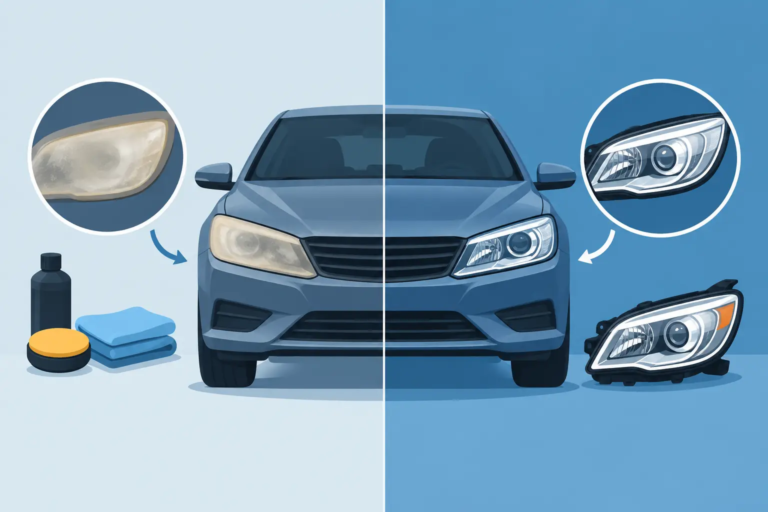
Replacement may be the right call when the housing is broken, the lens has extensive cracks, internal components are damaged, or the assembly cannot produce a proper beam pattern. Some modern headlight assemblies are expensive, though, and replacing them can involve more labor and cost than drivers expect.
When the issue is surface oxidation, restoration is usually the more cost-effective first option. It preserves the original assembly, improves visibility, and can refresh the look of the entire front end. For many vehicles, that is all that is needed.
SuperGlass Denton provides mobile headlight restoration for drivers and fleets who want a clear answer before spending money on replacement. A qualified assessment can help you avoid replacing a headlight that can still be restored properly.
Clear headlights make night driving easier, help your vehicle look cared for, and remove one more question mark before an inspection or safety check. If your lenses are yellow, cloudy, or noticeably dim, address them before they become the kind of problem that a simple repair can no longer solve.