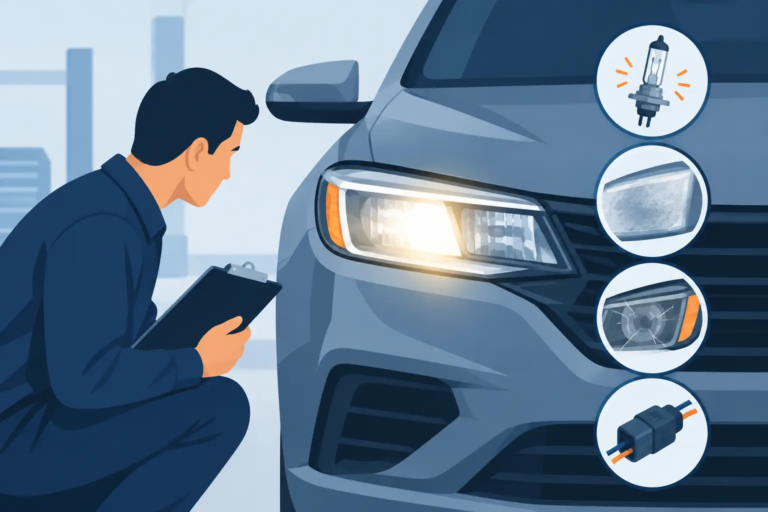
That late-night drive feels different when your headlights stop doing their job. If the road ahead looks dim, hazy, or uneven, the top signs headlights need restoration are usually already showing up in plain sight. Most drivers notice the problem gradually, which is exactly why it gets ignored until nighttime visibility becomes a real safety issue.
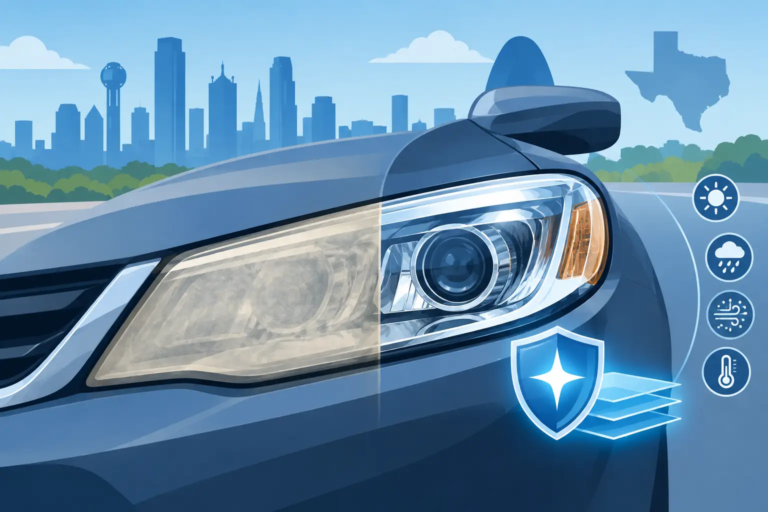
Headlight lenses take a beating in North Texas. Sun exposure, road grime, heat, and oxidation wear down the clear outer layer over time. What starts as a slightly dull look can turn into a cloudy, yellowed lens that cuts light output and makes your vehicle look older than it is. The good news is that many headlights can be restored without the cost of full replacement.
Why headlight condition matters more than most drivers think
When headlights fade, the issue is not just cosmetic. Yes, cloudy lenses make a vehicle look neglected, but the bigger concern is how much usable light gets blocked before it ever reaches the road. You may still see your lights turn on, but that does not mean they are performing the way they should.
For commuters, parents driving at night, and fleet vehicles that stay on the road after dark, reduced headlight clarity can mean shorter reaction time. Street signs become harder to read. Lane edges are less visible. Rainy conditions feel worse. That is when restoration stops being a nice-to-have and becomes the smarter fix.
Top signs headlights need restoration
1. Your headlights look cloudy or foggy
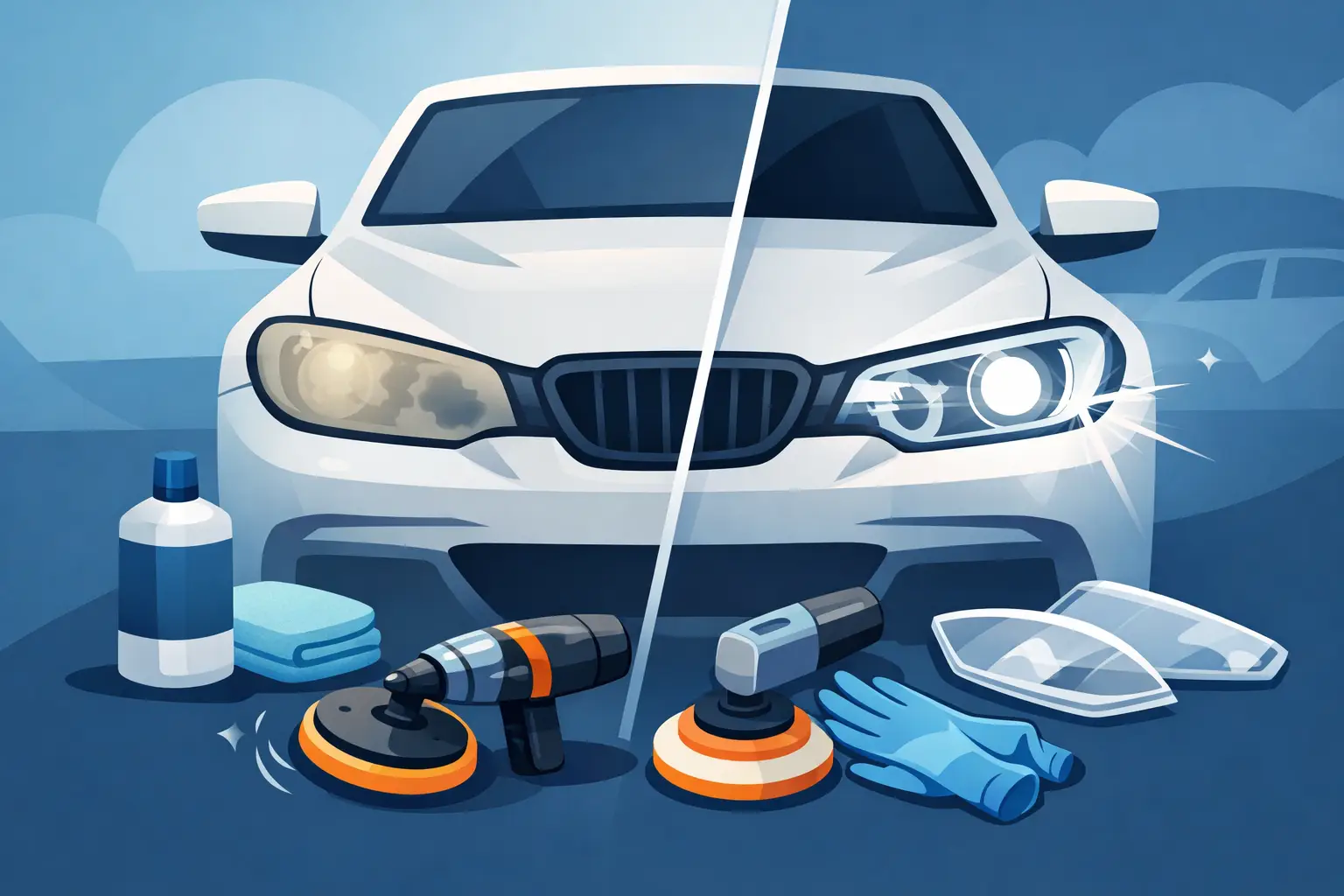
This is the most common warning sign. If the lens has a milky film or a dull haze across the surface, oxidation is likely building up. That outer layer scatters light instead of letting it pass through cleanly.
Cloudiness usually starts small, then spreads across the lens. In daylight, it may look like a simple cosmetic issue. At night, it can cut visibility more than most people expect. If both headlights look washed out instead of clear, restoration is usually worth checking before you assume replacement is necessary.
2. The lenses are turning yellow
Yellowing is another strong sign that UV damage has broken down the protective surface of the lens. This happens gradually, especially in areas with intense sunlight and heat. Once the lens starts changing color, the clarity is already compromised.
Yellow headlights do not just make the front end of the vehicle look older. They also reduce the brightness and accuracy of the beam pattern. If your lights seem weaker even after replacing bulbs, the lens itself may be the real problem.
3. Night driving feels harder than it used to
Many drivers first notice the issue from behind the wheel, not while standing in front of the car. If roads seem darker, reflective signs are harder to spot, or you feel like you are outdriving your headlights, pay attention to that change.
This is one of the top signs headlights need restoration because it points directly to performance, not just appearance. A degraded lens can block and scatter light enough to make normal nighttime driving feel tiring or uncomfortable. If you are squinting more, slowing down more, or relying heavily on high beams, your headlights may not be delivering full output.
4. The beam looks uneven or weak
Headlights should throw a clean, consistent beam. When the lenses are badly oxidized, the light can appear patchy, diffused, or noticeably weaker on one or both sides. Sometimes drivers assume there is an electrical problem or a bad bulb when the lens is actually the cause.
It depends on the age and condition of the vehicle, of course. Some beam issues come from alignment, bulb failure, or internal housing damage. But if the outer lens is visibly faded and the light pattern looks soft or inconsistent, restoration is often the first thing to consider.
5. Water spots, surface pitting, or rough texture are visible
Run your eyes closely over the headlight lens. If the surface looks rough, peppered, or covered in stubborn spotting, that wear can interfere with light transmission. Road debris, harsh weather, and long-term exposure can leave the lens looking worn even if it is not fully yellow yet.
A smooth, clear lens performs better than one covered in micro-damage. Minor surface deterioration can often be corrected with professional restoration. If the damage is too deep, replacement may be the better route, but that is not the first conclusion to jump to.
6. New bulbs did not solve the problem
This is a big one. A lot of drivers replace the bulbs expecting brighter results, then realize almost nothing changed. When that happens, the issue is often not inside the headlight. It is the lens blocking the light from getting out.
If fresh bulbs still leave you with weak nighttime visibility, cloudy appearance, or poor beam reach, the housing needs attention. Restoration can make a dramatic difference because it addresses the actual barrier between the bulb and the road.
7. Your vehicle looks older and less cared for than it really is
This may sound cosmetic, but it matters more than people think. Oxidized headlights drag down the whole appearance of a vehicle. Even a clean, well-maintained car can look tired when the lenses are faded and yellow.
For personal vehicles, that affects pride of ownership and resale appeal. For fleet vehicles, it affects the professional image you present to customers, passengers, or clients. Clear headlights make a vehicle look maintained, safer, and more professional without a major investment.
When restoration makes sense and when it might not
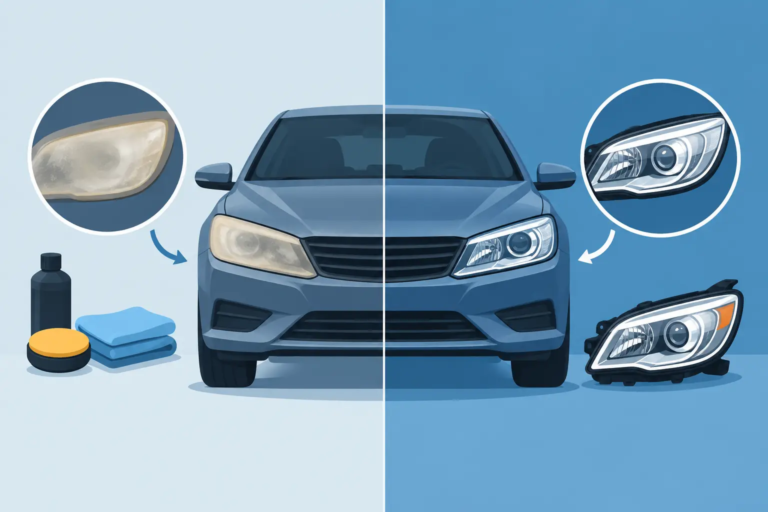
In many cases, restoration is the smarter move because it saves the original headlight assembly and avoids unnecessary replacement costs. That is especially true when the problem is oxidation, haze, yellowing, or moderate surface wear. A proper restoration can improve both appearance and light output at a fraction of the cost of new assemblies.
That said, not every headlight should be restored. If the lens is cracked, the housing has moisture inside, mounting tabs are broken, or the damage is deep enough to affect structural integrity, replacement may be necessary. This is where experience matters. A specialist should tell you honestly whether restoration will deliver a real result or whether replacement is the better call.
Why DIY kits do not always hold up
Plenty of drivers try store-bought kits first, and sometimes they help for a while. The problem is consistency. Many DIY solutions improve the look temporarily but do not fully correct the surface or properly protect it afterward. That can leave headlights looking better for a short period, then fading again faster than expected.
Professional restoration is different because the process is controlled, the materials are stronger, and the goal is lasting clarity, not a quick cosmetic touch-up. For busy drivers and fleet operators, repeating the same temporary fix every few months is usually not the best use of time or money.
What local drivers and fleet managers should watch for
In North Texas, sun exposure is a major factor. Vehicles parked outside all day tend to show oxidation sooner, especially work trucks, school vehicles, and commuter cars that spend long hours on the road. If your headlights are starting to haze over, waiting usually makes the job harder and the visibility worse.
For fleet managers, there is also the issue of consistency. One or two vehicles with poor headlights can create safety concerns and make the fleet look less professional. Catching the problem early helps avoid downtime and keeps vehicles road-ready without paying for unnecessary assembly replacement.
A smart next step if you are noticing these signs
If several of these symptoms sound familiar, it is time to have the headlights evaluated by someone who works on restoration regularly. A specialist can tell you quickly whether the issue is oxidation, bulb performance, deeper damage, or a combination of factors. That clarity matters because the right repair saves money, improves safety, and keeps you from replacing parts that may still have plenty of life left.
At SuperGlass Denton, that repair-first mindset is exactly the point. If your headlights are dull, yellow, or underperforming, getting them checked now is a lot easier than waiting for another frustrating drive home after dark.
Clear headlights change more than how your vehicle looks. They make night driving less stressful, help you see farther, and put your vehicle back in the condition it should have been in all along.