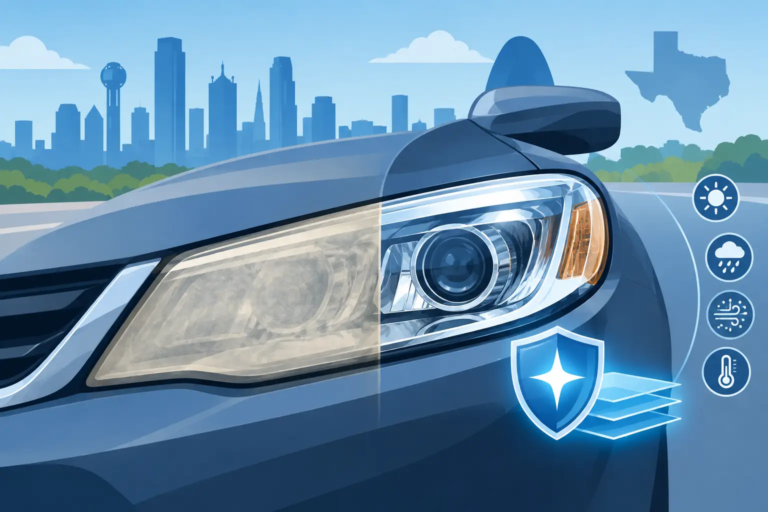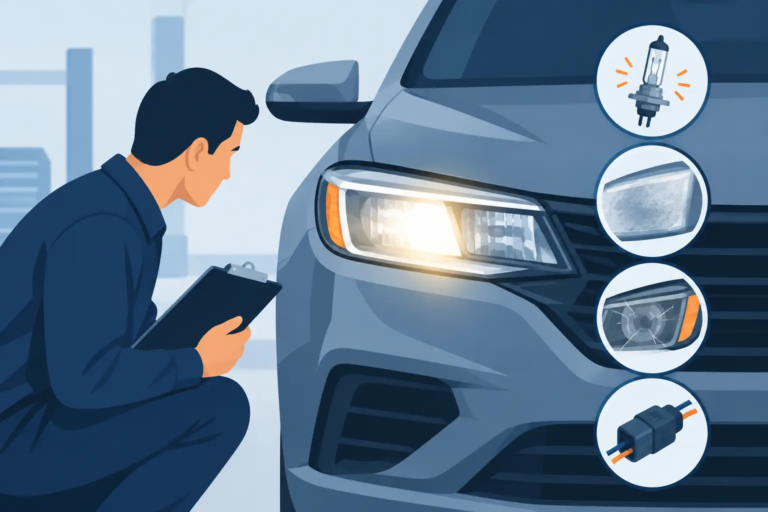
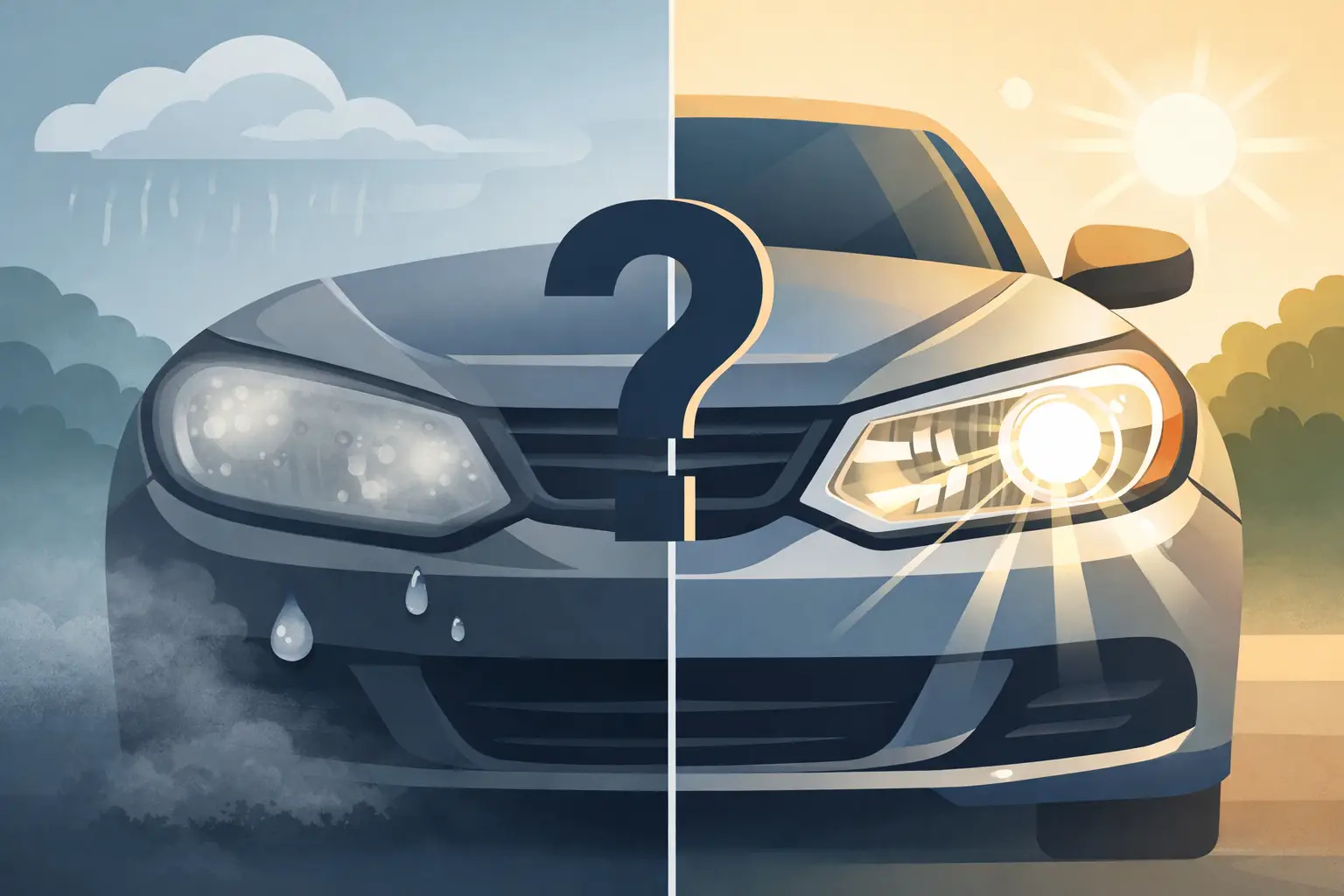
That cloudy, yellowed film on your headlights is not just making your car look older. If you’re asking, “why are my headlights foggy,” you’re usually seeing years of sun exposure, oxidation, road grime, and surface wear catching up with the plastic lens.
For drivers across North Texas, this is a common problem. Strong sun, heat, dust, highway driving, and weather swings all work against modern headlight lenses. The good news is that foggy headlights usually do not mean the whole assembly needs to be replaced. In many cases, the lens can be restored and the light output improved without the cost of new parts.
Why Are My Headlights Foggy in the First Place?
Most newer vehicles use polycarbonate plastic headlight lenses instead of glass. That material is tough and impact-resistant, which is good for daily driving. The trade-off is that plastic does not age as gracefully as glass.
When headlights are new, they have a clear protective coating on the outside. Over time, UV rays break that coating down. Once that happens, the surface starts oxidizing. That oxidation creates the hazy, dull, or yellow look most drivers notice first.
Fogginess can also come from fine scratches. Every car wash, every blast of road dust, and every wipedown with the wrong towel can leave tiny marks. One scratch does not matter much, but thousands of them scatter light and make the lens look cloudy.
Then there is contamination. Dirt, salt, bug residue, traffic film, and hard water spots can build up on the surface. Sometimes that grime is the whole problem. More often, it is sitting on top of oxidation and making it look worse.
The Main Causes of Foggy Headlights
UV damage and oxidation
This is the biggest cause by far. The outer layer of the lens gets cooked by the sun over time. Once the UV coating fails, oxidation forms on the plastic. That is what gives headlights a faded, chalky, or yellow appearance.
In Texas, this tends to happen faster than many drivers expect. Long sunny summers and vehicles parked outside every day create the perfect conditions for lens damage.
Surface scratches and wear
Road debris, automatic car washes, and even improper cleaning can rough up the lens. A worn surface stops looking clear because light hits those scratches and scatters instead of passing through cleanly.
This is one reason some headlights still look foggy even after a basic wash. The problem is not dirt alone. The surface itself has changed.
Moisture inside the headlight
Sometimes the issue is not on the outside. If you see condensation, water droplets, or a gray haze inside the housing, the seal may be compromised. In that case, restoration of the outer lens may help appearance, but it will not fix an internal moisture problem.
This is where it depends on what you’re seeing. Exterior oxidation can often be repaired. Internal condensation may point to a vent, gasket, or housing issue.
Chemical damage
Harsh cleaners and low-quality DIY products can do more harm than good. Some quick-fix kits improve clarity for a short time but strip what is left of the protective layer. That can leave the lens looking decent for a few weeks, then worse than before.
How Foggy Headlights Affect Safety
A lot of drivers put this off because the vehicle still technically has working headlights. The bulbs turn on, so it feels like a cosmetic issue. But foggy lenses reduce how much useful light reaches the road.
That matters at night, in rain, and during early morning or evening commutes. A cloudy lens can dim your forward visibility and make your beam pattern less effective. Instead of projecting light where you need it, the lens scatters it.
It can also make your vehicle less visible to other drivers. That is not something most people think about until they are driving in bad weather or on a dark two-lane road.
For families, commuters, and fleet vehicles, this is more than appearance. Clear headlights help drivers see hazards sooner and react faster.
Can Foggy Headlights Be Repaired?
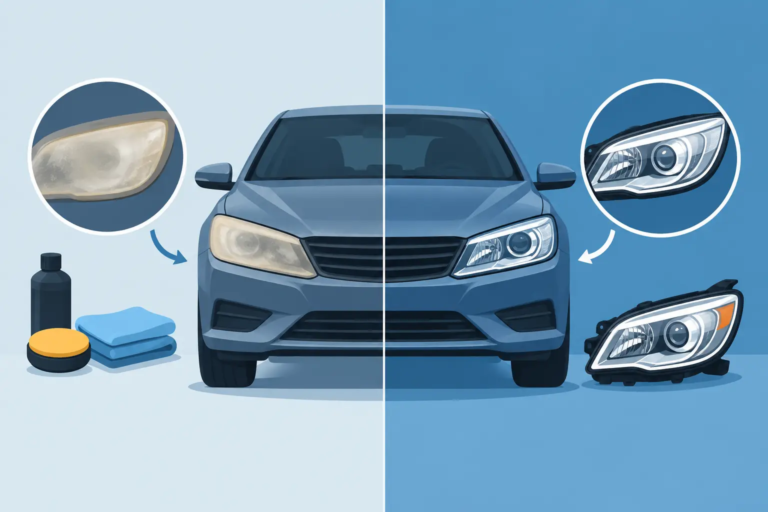
In many cases, yes. If the problem is oxidation, yellowing, or surface haze on the outside of the lens, professional restoration is often the right move. The process removes damaged surface material, refines the lens, and applies protection so the headlight looks clearer and performs better.
That is usually much more cost-effective than replacing the entire headlight assembly. Replacement can get expensive fast, especially on newer vehicles with integrated lighting systems.
The catch is that not every foggy headlight is a restoration candidate. If the lens is deeply cracked, the housing is damaged, or moisture intrusion has caused internal failure, replacement may still be necessary. A specialist should be able to tell the difference quickly.
Why DIY Headlight Fixes Often Fall Short
If you have searched this problem before, you have probably seen home remedies and store-bought kits promising fast results. Some of them do make the lens look clearer for a little while. That is why they stay popular.
But temporary improvement and real restoration are not the same thing.
A basic DIY approach often handles the surface haze without properly protecting the lens afterward. That means the oxidation comes back, sometimes within weeks or months. In some cases, aggressive sanding or the wrong chemical treatment can leave uneven spots, distortion, or faster future damage.
That does not mean every DIY kit is useless. It means results depend on the condition of the lens, the quality of the materials, and whether the final protective step is done correctly. Most drivers want the problem solved, not repeated every season.
Signs It Is Time to Stop Waiting
If your headlights look yellow in daylight, seem dimmer at night, or still appear cloudy right after washing the car, the problem is not going away on its own. You may also notice that one lens looks worse than the other, which is common if one side gets more sun exposure.
Fleet operators should pay even closer attention. When multiple vehicles start showing lens haze, it affects consistency, appearance, and driver confidence. Taking care of it early is usually easier and less expensive than waiting for severe deterioration.
What Professional Restoration Actually Does
A proper restoration is not just wiping on a shine product. It addresses the damaged outer layer that is causing the haze. The lens is corrected, refined, and protected so clarity can return and stay that way longer.
That last part matters. Without protection, you are just exposing fresh plastic to the same sun and road conditions that caused the problem in the first place.
For many drivers in Denton, Plano, Frisco, McKinney, Lewisville, Carrollton, and surrounding areas, mobile service makes this even easier. You do not have to lose part of your day sitting in a shop just to get your headlights evaluated and restored.
Why Replacement Is Not Always the Smart First Step
A lot of general shops jump straight to replacement because it is simpler for them. But simpler for the shop is not always better for the customer.
If the assembly still functions and the damage is limited to the lens surface, restoration can save money and extend the life of the existing headlight. That is especially valuable for practical drivers who want a clear answer, fair pricing, and a fix that makes sense.
At SuperGlass Denton, that repair-first mindset is a big part of the value. If something can be restored correctly instead of replaced, that is usually the better deal for the customer.
How to Keep Headlights from Getting Foggy Again
No headlight stays perfect forever, especially in North Texas conditions. But a few habits help. Parking in a garage or shaded area reduces UV exposure. Hand washing with clean materials is gentler than abrasive cleaning methods. Keeping the lens protected after restoration makes a real difference too.
The bigger point is timing. Slight haze is easier to correct than severe oxidation. If you wait until visibility is clearly affected, the damage is usually more advanced and the repair options may be narrower.
Foggy headlights are common, but they should not be treated as normal wear you just live with. If your lights are dull, yellowed, or hazy, getting a professional opinion early can save you money, improve nighttime visibility, and keep a small problem from turning into an expensive one.