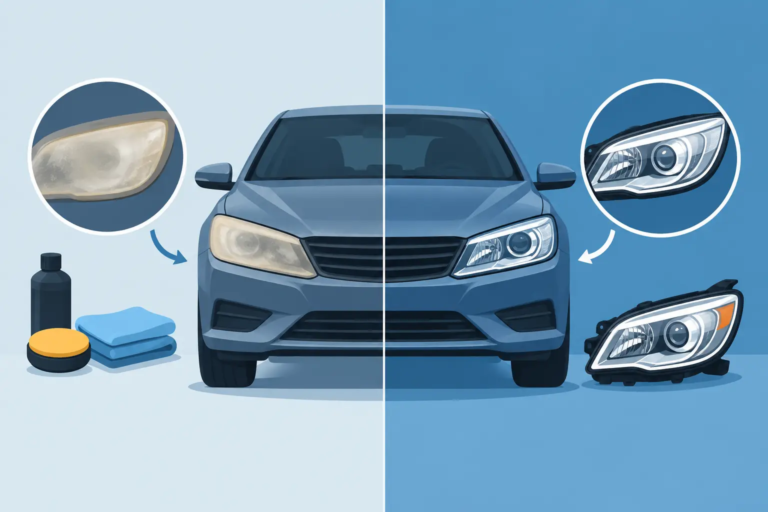
Cloudy headlights rarely show up overnight. One month your lenses look clear enough, and the next they seem dull, yellow, or chalky. If you have been wondering what causes headlight lens oxidation, the short answer is exposure – sunlight, heat, road grime, moisture, and time all work together to break down the outer surface of the lens.
That haze is not just cosmetic. Oxidized headlights can cut down your nighttime visibility, make your vehicle look older, and even create a safety issue in rain or low light. For drivers around Denton and across North Texas, where intense sun and heat are part of daily life, headlight oxidation is especially common.
What causes headlight lens oxidation in the first place?
Most modern headlight lenses are made from polycarbonate plastic. It is durable, lightweight, and impact-resistant, which makes it a smart material for vehicles. But it also has one weakness – it needs a protective hard coat on the outside to stand up to UV exposure.
Over time, that factory coating wears down. Once it starts failing, the plastic underneath becomes vulnerable. UV rays from the sun begin attacking the surface, and the lens slowly oxidizes. That oxidation is what creates the familiar cloudy or yellowed look.
In practical terms, oxidation is surface breakdown. The lens is not usually dirty all the way through. The outer layer has been damaged, and that damage scatters light instead of letting it pass through cleanly.
Sunlight is the biggest culprit
If there is one answer to what causes headlight lens oxidation more than anything else, it is UV radiation. Sun exposure is relentless, especially in Texas. Even when a car is parked most of the day, those lenses are sitting outside taking direct punishment from the sun.
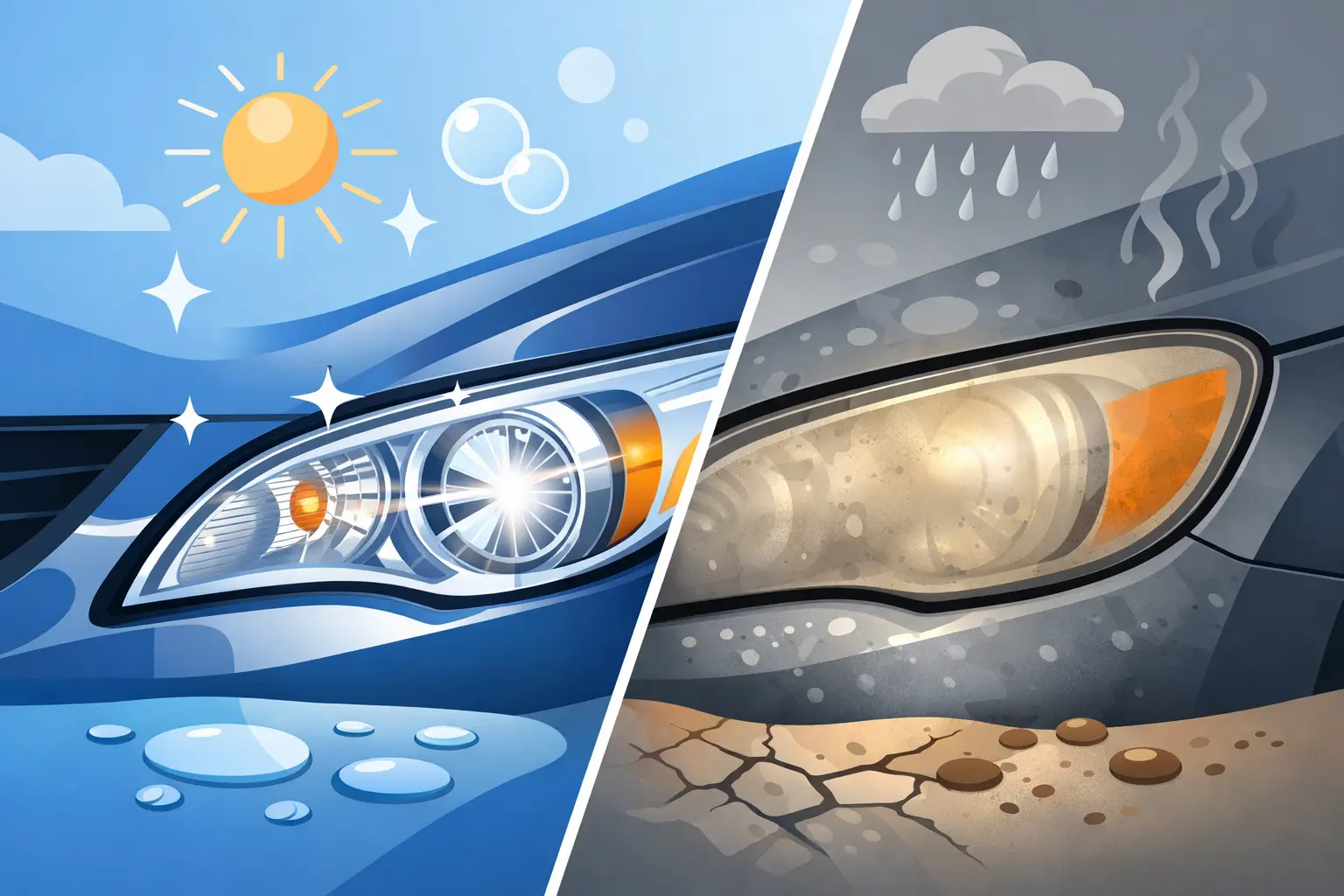
The process is gradual. First the clear coat starts to weaken. Then the surface dries out, fades, and becomes slightly rough. After that, oxidation becomes visible as haze, yellowing, or a milky film. In more advanced cases, you may also see peeling or fine cracking.
Garage-kept vehicles usually age more slowly than vehicles parked outside all day. But no car is immune forever. Daily driving means daily exposure.
Heat speeds everything up
North Texas heat does more than make the steering wheel hard to touch. High temperatures accelerate the breakdown of plastics and coatings. When heat combines with strong UV, oxidation can develop much faster.
Headlights also generate their own heat when they are in use. That repeated heating and cooling cycle puts stress on the lens surface over time. It is one reason older vehicles often develop headlight haze even if they have been otherwise well maintained.
This is also why two vehicles of the same age may not look the same. A truck parked outside every day in full sun will usually show more lens damage than a sedan that spends most of its life in a shaded garage.
Road debris, chemicals, and car washes wear the surface down
The sun starts the problem, but the road finishes it. Dust, sand, small debris, bug residue, and air pollutants all hit the front of your vehicle every time you drive. That constant abrasion slowly erodes the protective layer on the lens.
Then there are chemicals. Harsh cleaners, strong degreasers, and repeated exposure to certain automatic car wash products can strip or weaken the surface even more. Cheap DIY attempts can make things worse too. If someone sands or buffs the lens without properly refinishing and protecting it, oxidation often comes back fast.
That is the part many drivers miss. The cloudy look may seem like a simple cleaning issue, but if the protective layer is compromised, wiping it down will not solve the real problem.
Moisture and air pollution add to the damage
Oxidation happens when oxygen interacts with the lens surface after that factory protection starts to fail. Moisture, humidity, and pollutants in the air can all contribute to the process. While UV damage is the main trigger, environmental exposure keeps feeding the problem.
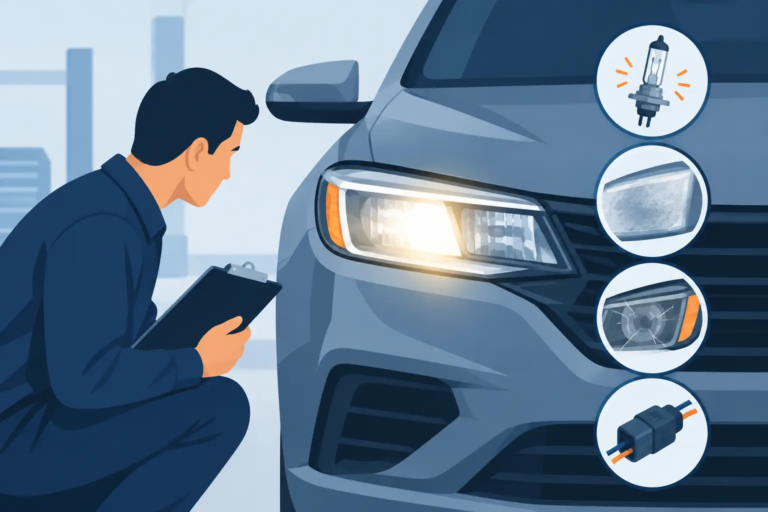
If your headlights also have minor seal issues, condensation inside the housing can confuse the diagnosis. Internal moisture and external oxidation are different problems, though they can happen at the same time. A lens might look foggy because the outside is oxidized, the inside is damp, or both.
That is why a proper inspection matters. Not every cloudy headlight needs the same fix.
Why some headlights turn yellow and others turn white
Not all oxidation looks the same. Some lenses develop a yellow or brown tint, while others look more chalky white or dull gray. The difference usually comes down to the stage of damage and the way the lens material is reacting to UV exposure and surface wear.
Yellowing often shows up earlier as the plastic begins to degrade. A whiter haze can appear as the surface becomes more etched and rough. If the lens has heavy pitting from road wear, the cloudiness may look uneven, with clearer patches mixed with deeper damage.
For vehicle owners, the exact shade matters less than the result. Any of these conditions can reduce light output. If your headlights look faded during the day, they are almost certainly performing worse at night.
Can oxidation be prevented?
You can slow it down, but you usually cannot prevent it forever. Headlight lenses live in a tough spot on the vehicle. They face the sun, heat, weather, and debris every time you drive.
Still, a few habits make a real difference. Parking in a garage or shaded area helps. Hand washing with safe products is better than using aggressive chemicals. Applying proper UV protection after restoration can extend the life of the lens. Keeping the surface clean also reduces the buildup of contaminants that grind into the plastic over time.
The big trade-off is that prevention takes consistency. Most drivers are busy. They are not thinking about headlight coatings until the lens already looks bad. That is normal, and it is exactly why professional restoration becomes the practical option.
What causes headlight lens oxidation to come back after restoration?
This is a common frustration. A driver gets the headlights polished, they look great for a while, and then the haze returns. Usually, that happens because the oxidation was removed without replacing meaningful surface protection.
Buffing alone can make a lens look clear in the short term. But if the damaged outer layer is exposed and left unprotected, the sun starts attacking it again almost immediately. That is why some bargain fixes wear off quickly.
A proper restoration should not just improve appearance for a week or two. It should address the damaged surface and leave the lens with protection against future UV damage. The exact process can vary based on lens condition, but the principle stays the same – clear it, then protect it.
When oxidation becomes a safety issue
Drivers often put off headlight restoration because the change happens slowly. Your eyes adjust. You get used to the look. Then one night on a dark road, you realize your lights are not doing much.
Oxidized lenses scatter and block light. That means less usable illumination on the road ahead. It can also reduce how visible your vehicle is to others. For commuters, families, and fleet vehicles that spend long hours on the road, that matters.
If you notice dim output, poor visibility in rain, or a beam pattern that looks weak even after replacing bulbs, the lens may be the real problem. New bulbs cannot fix a cloudy cover.
Repair usually makes more sense than replacement
Many drivers assume cloudy headlights mean they need new assemblies. Sometimes replacement is necessary, especially if the housing is cracked, badly sealed, or damaged internally. But in many cases, oxidation is a surface issue, and restoration is the smarter move.
That means lower cost, less waste, and less downtime. For busy vehicle owners and fleet managers, that matters. Getting the lens professionally restored can bring back clarity and performance without the expense of replacing parts that are otherwise still usable.
That is also where working with a repair specialist makes a difference. A general shop may default to replacement. A specialist looks at whether the component can be restored correctly and cost-effectively first.
For North Texas drivers, the real answer to what causes headlight lens oxidation is simple – sun, heat, exposure, and time. The good news is that cloudy lenses are often fixable, and fixing them early usually gives you better results than waiting until the damage gets worse.
If your headlights are starting to haze over, do not treat it like a minor cosmetic annoyance. Clear headlights help you see better, look better, and get more life out of the vehicle you already own. Sometimes the smartest repair is the one that saves what is still worth keeping.