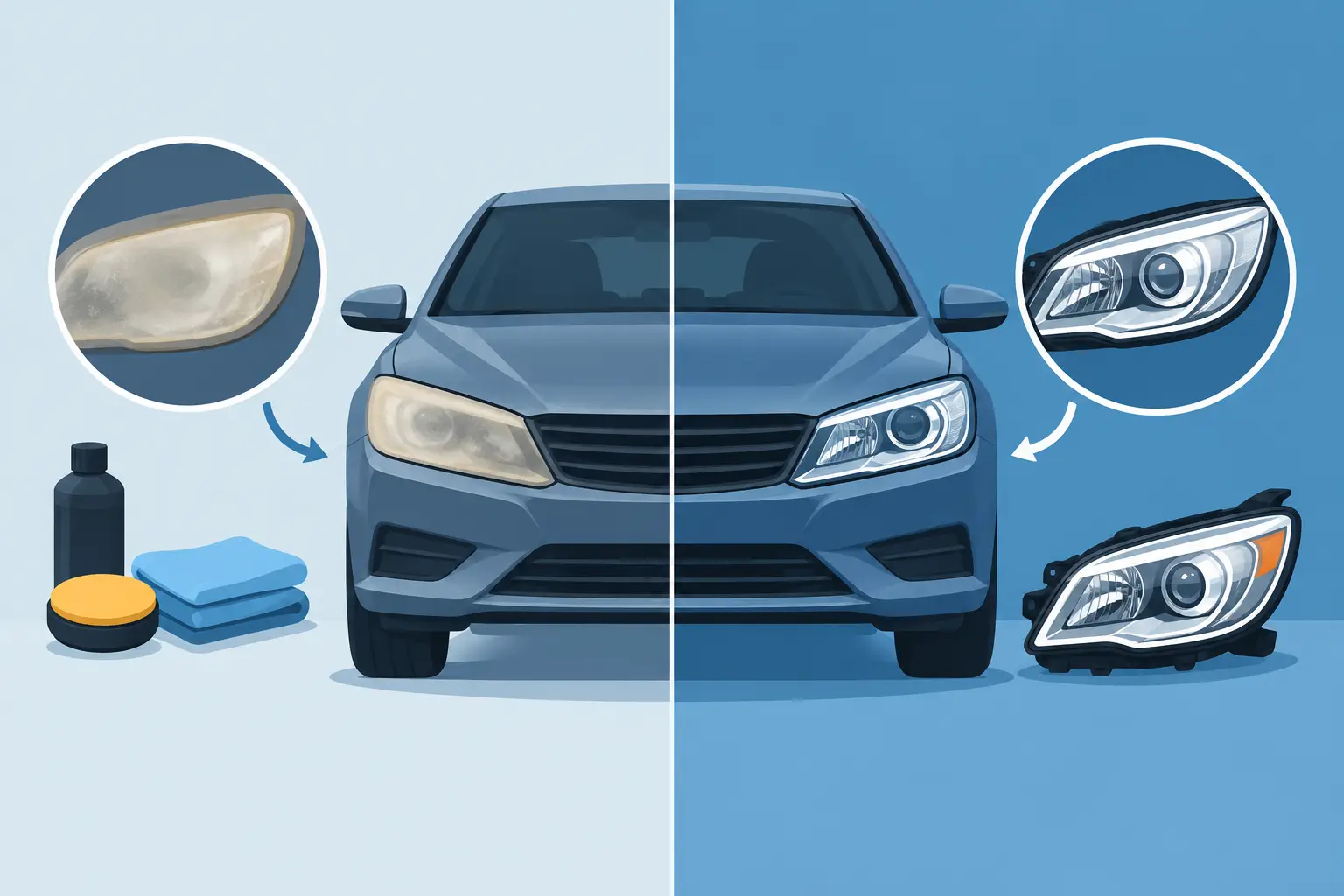
A cloudy headlight is not just a cosmetic problem. When the outer lens turns yellow, hazy, or scratched, less usable light reaches the road. That can make night driving, rainy commutes, and early morning school drop-offs more difficult than they need to be. This headlight lens comparison explains the practical choice most drivers face: restore the lenses you have or replace the entire headlight assembly.
For many Denton-area drivers, restoration is the better value. But not every lens can or should be restored. The right answer depends on where the damage is, how far it has progressed, and whether the assembly itself is still in good condition.
Headlight Lens Comparison: What You Are Really Comparing
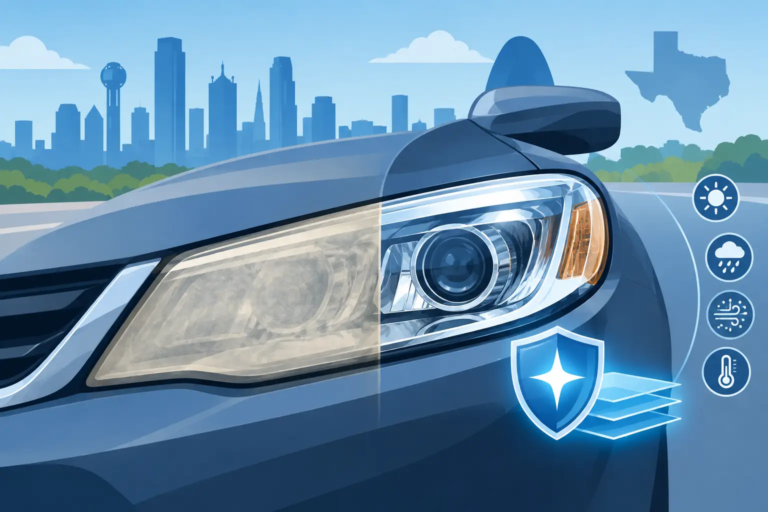
Most late-model vehicles use clear polycarbonate plastic headlight lenses, not glass. Polycarbonate is lightweight, impact-resistant, and easier for manufacturers to shape into modern headlight designs. Its weakness is exposure. Years of North Texas sun, heat, road grit, car-wash chemicals, and moisture slowly break down the factory UV coating.
That breakdown causes the familiar dull, yellow appearance. Fine scratches scatter the beam before it leaves the headlight, reducing clarity and making the vehicle look older. A lens can appear only mildly hazy in daylight yet noticeably limit visibility after dark.
When comparing restoration with replacement, the question is not simply, “Which one makes the headlights look clear?” Both can improve appearance. The better question is whether the existing lens and housing are structurally sound enough to deliver a lasting repair.
A professional restoration renews the outer lens surface and applies protection designed to slow future UV damage. Replacement installs a new or used complete headlight assembly, which may include the lens, housing, reflectors, mounts, bulbs, and electronics depending on the vehicle.
When Headlight Restoration Is the Smart Choice
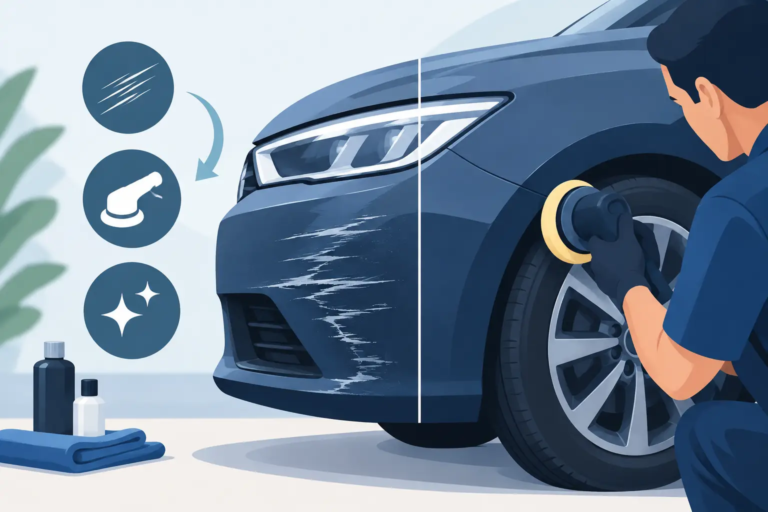
Restoration is often the right call when the damage is on the outside of the lens. Surface oxidation, yellowing, light scratches, dullness, and faded UV coating are all common candidates. These problems are repairable without throwing away a complete headlight assembly that still functions properly.
The main benefit is value. A quality restoration typically costs much less than replacing assemblies, especially on vehicles with LED lighting, adaptive headlights, or assemblies that require programming or calibration. It also avoids the risk of buying low-quality aftermarket parts that may not fit correctly, seal well, or produce the same beam pattern as the original equipment.
For busy drivers, the convenience matters too. Mobile restoration can be completed where your vehicle already is, whether that is at home, at work, or at a fleet yard. There is no need to leave the vehicle at a shop for a simple surface problem.
The finish matters more than many people realize. Quick wipe-on products and DIY kits may improve clarity for a short time, but they often do not fully remove damaged material or restore dependable UV protection. Without the correct preparation and coating, haze can return quickly. A professional repair should address the oxidized surface, refine the lens for optical clarity, and protect it afterward.
Restoration is particularly useful for fleet vehicles. School buses, work trucks, rental cars, and service vehicles accumulate miles quickly and spend long hours in direct sun. Restoring lenses helps maintain a clean professional appearance while supporting safer nighttime operation without taking multiple vehicles out of service for replacement parts.
When Replacement Makes More Sense
There are situations where replacing the complete assembly is the more responsible repair. Restoration cannot fix a cracked lens, broken mounting tabs, severe impact damage, or a housing that no longer seals against water. If moisture is getting inside, the reflective surfaces or electrical components may already be compromised.
Replacement is also likely necessary when the damage is internal. If the reflector bowl is burned, peeling, or corroded, polishing the outer lens will not restore the headlight’s output. The same is true when condensation has caused lasting staining inside the assembly or when the lens is damaged on the inner surface.
Modern headlights can make replacement more complicated than expected. Some assemblies contain LED modules, daytime running lights, automatic leveling motors, cameras, or sensors. A replacement may require aiming, calibration, or programming. That does not mean replacement is wrong. It means the decision should be made with a clear understanding of the total cost, parts quality, and labor involved.
Used assemblies can lower the parts cost, but they bring trade-offs. They may have hidden haze, weakened mounting points, fading, or a different level of wear than the opposite headlight. New aftermarket assemblies may be affordable, yet quality varies widely. A poor seal can invite moisture, and an inaccurate beam pattern can create visibility problems of its own.
Factory Lens, Aftermarket Assembly, or Restored Lens?
A useful headlight lens comparison is not just restoration versus replacement. It is also original equipment versus aftermarket parts.
A restored factory lens often remains the strongest value when the original housing, mounts, seals, and reflectors are intact. Factory assemblies are designed specifically for the vehicle, and preserving them can prevent fitment issues. The goal is not to replace parts unnecessarily. It is to restore what can be restored correctly.
A new factory assembly can be the best choice for severe damage, but it is usually the most expensive option. It may be justified on newer vehicles, higher-end models, or any vehicle with advanced lighting features where correct fit and performance are critical.
Aftermarket assemblies occupy the middle ground. Some are well made and provide a practical solution. Others are inexpensive for a reason. Lens clarity on day one does not guarantee long-term UV resistance, proper sealing, or accurate light distribution. Before choosing this route, consider the warranty, the brand reputation, and whether installation includes proper headlight aiming.
There is also a safety angle. A headlight that looks clean but throws light too high, too low, or unevenly is not doing its job. Clear lenses are part of the solution. Correct beam aim and a healthy bulb or LED system matter just as much.
Signs Your Lenses Need Attention Now
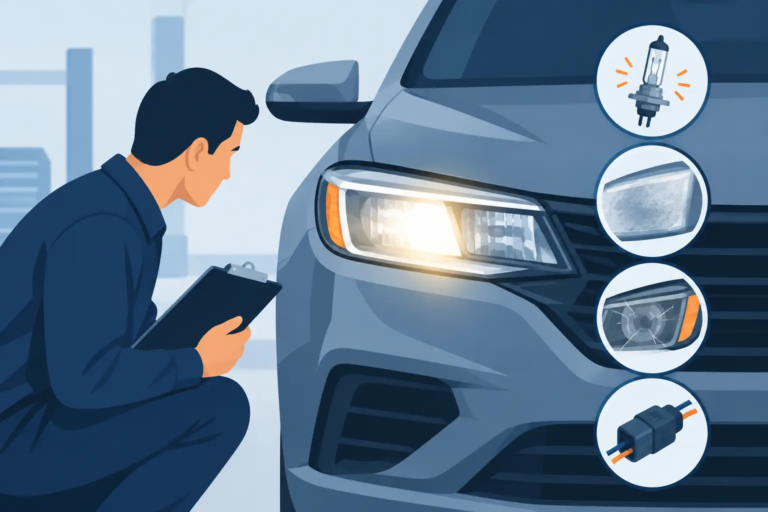
You do not need to wait until headlights are completely yellow. Check them in direct sun and again at night with the lights on. A professional evaluation is worthwhile if you notice several warning signs:
- Yellow or milky haze across the outer lens
- Fine scratches that catch sunlight or scatter the beam at night
- Dull patches that remain after washing the vehicle
- Reduced visibility despite replacing bulbs
- Moisture droplets, standing water, or fogging inside the housing
- Cracks, chips, loose mounts, or broken tabs around the assembly
The first four usually point to exterior lens restoration. The last two can indicate an assembly problem that needs replacement or additional repair. Sometimes both issues exist at once, which is why an honest inspection comes before a recommendation.
What a Lasting Restoration Should Include
Not all headlight restoration work is equal. A lasting result requires more than buffing the lens until it looks better from ten feet away. The damaged outer layer needs to be properly removed, the surface needs to be refined, and the lens needs a protective finish suitable for UV exposure.
The vehicle should also be protected during the process. Paint, trim, and surrounding areas need careful masking so the work stays focused on the lens. After restoration, the technician should inspect clarity and recommend whether the headlights need aiming or whether aging bulbs are limiting performance.
Maintenance helps preserve the result. Regular washing removes grime that can dull the surface, and parking under cover when possible reduces UV exposure. Still, no exterior lens stays new forever under Texas sun. The advantage of professional restoration is that it gives a sound assembly another useful life at a fraction of replacement cost.
Get the Right Answer Before Buying New Headlights
If your lenses are hazy but the housings are dry, secure, and undamaged, do not assume replacement is your only option. A specialist can tell the difference between repairable oxidation and damage that has gone beyond the lens surface.
SuperGlass Denton brings mobile headlight restoration to drivers and fleets across Denton and surrounding North Texas communities, helping customers avoid unnecessary replacement whenever a quality repair is the better solution. If the assembly truly needs replacement, you will know why. If restoration can bring back clarity and improve the look of your vehicle, that is the repair worth making.