Water spots on auto glass are easy to ignore until the sun hits them just right. Then suddenly your windshield looks hazy, your side windows look neglected, and nighttime glare gets worse than it should. If you are wondering how to remove glass water spots without making the problem worse, the answer is simple – start with the least aggressive method and only step up when the glass truly needs it.
Most water spots are mineral deposits left behind when hard water dries on the surface. Sprinklers are a common culprit in North Texas, especially when a vehicle sits in a driveway or office parking lot for hours at a time. Rain can also leave spotting if it mixes with dust, road grime, or minerals already on the glass. The longer those deposits sit, the more stubborn they become.
Why glass water spots happen
Not all spots are the same, and that matters when you are deciding how to clean them. Fresh spots usually sit on top of the glass. Older spots can start to bond more firmly, especially after repeated heat exposure. On a windshield, that means regular sun, dust, and temperature swings can bake the residue in place.
There is also an important difference between a deposit and actual glass damage. Mineral spotting often feels rough or chalky and may come off with the right cleaner. Etching is different. That happens when minerals or contaminants sit long enough to affect the surface itself. Etching can look like water spots, but it does not always respond to normal cleaning.
That is why some DIY methods work quickly and others seem to do nothing. If the glass is only dirty, removal is straightforward. If the surface is etched, cleaning alone may not fully restore clarity.
How to remove glass water spots safely
The safest way to handle auto glass is to work in stages. You do not need to attack it with harsh tools right away. In fact, that is how people end up with scratches, smeared residue, or damaged trim.
Start with a proper wash
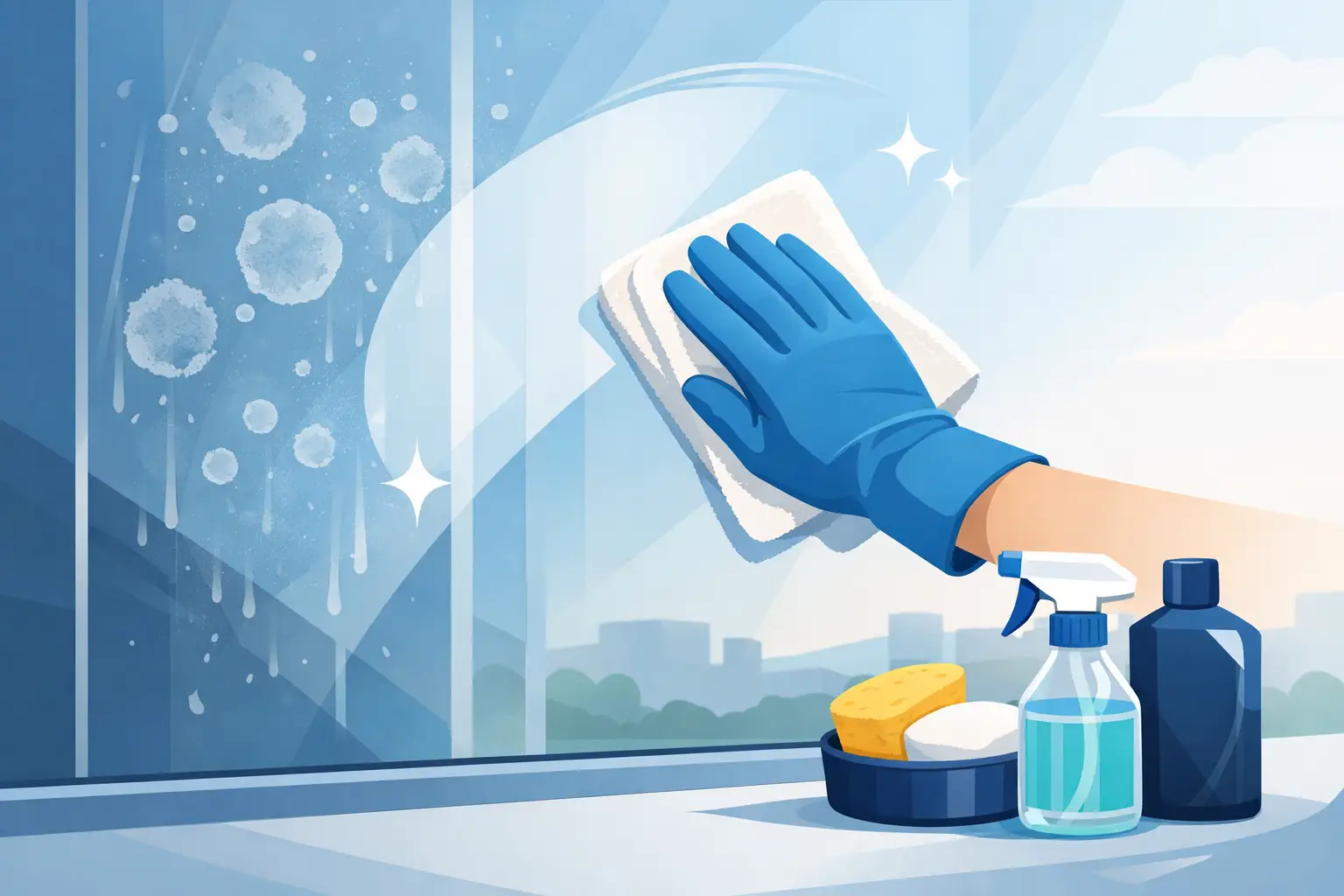
Before trying any spot remover, wash the glass thoroughly. Use automotive glass cleaner or car wash soap with water to remove loose dirt and road film. Dry the area with a clean microfiber towel. If you skip this step, you risk rubbing grit into the glass while trying to remove the spots.
A basic wash will not remove heavy mineral buildup, but it gives you a clean surface so you can see what is really there. Sometimes what looks like hard water spotting is partly traffic film, old cleaner residue, or a layer of grime from wiper use.
Try distilled white vinegar first
For mild to moderate spotting, white vinegar is often the best first move. It is acidic enough to break down mineral deposits, but still far gentler than abrasive compounds. Mix equal parts distilled white vinegar and water in a spray bottle, apply it to the affected glass, and let it sit for a few minutes. Then wipe with a microfiber towel and rinse.
If the spots are more stubborn, use straight vinegar on a towel and apply light pressure in small sections. Do not let it dry on the glass in direct sun. Work in the shade if possible, and keep it off painted surfaces as much as you can.
This approach works well for recent sprinkler spotting and light buildup around side windows. On older windshield stains, you may need a second or third pass.
Use an automotive water spot remover if needed
If vinegar does not get the job done, the next step is a dedicated automotive water spot remover made for glass. These products are designed to dissolve or loosen mineral deposits more effectively than a homemade mix. Follow the label closely, because some are stronger than others.
Apply the product with a microfiber applicator or soft towel, not a rough pad unless the product specifically calls for it. Work in small sections, wipe thoroughly, and inspect from different angles. A windshield can look clean straight on but still show spotting in sunlight.
This is where patience matters. One careful application is better than aggressively scrubbing for ten minutes. If a product is not making progress, more force is usually not the answer.
What not to do when removing water spots
A lot of bad advice gets passed around on this topic. Some of it comes from household cleaning tips that do not translate well to vehicle glass.
Do not use steel wool unless it is specifically automotive safe and you know exactly what you are doing. Do not grab a razor blade for general spot removal. Do not use random abrasive powders meant for sinks or tile. And do not assume every cloudy mark is a water spot.
Auto glass is tough, but the surrounding materials are not. Rubber seals, trim, tinted surfaces, and nearby paint can all be affected by the wrong cleaner or technique. Even if the glass itself survives, the finish around it may not.
There is also a visibility issue. If you create fine scratches while chasing water spots, you may trade one problem for another. Daytime visibility might seem fine, but glare at night can get noticeably worse.
When water spots are more than surface residue
If you have cleaned the glass properly and the marks still remain, there is a good chance you are looking at etching rather than simple deposits. This is common on vehicles exposed to repeated sprinkler spray, hard water runoff, or long-term outdoor parking.
Etching usually appears as dull patches, rings, or a ghosted haze that does not wipe away. The glass may feel smooth even though the stain is still visible. That is a sign the surface itself has been affected.
At that point, DIY cleaning has limits. Some cases can improve with professional glass polishing or surface restoration. Others may only improve partially. The key is not to keep escalating with harsher methods that can make the surface worse.
For drivers, this becomes more than a cosmetic issue when the windshield is involved. Even light haze can increase glare during early morning commutes, rainy evenings, or night driving around Denton, Plano, Frisco, and the rest of North Texas. Clear glass is a safety issue, not just a detail issue.
The best approach for windshields versus side glass
Windshields deserve extra caution. Because they sit directly in your line of sight, even minor distortion matters. A method that seems acceptable on a side window may not be the right choice for the windshield.
Side and rear glass can sometimes tolerate a little more experimentation because small imperfections are less noticeable. Windshields are different. If you are unsure whether you are dealing with water spots, wiper wear, road film, or light scratching, it is smarter to have the glass assessed before trying aggressive correction.
This is especially true on commercial vehicles and fleet units. A school bus, rental unit, or work truck does not have much room for visibility issues, and downtime costs money. Quick guessing can turn a removable problem into a replacement decision.
How to keep glass water spots from coming back
Once you know how to remove glass water spots, prevention becomes the easier part. The big goal is to keep minerals from drying on the glass in the first place.
If possible, avoid parking near sprinkler systems. That one habit causes a huge share of stubborn spotting. Wash the vehicle regularly, especially if it sits outside all week. Dry the glass after washing instead of letting water air dry. A quality glass protectant can also help water sheet off more cleanly, though it is not a magic shield.
For work vehicles and family cars that stay on the road constantly, routine care makes the biggest difference. The longer hard water sits, the more likely it is to leave behind something tougher than a simple deposit.
When it makes sense to call a specialist
There is a point where DIY stops saving money. If you have tried vinegar, a proper glass-safe remover, and careful cleaning without success, the next step should be an expert evaluation. The same goes for any windshield that still looks cloudy, streaked, or pitted after cleaning.
A specialist can tell the difference between removable mineral buildup, wiper damage, surface contamination, and true etching. That matters because each problem calls for a different fix. Treating all haze like a cleaning issue is how people waste time and still end up with poor visibility.
At SuperGlass Denton, that specialist mindset is the whole point. The goal is not to push replacement when repair or restoration can do the job. It is to look at the glass honestly, explain what is possible, and help you avoid unnecessary cost when the surface can still be restored.
Water spots may seem minor, but on a windshield they have a way of showing up at exactly the wrong time – low sun, rain, headlights, or a long commute home. If the glass is just dirty, clean it the right way. If the marks are deeper than that, getting a professional opinion early can save you a lot of frustration later.