
A windshield chip can look minor at breakfast and become a spreading crack by the afternoon commute. North Texas heat, cold blasts from the A/C, rough roads, and normal body flex all put pressure on damaged glass. Understanding how windshield chip repair cures explains why prompt repair can save the original windshield – and why waiting can turn an affordable repair into a replacement.
Windshield repair is not a cosmetic cover-up. Done correctly, it fills the damage with a specialized resin, bonds the damaged area, and hardens that resin with ultraviolet light. The goal is to restore structural integrity, stop the chip from spreading, and make the damage much less noticeable.
How Windshield Chip Repair Cures Inside the Glass
A modern windshield is laminated glass. It has two layers of glass with a clear plastic layer between them. That construction helps the windshield stay together during an impact, but it also means a chip can have small cracks and air pockets extending farther than the visible impact point.
The repair process starts with a careful inspection. A specialist identifies the chip type, checks whether contamination has entered the break, and determines whether the damage is still a sound candidate for repair. Bull’s-eyes, stars, combination breaks, and small cracks can often be repaired when treated early enough.
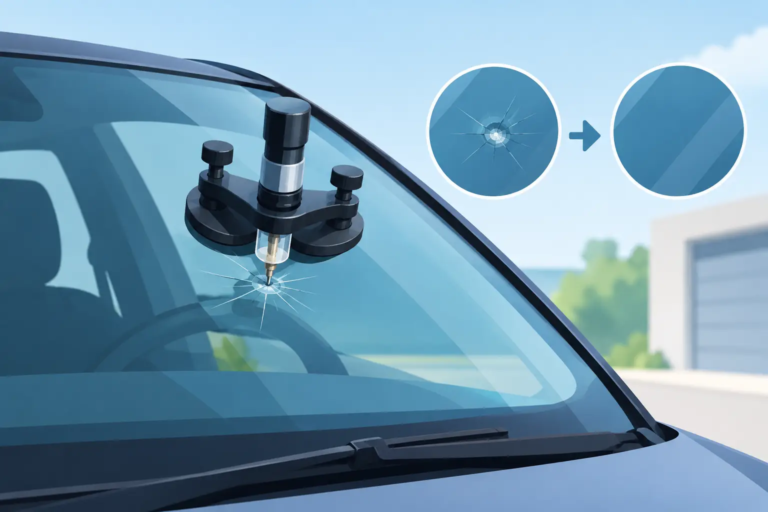
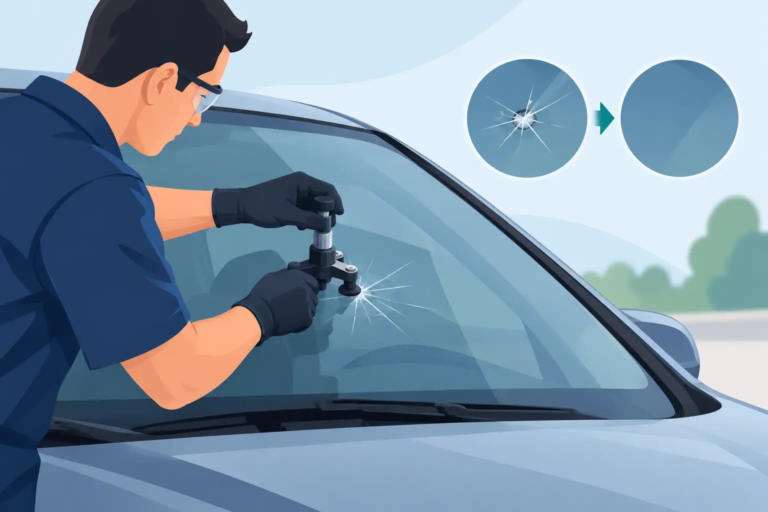
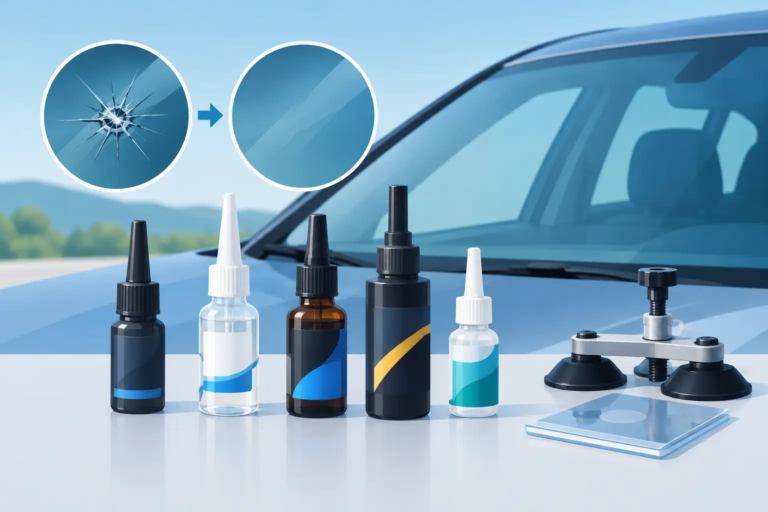
Next, the technician prepares the damaged area and uses a repair bridge to create a controlled seal over the chip. The bridge applies vacuum to pull trapped air and moisture from the break. Then it applies pressure to inject a low-viscosity resin into the tiny cracks and voids within the glass.
This is the part many drivers do not see. The resin is not simply placed on top of the chip. It must travel through the fracture paths. An experienced windshield repair specialist watches the break closely, adjusts pressure as needed, and makes sure the resin reaches as much damaged glass as possible.
Once the resin has filled the break, UV light activates the curing process. The resin hardens into a durable material that bonds with the glass and stabilizes the damaged area. The technician then adds a finishing resin at the surface, cures it, and polishes the repair smooth.
The cure itself often takes only a few minutes. Proper results, however, depend on the complete process: inspection, moisture removal, resin flow, controlled curing, and finishing. That is why professional repair is more reliable than a quick do-it-yourself attempt when you want to preserve a windshield.
What Curing Actually Accomplishes
A cured repair resin serves two practical purposes. First, it reinforces the damaged glass and reduces the chance that everyday stress will turn the chip into a crack. Second, it improves the appearance of the impact point by replacing air in the break with a resin that better matches the optical properties of glass.
The visual result varies. Some repairs become difficult to spot from a normal viewing distance. Others still leave a faint mark, especially when the original chip was deep, dirty, old, or shaped like a complex star break. A quality repair is judged first by stabilization, not by whether the glass looks brand new.
That distinction matters. Repair can save a windshield, but it cannot erase every trace of impact damage. A trustworthy technician should set that expectation before starting work. The right question is not always, “Will it disappear completely?” It is, “Can this damage be stopped before it spreads?”
Why Timing Changes the Outcome
The longer a chip remains open, the more difficult it can be to repair cleanly. Rainwater, washer fluid, dust, road grime, and moisture can enter the break. Temperature swings can also make the crack legs grow. Once contamination is inside the chip, even a properly cured resin may not restore the same level of clarity as it would on fresh damage.
A chip near the edge of the windshield deserves especially quick attention. The edge is a high-stress area, and cracks that start there often spread faster. Damage in the driver’s primary viewing area can also require closer evaluation because visibility and safety standards matter as much as the repair itself.
If you cannot schedule repair immediately, cover the chip with clear tape after the glass is dry. Do not wash the vehicle, spray the chip with cleaner, or poke at it. Avoid sudden temperature changes when possible, including blasting a hot windshield with cold A/C or pouring hot water onto cold glass.
When a Chip Can Be Repaired – and When It Cannot
Most small chips are worth inspecting, but repairability depends on more than size. The location, depth, shape, age, contamination level, and number of crack legs all matter. A small, fresh chip away from the edge usually has a strong chance of repair. A long crack, severe impact damage, or damage that reaches the windshield’s inner layer may call for replacement instead.
There are also safety limits. If damage interferes with the driver’s clear line of sight, a repair may stabilize the glass but still not be the best solution. If the windshield has extensive cracking or the structure has been compromised, replacement may be necessary.
The value of working with a repair specialist is getting an honest answer before replacement is assumed. SuperGlass Denton focuses on restoring existing glass whenever it is safe and practical. For drivers, that can mean less cost, less downtime, and no need to disturb factory-installed glass unnecessarily.
Weather, Temperature, and Mobile Repair
Many drivers wonder whether windshield resin can cure outside. It can, when the technician controls the repair conditions and uses proper UV curing equipment. Natural sunlight may contribute UV energy, but professional curing does not depend on hoping for the right weather at the right moment.
Heat does matter. On a very hot day, glass expands and the air inside a chip can behave differently. On a cold day, the glass contracts. A trained mobile technician accounts for these conditions while preparing the break, injecting resin, and curing it. The repair may take a little longer in challenging conditions, but the key is controlled workmanship, not rushing through the appointment.
Mobile service is especially useful for busy Denton, Plano, Frisco, McKinney, Lewisville, and Carrollton drivers. Instead of driving with a vulnerable chip and risking a crack, you can have the glass evaluated at home, at work, or where your vehicle is parked. Fleet operators gain the same advantage by reducing time off the road for trucks, school buses, and rental vehicles.
Common Misunderstandings About Cured Chip Repairs
One misconception is that a repaired chip can never crack again. Repair greatly improves the odds of stopping the damage, but no honest professional can promise that a windshield will never face another impact or extreme stress. A new rock strike near an old repair is still a new problem.
Another misconception is that any resin kit produces the same result as professional service. Some kits can offer a temporary improvement, particularly on simple, fresh chips. But they often lack the vacuum and pressure control needed to remove air and fully fill complex fractures. If a kit fails or leaves resin in the wrong place, professional repair can become more difficult.
Drivers also sometimes believe they should wait until a chip spreads so insurance will cover it. That is rarely a money-saving move. A repair is generally less expensive and less disruptive than replacement, and many insurance plans treat windshield repair more favorably than a full windshield claim. Coverage varies, so it is wise to check your policy rather than assume.
Protect the Windshield You Already Have
Your original windshield is more than a piece of glass. It supports the vehicle’s structure, provides a clear view of the road, and may work with cameras or driver-assistance systems mounted near the glass. Keeping it in service when repair is appropriate is often the practical choice.
If you notice a new chip, take a quick photo, keep it clean and dry, and arrange an evaluation before the next heat cycle or highway trip gives it a reason to spread. A small repair completed at the right time can be one of the simplest ways to keep a minor road hazard from becoming a much bigger interruption.